CEDIA Expo has a way of surfacing the industry’s mood in real time, and this year’s show, from spec home tours to briefings with exhibitors to conversations had on and off stage, told a remarkably consistent story. Conversations this year were noticeably longer and more detailed than in past shows, with integrators arriving already versed in the products and asking sharper, more specific questions. The same pattern held in Smart Stage sessions that drew attendees who weren’t simply sitting and listening, but visibly working through the material and pushing back with pointed follow-up questions.
Several threads ran through our time on the show floor, on panels and elsewhere: AI is quietly becoming installation infrastructure rather than a gimmick; audio, lighting, and shading are merging into single physical products instead of separate trades; design and materiality have become as important as performance specs; the outdoor room is now a full-blown technology category; wellness and hydrotherapy are finally speaking the smart home’s native control protocols; retrofit has stopped being a secondary product line and started driving manufacturer roadmaps outright; networking, power, and cybersecurity are being treated as premium products in their own right; projection is holding its ground against the LED wave on the strength of a genuinely different viewing experience; and the industry’s business model is leaning harder on builder relationships and reference-quality media. Here’s what integrators need to know.
AI Stops Being a Feature and Starts Being Infrastructure
A year ago, “AI” at CEDIA mostly meant a marketing slide. In 2026, nearly every major platform demoed AI doing real integrator and homeowner work, and, notably, almost none of it was consumer-facing chatbot fluff.
Crestron previewed an AI-assisted mode inside Configure Pro, arriving in early 2027, that lets integrators build out a project using natural language, including uploading an Excel file of project details to auto-populate rooms and technology placeholders. Crestron was explicit that the tool is being trained on “decades of data and beta user feedback,” and just as explicit about who it’s for: dealers and integrators, not end users. The team’s reasoning was blunt: natural-language programming for homeowners is being explored, but the near-term priority is protecting integrators from the liability of customers reprogramming systems badly. Crestron is also killing the historical VPN-tunnel dance for local configuration, letting dealers manage local and cloud systems from a single button.
Savant went further on the design side. CEO Bob Madonna demoed a rewritten Blueprint configuration tool that uses an AI layer, paired with the company’s new Savvy personal assistant, to read an uploaded architectural floor plan and automatically identify and place recessed lights, pendants, and keypads, suggesting best-practice configurations without an integrator manually counting fixtures. One attendee suggested, on the spot, extending the tool to auto-calculate cable-run lengths and generate a cabling estimate, an idea well received enough that Savant flagged it as a same-week action item. Savvy itself is in beta now, targeting full production by year-end, supports 56 languages, and lets users tune its personality; it controls lighting, HVAC, entertainment, and music through natural language.
Savant was joined on the Smart Stage by Josh.ai’s Alex Capecelatro and two dealers, during which the two control manufacturers, the only two on the show floor saying anything about user-facing AI control tools, discussed what is currently possible with AI home control, and what will shortly become reality thanks to natural language programming and predictive analytics.
WAC/Modern Forms rounded out the AI story from the design side with Inspire, a tool that lets integrators and designers upload a photo of a home’s interior or exterior and virtually place decorative fixtures into the image using text prompts, swap a chandelier tier, change a room type, then send the generated concept directly to WAC for quoting. It’s less about automation and more about collapsing the sales cycle between “what if we tried this fixture here” and an actual quote.
The common thread: this generation of AI tools is aimed at compressing integrator labor (floor-plan takeoffs, room programming, quoting) rather than replacing the integrator, and every vendor who addressed end-user-facing AI directly (Crestron, Sonos) was careful to frame it as still early and non-default.
Manufacturers Think More Holistically About Lighting, Shading, Audio
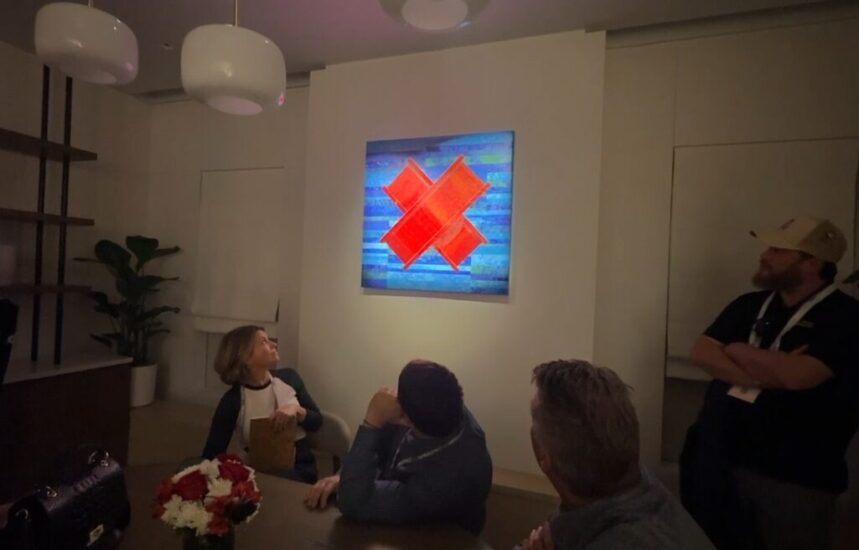
Lutron’s intelligent lighting demo showed how light can change the appearance of art.
The most literal expression of ‘invisible technology’ at the show wasn’t a smaller speaker — it was something that stopped needing to exist on its own at all.
Many of you caught a glimpse of what Origin Acoustics was showing behind closed doors. In short, the concept rethinks what is happening in the ceiling and how much space it should take to deliver great audio and lighting. Origin isn’t ready to detail the product publicly yet, but this is worth watching. This is exciting but we have to be careful not to reveal too much, so we’ll end with this: Origin is trying to solve a scheduling problem as much as an acoustic and ambiance one. We only expect this kind of innovation from Origin, to be honest.
Lutron’s Native by Design program is the ecosystem-level version of the same idea: rather than simply certifying third-party fixtures to talk to Lutron over software, Lutron is co-engineering hardware from scratch with partners so components like wireless antennas are built into the fixture ring itself. Partners on display included Coastal Source (whose VIA platform, developed jointly with Lutron, brings native Ketra light engines to outdoor-rated architectural fixtures), Niche (a founding partner co-designing decorative fixture lines), Merlin (a framing projector for precise, spill-free art lighting), Cerno (tape lighting and trim), and, in a genuinely unusual crossover, Swarovski, which produced a first-of-its-kind smoke-toned crystal specifically for Lutron’s Palladiom drapery hardware. Lutron also announced a Sonos Voice Control launch partnership, letting Caséta and HomeWorks lighting and shades respond to Sonos voice commands.
Speaking of Lutron, the company’s Intelligent Lighting demo is always a crowd favorite, and it didn’t disappoint in Denver.
Design and Materiality Are Now Load-Bearing Product Features
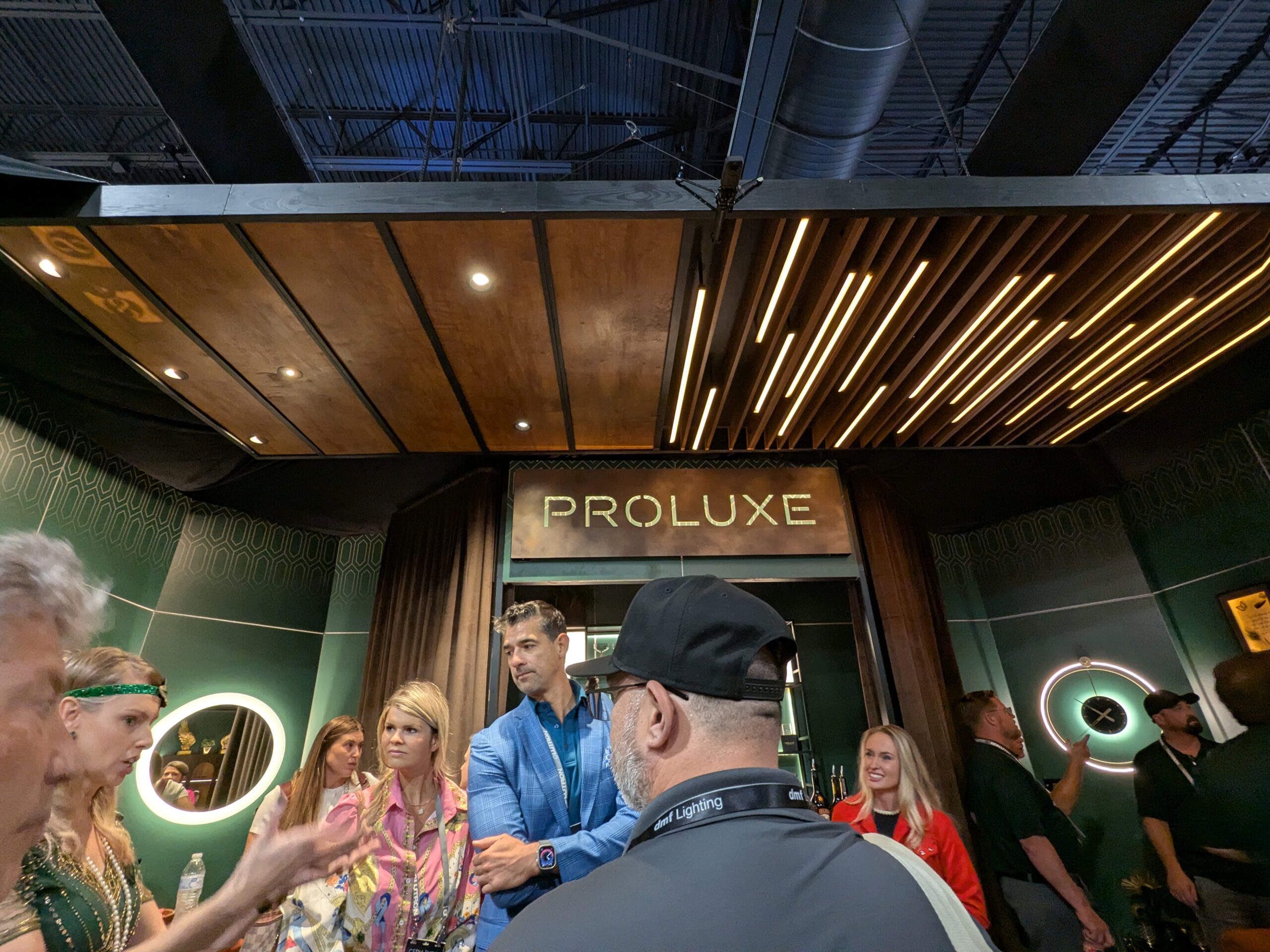
Several briefings made clear that “does it disappear” has been replaced by “does it match the room” as the design bar.
Leon detailed a seasonal refresh built almost entirely around materiality: new Italian hardwood veneers so a Studio Frame TV surround, a soundbar, and a subwoofer can all match finishes; new proprietary grill fabrics developed with a local fabricator; and a redesigned Studio Frame/Flex Frame mounting system that swaps thumbscrews for an “alligator clip” pressure-fit onto displays like the Sony Bravia 7, Bravia 9, and Mark Two, holding to a quarter-inch reveal for ventilation. On the audio side, Leon partnered with pro-audio manufacturer PowerSoft for amplification, producing a redesigned powered subwoofer with a PowerSoft plate amp and companion app, plus the flagship Framebar Ultima and Framebar MM Force Ultimate (twin 8-inch PowerSoft drivers embedded in the soundbar itself, up to 3,000 watts). Leon is also leaning into retrofit revenue: its Heritage Collection and Edge media frame can be built around existing third-party gear, including framing a competitor’s soundbar, with two-week turnarounds once engineering signs off on a design, and the company will source custom or hand-stretched fabric to match specific environments (their Muscle Shoals Sound Studio project was cited as the extreme case).
Lenbrook’s Dali brand told a similar story for loudspeakers: a new all-in-one Dali Vega soundbar in “tonal weave” fabric built on BluOS, positioned explicitly as a design object first, plus expanded IQ-series finishes (premium paint, walnut veneer) aimed at design-conscious buyers who want to choose a color and fabric the way they’d choose furniture.
WAC’s sauna-rated Balta series and Schonbek’s European crystal lighting line reinforce the same pattern from the fixtures side: category expansion is happening at the intersection of technology and interior design, not technology alone.
The Outdoor Room Has Become Its Own Full-Stack Category
Outdoor living wasn’t a subplot this year, it was close to its own trade show. Coastal Source showed a genuinely deep outdoor audio and lighting refresh: new EB 2650 speakers with sealed-woofer design and ribbon tweeters for better dispersion, a modular B1100 system that can stack, flip, and daisy-chain (via an 8-conductor connector) to cover up to 400 feet of zone on a single amp channel, and a flagship 12.0 speaker with a variable waveguide designed to hold tonal balance at long throw distances, directly targeting the common complaint of “muddy” sound far from the amp. Just as notably, Coastal Source demonstrated low-frequency steering, using DSP to keep bass energy inside a client’s property line and off a neighbor’s patio, addressing what the design manager called one of the most frequent client complaints in outdoor installs. On the lighting side, the new VIA intelligent outdoor lighting platform, developed jointly with Lutron through the Native by Design program, and the upcoming PowerSource® system (shipping October 15), the industry’s first UL-certified, plug-and-play line-voltage system, tackle voltage drop over long landscape runs by letting transformers sit closer to fixtures without requiring an electrician, a pitch aimed squarely at expanding who can sell and install outdoor lighting.
WAC echoed the theme with a new outdoor X Track line built for spaces like outdoor kitchens, plus expanding bollards, path lights, and a landscape “colorscaping” configurator. Somfy and the broader shading category are along for the ride too: the Glydea Ultra 50 drapery motor and top-down/bottom-up shade motor both got USB-C fast-charging upgrades this cycle, cutting charge time from roughly eight hours to 80% in two hours, which matters as much for outdoor/hard-to-access installs as indoor ones.
Wellness Enters the Smart Home, and This Time It’s Actually Integrated
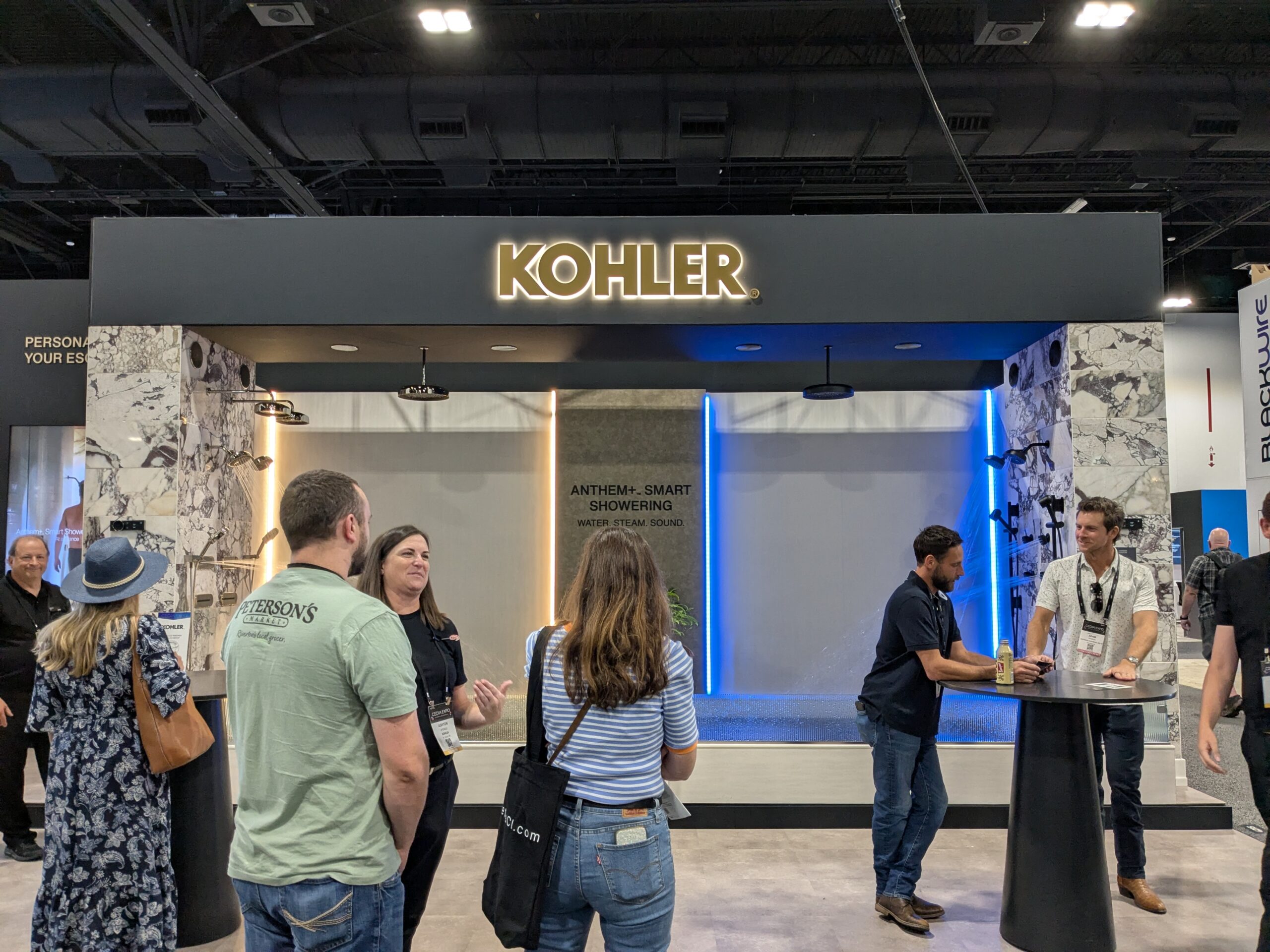
Hydrotherapy and wellness technology have circled the edges of the industry for years without ever quite landing inside it, and this year’s floor suggested that’s changing. Kohler, a familiar CEDIA presence going back to when the show was still held in Dallas, showed how far its Anthem+ smart shower platform has come. What integrators once treated as a compelling idea stuck waiting on real control-system integration has arrived: Anthem+ now connects directly into platforms like Control4 and Crestron, closing the gap that had kept many dealers on the sidelines. The response was described as unambiguous, and strong enough that Kohler is reportedly exploring extending the same connected approach to other bathroom products, including its Stillness smart bath. Kohler wasn’t alone: several other hydrotherapy and sauna manufacturers were on the floor gauging integrator interest in similar platform connections. For a channel that has historically struggled to gain real ground in kitchen-and-bath work, wellness may be the wedge: a category compelling enough on its own merits that, now that it finally speaks the smart home’s native protocols, it could pull integrators into rooms they’ve rarely owned.
Retrofit Stops Being the Fallback and Starts Driving the Roadmap
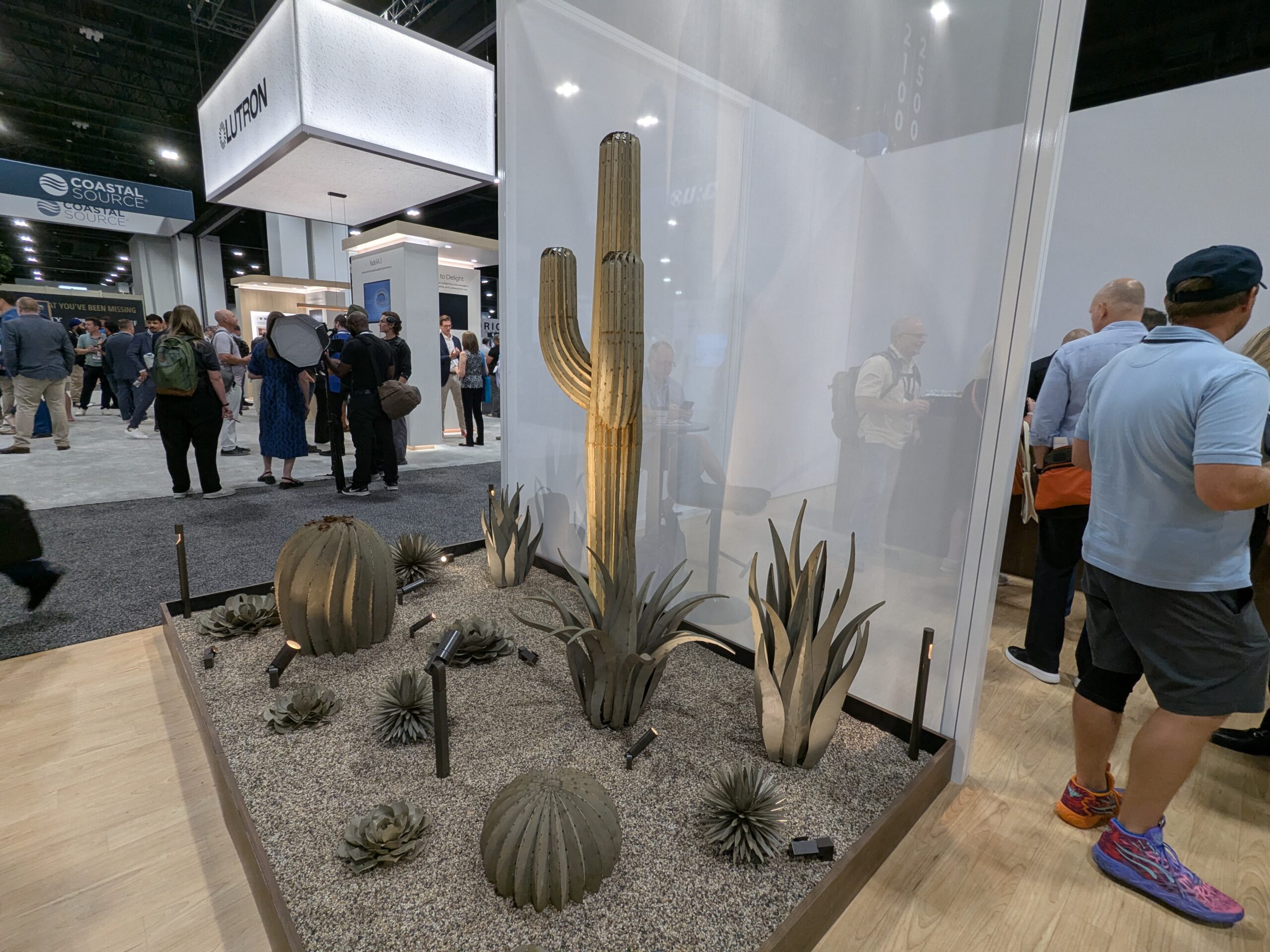
New construction hasn’t disappeared as a category, but enough manufacturers described it as cooling that product roadmaps are visibly shifting in response. DMF Lighting used its CEDIA presence to foreground new retrofit-specific fixtures, framing the move explicitly as a response to a slower new-build pipeline. That framing came up in conversation after conversation on the floor: several manufacturers said their biggest operational challenge right now isn’t generating demand, it’s keeping pace with dealers’ rising retrofit workload. The logical next step for the category, wireless-first hardware that avoids opening up finished walls and ceilings, went mostly unstated on the floor, but it’s the clear implication. It also reframes products covered elsewhere on the show floor: Leon’s ability to build custom frames around a client’s existing gear, and Coastal Source’s plug-and-play landscape lighting built to skip an electrician, are both effectively retrofit products wearing other categories’ names. Taken together, the floor suggested an industry recalibrating its roadmaps around remodels and add-ons rather than treating retrofit as a secondary use case for new-construction hardware.
Networking, Power, and Cybersecurity Are Being Sold as Premium Products, Not Afterthoughts
A few separate CE Pro briefings treated the “boring” back-of-rack infrastructure as the actual product being launched.
Apex Cinema, built in partnership with Control Envy, centered its entire pitch on power reliability and secure remote access rather than the cinema experience itself. The company’s UPS/PDU line now supports third-party hardware broadly (Panamax, WattBox, SurgeX, Middle Atlantic, Furman) rather than locking dealers into a single ecosystem, and stores a full year of power, temperature, and humidity telemetry per device so techs can diagnose intermittent job-site issues remotely instead of guessing on a truck roll. The headline feature, though, was tunnel technology for remote access, a locally-resident device that creates a direct encrypted connection to a site rather than routing through a cloud relay, which the team said kept their customers’ systems running during a global internet/cloud outage the day before this recording. They contrasted this directly with cloud-dependent tools like TeamViewer and AnyDesk, calling that approach “inherently not very cyber secure,” and are close to shipping a full WireGuard VPN option on the same tunnel infrastructure. Dealer cost: a one-time $1,200, no subscription, a notable pricing stance in an industry increasingly moving toward recurring software fees.
Blustream made the case that the underlying network itself has become the product. The company described flipping from a 90/10 residential-to-commercial mix five years ago to roughly 50/50 today, with a projected 60/40 commercial tilt by next year, driven largely by investment in Dante audio networking, which it’s actively trying to “demystify” for residential-trained dealers through a partnership with Sonance. New Dante Matrix hardware (high-Z/low-Z, bridgeable) is due early next year, alongside network switches purpose-built to make video-over-IP configuration approachable without deep networking expertise, and new 4K120/8K60 distribution aimed at large-format displays with lighter infrastructure requirements than before. Somfy showed its own version of network convergence with a Power-over-Ethernet ecosystem combining PoE lighting, Sonos PoE speakers, and Somfy PoE shade motors on one network fabric, controllable through simple scene keypads.
Savant extended the infrastructure story into energy: a battery-backup line using “double online conversion” (AC-to-DC-to-AC) for clean sine-wave output, positioned as a direct alternative to Tesla’s home battery products, plus a new partnership with heat-pump manufacturer Daikin and an indoor air-quality monitor in development, signs that whole-home platforms are pushing further into energy management as a growth category, not just lighting and AV.
Projection Holds Its Ground Against the LED Wave
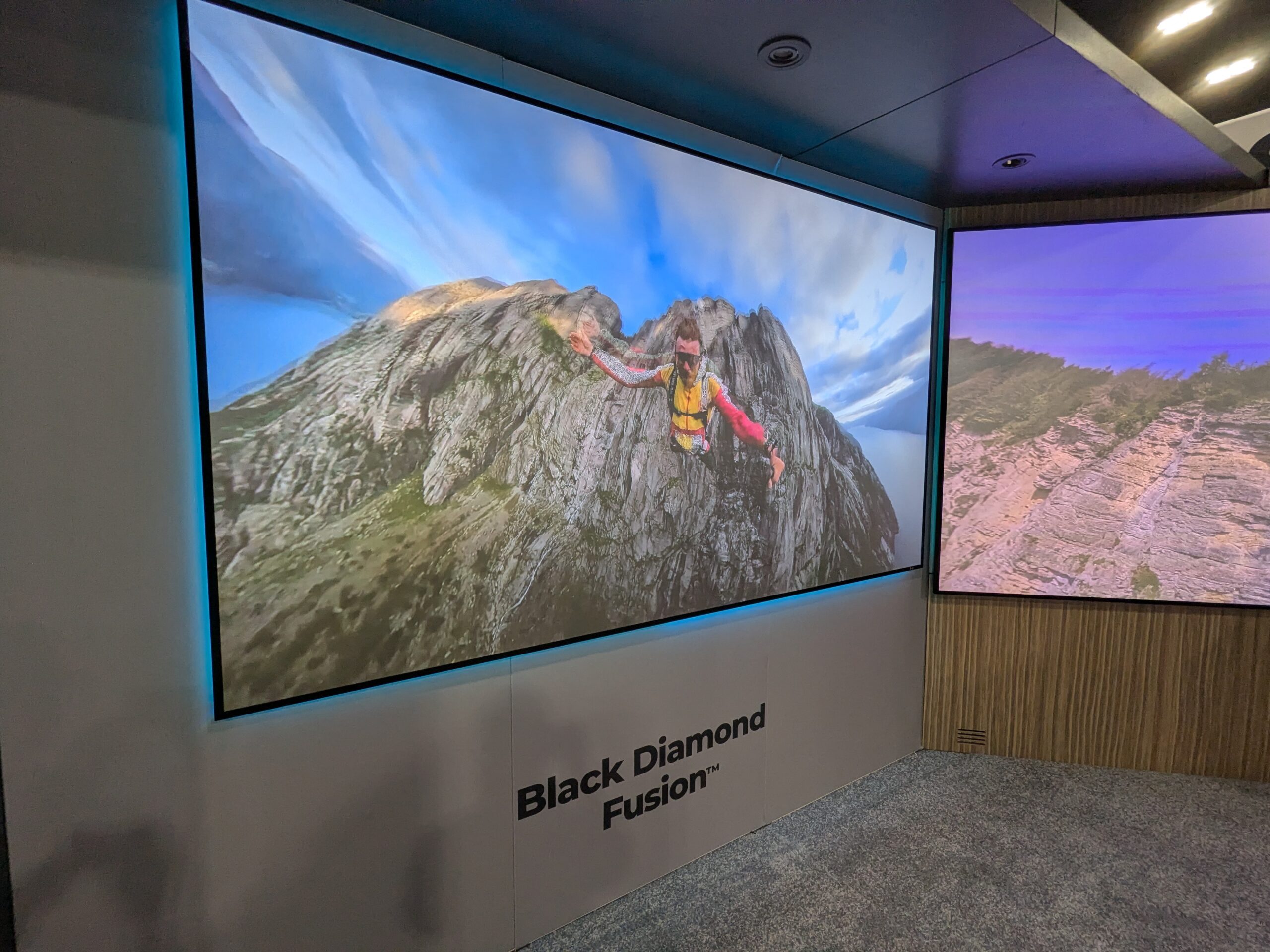
With microLED video walls proliferating across the show floor and newly released micro-RGB display technology and first-time CEDIA Expo players drawing crowds, it would be easy to assume LED is simply outgrowing projection. Conversations with projection-side manufacturers, including Screen Innovations and Sony, which sells seriously into both categories, suggested a more settled coexistence than a horse race. The comparison that came up repeatedly was to vinyl records: a projector-and-screen combination delivers a viewing experience distinct enough from an LED wall that framing the two as direct competitors somewhat misses the point. For integrators chasing the specific, cinematic quality a dedicated home-theater client wants, the view from the floor was that projection remains the closest thing to the real thing, and, like a turntable or a tube amp, that’s likely to keep it relevant even as newer display technology continues to take share elsewhere in the home.
That said, the video wall manufacturers at this year’s show like Just Video Walls, AWALL and more showed exactly why they are giving projector manufacturers a run for their money.
Media Playback Keeps Chasing Reference Quality, and the Business Model Is Leaning on Builders and Retrofits
Kaleidescape reinforced its position as the reference standard for premium home cinema, detailing its 4K cinematic format (full chroma 4:4:4 at bit rates well above standard 4K Blu-ray, run through an 8K processor) and showing off restorations of scanned film sources like the 70mm-shot 2001: A Space Odyssey and a 1959 print of The Parent Trap. The company is dealing with a genuine demand problem: product that shipped June 18 is on a roughly two-month backorder, and a new server announced this week (translating roughly to multiple petabytes of storage across large-capacity drives, holding on the order of 4,000 films) is aimed at both easing that bottleneck and future-proofing for 8K content as studios slowly retool.
Meanwhile, Stealth Acoustics is trying to bring reference-caliber visuals down-market with a new indoor LED display line: an all-in-one panel with an integrated soundbar, custom sizing, and pixel pitch selected by viewing distance rather than a one-size-fits-all spec sheet, alongside a coming outdoor version and a new line of Dante-equipped digital amplifiers due by year-end.
CE Pro Takeaways
Put together, the show’s message was less “here’s a flashy new gadget” and more “here’s how we’re making the complicated parts of this industry more scalable.” AI tools are aimed at integrator throughput, not homeowner novelty. Lighting and audio are being engineered as single components instead of coordinated separately. Design finishes are treated as core specs. Outdoor spaces are getting the same systems rigor that indoor theaters got a decade ago. Wellness and hydrotherapy are finally arriving with the control-platform compatibility that had kept integrators on the sidelines. Retrofit has quietly gone from a fallback line item to the assumption baked into new product roadmaps. Infrastructure (power, network, remote access, storage) is finally being sold, and priced, like the premium product category it’s always functionally been. And even amid an LED-driven display boom, projection is holding its own as a genuinely different, still-desirable format rather than a technology on its way out.
For integrators, the practical takeaway is that the next competitive edge is less about which single box you sell and more about which platform’s tools, and which categories, save you the most labor while opening doors into rooms of the home the channel hasn’t fully claimed yet.
Stay tuned as CE Pro dives deeper into these trends as we continue to unpack from Denver.