Takeaways
- FCC voted to ban all Chinese labs from testing US-bound radio communication devices on April 30, 2026.
- Devices using wireless communication technology such as Wi-Fi, Bluetooth, Zigbee, Z-Wave, RFID and Thread are potentially implicated.
- Vote will move to a 60-to-90-day public commentary period before going into full effect with a two-year grace period.
In the ongoing efforts from the Federal Communications Commission (FCC) to “secure [U.S.] networks from bad actors” (as stated by FCC Chair Brendan Carr), the regulatory body recently voted to ban any Chinese lab from certifying devices bound for US markets.
The vote took place on April 30, 2026, extending a previous ban on 15 state-owned or government-affiliated Chinese labs such that it now applies to every lab in China. Following this vote, the FCC will be opening a public comment period lasting 60 to 90 days before a final ruling is made. Should the decision be finalized, there will be a two-year grace period to allow manufacturers to adjust.
The news comes as the FCC continues to refine its guidance regarding the recent ban on all foreign-made, consumer-grade routers announced back in March of 2026.
Why should this matter to integrators?
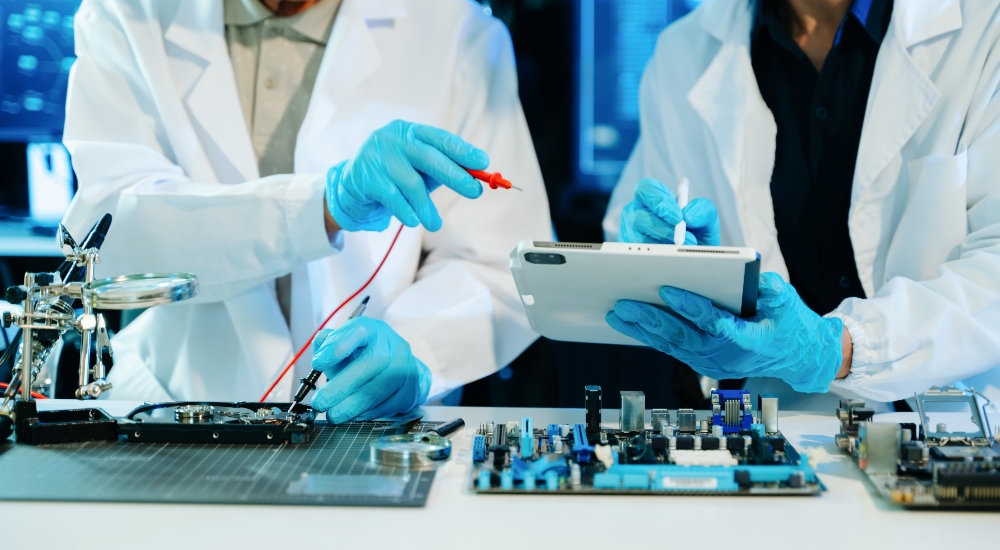
Any device that emits a radio frequency requires testing prior to FCC approval before being sold in the US. This includes any smart home device that uses wireless frequencies for communication purposes, including devices that leverage Wi-Fi, Bluetooth, Zigbee and/or Z-Wave technology, among others.
This means that an overwhelming number of smart devices within the home, from sensors, to lights, to speakers, are subject to inspection before being sold in the US. The exact scope of which products currently serviced by integrators will be affected is unknown. Also, just because a device uses any of the aforementioned technologies does not inherently mean it will be subject to the ban, as testing for many products can still occur outside of China or Hong Kong.
Currently, though, the FCC estimates that 75% of devices requiring inspection are tested by labs in China. Should the ban go through, every lab in China and Hong Kong will lose its ability to certify products, with even labs owned by U.S. companies but are in China or Hong Kong, losing that ability.
The shift in lab locations could translate into higher costs for producing IoT or smart devices sold in the U.S. As Tom’s Hardware reported, FCC certification for testing in China is estimated to cost between $400 and $1,300. If testing were to move to the US, that cost would jump to anywhere between $3,000 and $4,000. Even if testing were to move to Taiwan or Europe, the cost would still be more than that of having it done in China.
Why (aside from cost) testing is often done in China
Aside from the lower cost to test, testing is often done in China due to the proximity of testing labs to fabrication plants. This drastically lowers the cost of shipping overall, due to much of the process being centrally located.
The FCC’s initial investigation of UL Labs
Prior to extending its ban, the FCC launched investigations into Underwriter Labs (UL) LLC., for its China-based lab locations. The investigation, which was announced on September 8, 2025, was conducted over concerns of UL’s ties to China.
Following the launch of these investigations, UL LLC withdrew from its position as Lead Administrator for the U.S. Cyber Trust Mark.
The mark—originally introduced under the Biden administration—was set to be a certification standard for IoT devices like Energy Star, though focused on developing a replicable, certifiable standard for cybersecurity on all internet-based devices sold in the US, meant to safeguard American networks against cyberattacks through any IoT device.
Following UL’s withdrawal from the program, all momentum regarding the mark stalled, with its future currently in question, as no major, publicly known progress has been made in finding a replacement.
Takeaways for integrators regarding the FCC ban on Chinese testing labs
For integrators, this issue may already be partially resolved, as, at the start of the Liberation Day tariffs in April 2025, many manufacturers began exploring other locations for fabrication to avoid the worst of the tariffs.
Industrial onshoring does not occur in a single year, however, and while fabrication may move, that does not mean that testing has moved or was even located in China to begin with.
It’s also important to remember this vote is also not inherently final, though should the decision be finalized, the move has the potential to substantially disrupt supply chains in the immediate future as manufacturers work to accommodate while also increasing manufacturing costs that could eventually show up in the products’ pricing.
Integrators seeking to better understand how their products might be impacted should also reach out to their manufacturers to learn more about which products need to be tested, what testing is currently being done in China and how their manufacturers are planning to address this development. For any integrator or manufacturer looking to have their thoughts and concerns heard on the matter, it is also suggested they respond within the timeframe for public commentary when it opens.