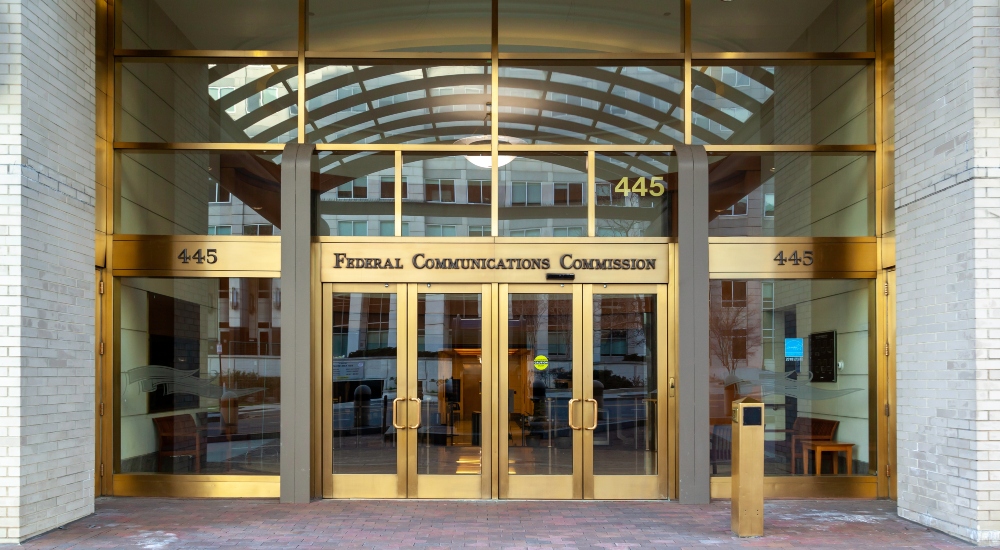
Howdy folks. Thanks for tuning in to the Week in Playback. It seems the situation with the FCC’s foreign-made router ban has evolved quite a bit, so why don’t we dig into that a little bit this week?
For those of you not in the know, starting in March the FCC placed a ban on all foreign-made consumer-grade wireless routers, providing a definition that effectively meant every single major router manufacturer in the U.S. would be affected. At the time that included brands like eero, Netgear, Ubiquity, TP-Link and many more. Eero and Netgear have since gotten conditional exemptions.
Now since that ban only affects consumer-grade routers, the custom integration industry has met the policy with cautious optimism. The people dealing in enterprise equipment don’t have to worry, but for anyone who works with consumer-level products, the risk of supply chain disruption and subsequent price increases looms.
The policy is not without its detractors though and the CTA has brought forward many of the criticisms that have been expressed so far about the FCC’s approach. A major issue that seems to fly in the face of the proposed mission of eliminating security vulnerabilities for the U.S. in particular is how the FCC plans to block software updates for all existing routers that fall under its covered list.
No software updates means security vulnerabilities don’t get patched out. When security vulnerabilities stay in a product, it’s only a matter of time before a hacker is able to uncover those. Once those are uncovered, they are able to be exploited without recourse. Apply that to the broad consumer ecosystem and suddenly you have a swath of products that are now guaranteed to one day become security vulnerabilities.
One other thing that the CTA brought up in its meeting with the FCC was the prospect of clarity, saying that under the current language it is difficult for much of the industry to know what products are affected under the new policy. It’s also difficult for manufacturers to know what needs to be done to become compliant with the policy.
While the latter part hasn’t been addressed yet, the former has in some way–though if anything it’s only highlighted how little we still understand of the policy. A recent update to the FCC’s FAQ section (not even the policy itself) has revealed that under the current language, cellular routers and mobile Wi-Fi hotspots are to be covered.
While that does add a little bit of clarity, critics have argued the sudden revelation highlights how the FCC can quickly add more device categories into this ban if it so chooses. The fact that these two product categories weren’t even considered in the first place by broader industry shows how little information we have to go off of when it comes to understanding what is affected under the policy.
Because of this CE Pro will be keeping a close eye on any updates and we’ll be relaying that information back to our audiences as we become aware of these developments. Much like with the tariffs, it seems like there might be a lot more to uncover before we get a full understanding of how this new policy will be impacting our industries.
1. So Long Denver!
Source: CEDIA Expo to Rotate Out of Denver Starting in 2027
On April 28th 2026, CEDIA Expo announced that it will be rotating out of Denver, Colorado starting 2027. From 2027 to 2030 the event will be taking place in three separate U.S. locations, with the destination changing each year.
Locations announced by the event organizers include Las Vegas, Nevada, Orlando, Florida, and Dallas, Texas, the last of which brings CEDIA Expo back to its location from 2022.
The decision to rotate locations was informed by extensive feedback from attendees and exhibitors, with Jason McGraw, group of vice president and show director, saying that the show wants to bring greater opportunity for attendees to experience the show from different regions.
For now, CEDIA Expo/CIX will return to Denver from September 1st to the 4th, 2026.
2. Cellular Routers Deemed a No-Go by FCC
Source: Hotspots, Cellular Internet Devices Clarified to Be Banned Under FCC Router Policy
Last week the FCC updated its FAQ page with a few clarifications on its router ban. These clarifications expanded the scope of the ban to now include mobile hotspot devices and domestic routers that use a 5G cellular connection to access the internet.
Specifically, the clarified language includes “LTE/5G CPE devices for residential use,” with the CPE standing for customer premises equipment.
While the FCC has stressed that no formal change to the initial policy has been made, the update to its FAQ page has been seen as a subtle expansion of what was initially considered to be covered under its prior statements.
As of now the ban still only applies to consumer-grade devices, with enterprise networking equipment unaffected.
3. CTA Meets with FCC Over Router Policy
Source: CTA Urges FCC to Reconsider Software Update Cutoff in Foreign Router Policy
According to a regulatory filing issued April 23, 2026, the Consumer Technology Association, also known as the CTA, met with the FCC, urging the commission to reconsider several aspects of its router policy.
The most noteworthy of suggestions related to the software update cutoff listed for March 1, 2027, with the CTA urging extensions and exemptions so as to prevent more unnecessary security risks from unsupported hardware.
Additionally the CTA suggested that the FCC adopt an open and transparent process for determining a device’s security profile, in the same vein as the U.S. Cyber Trust Mark.
At the time of writing the current status of the Cyber Trust Mark is unknown, with one of the leads of the initiative, UL Labs, having left due to investigations from the FCC regarding its lab presence in China.
4. Google Gives Gemini a Speed Boost
Source: Google Gemini Update Highlights the Challenges LLMs Can Face in Smart Homes
A minor update released by Google for its Home Platform on April 28th, 2026, has revealed some of the challenges Gemini has been facing since its initial integration into the smart home platform.
While largely embraced by home users as a vastly improved experience, criticisms of Gemini have centered around the speed at which it is able to process commands.
According to Google, with the new update, Gemini will be able to process commands for lighting and plugs 1.5 seconds faster than before.
The update highlights how the long processing times often seen by LLMs on more complex commands can potentially negatively impact the smart home experience, which values quick, reliable command prompting.
5. Z-Wave Summit Celebrates Long Range Technology
Source: Z-Wave’s 2026 Spring Summit is Putting a Big Spotlight on Its Long-Range Technology
The programming schedule for the upcoming Z-Wave Spring Summit and UnPlug Fest for 2026 is out, and at the center of the festivities and activities is Z-Wave’s long-range technology.
According to officials a big focus of the show this year is going to be allowing users to interact and test Z-Wave long-range technology in the field.
While many of the hands-on demonstrations are open only to Z-Wave Alliance members, integrators and other attendees to the show will be able to participate in other forms of programming being offered by the Alliance.
Chairman Avi Rosenthal will kick off the sessions with an address to attendees outlining the alliance’s direction and key opportunities ahead and will then be followed by a member-driven fireside chat discussing the evolution of Z-Wave and the role of collaboration in driving this ecosystem forward.
The Week in Playback is CE Pro’s weekly news segment recapping the top five news stories from across the custom integration (CI) and smart home industries, focusing on recent and breaking stories ranked on importance and interest to the professional install channel.