Takeaways
- TCL officially enters the RGB TV category with the RM9L.
- All newly announced TV models will be receiving an over-the-air update to support Dolby Vision 2, with the QM8L being the first TV planned to receive the update.
- The QM7L and QM8L SQD-Mini-LED TVs are positioned as the lower and middle end of the SQD lineup, respectively.
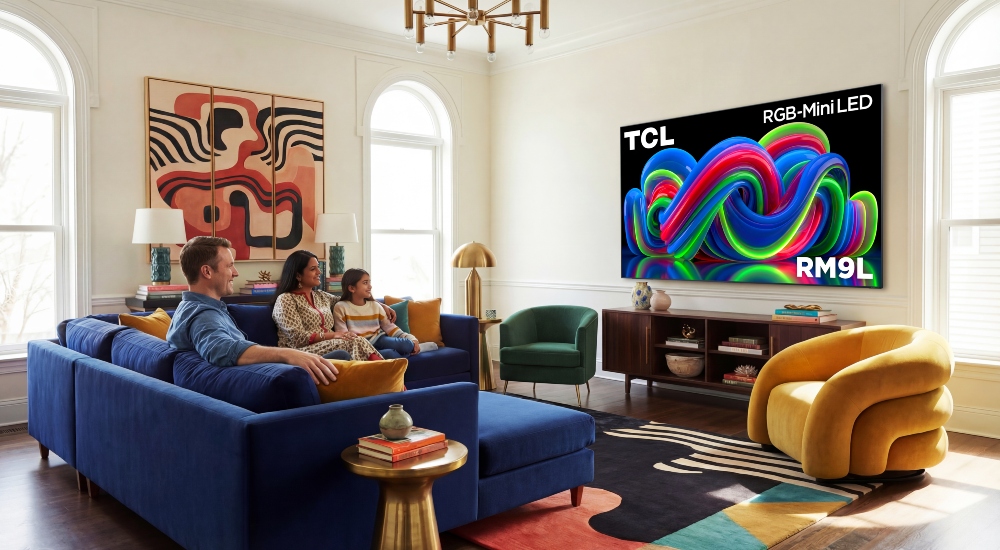
TCL had its Spring Product Launch over the weekend, with the company adding two new SQD-Mini LED TVs to its lineup, as well as its first entry to the RGB LED TV race. The two entrants into the SQD-Mini LED series are the QM8L and QM7L TVs, while the latest TCL RGB LED TV is the RM9L model.
TCL SQD-Mini LED vs. RGB LED
The SQD-Mini LED has largely been positioned in TCL’s portfolio as the company’s own answer to RGB LED technology on the color front. As described by TCL in the release of its flagship X11L SQD-Mini LED TV earlier this year, the TVs within the lineup leverage a proprietary color filter as well as a “color purity algorithm” to improve color accuracy and consistency while reducing artifacts and color crosstalk.
TCL claims this helps the TV achieve full BT.2020 color reproduction, putting the SQL-Mini LEDs in line with the performance being touted by RGB LEDs.
The key difference is that SQD-Mini LEDs still use filtered white light like a traditional LCD with proprietary filters and algorithms helping to up the contrast and color reproduction. RGB LEDs, on the other than, replace the white backlights of traditional LEDs with colored diodes focusing on extremely high brightness and color reproduction.
QM8L and QM7L Features
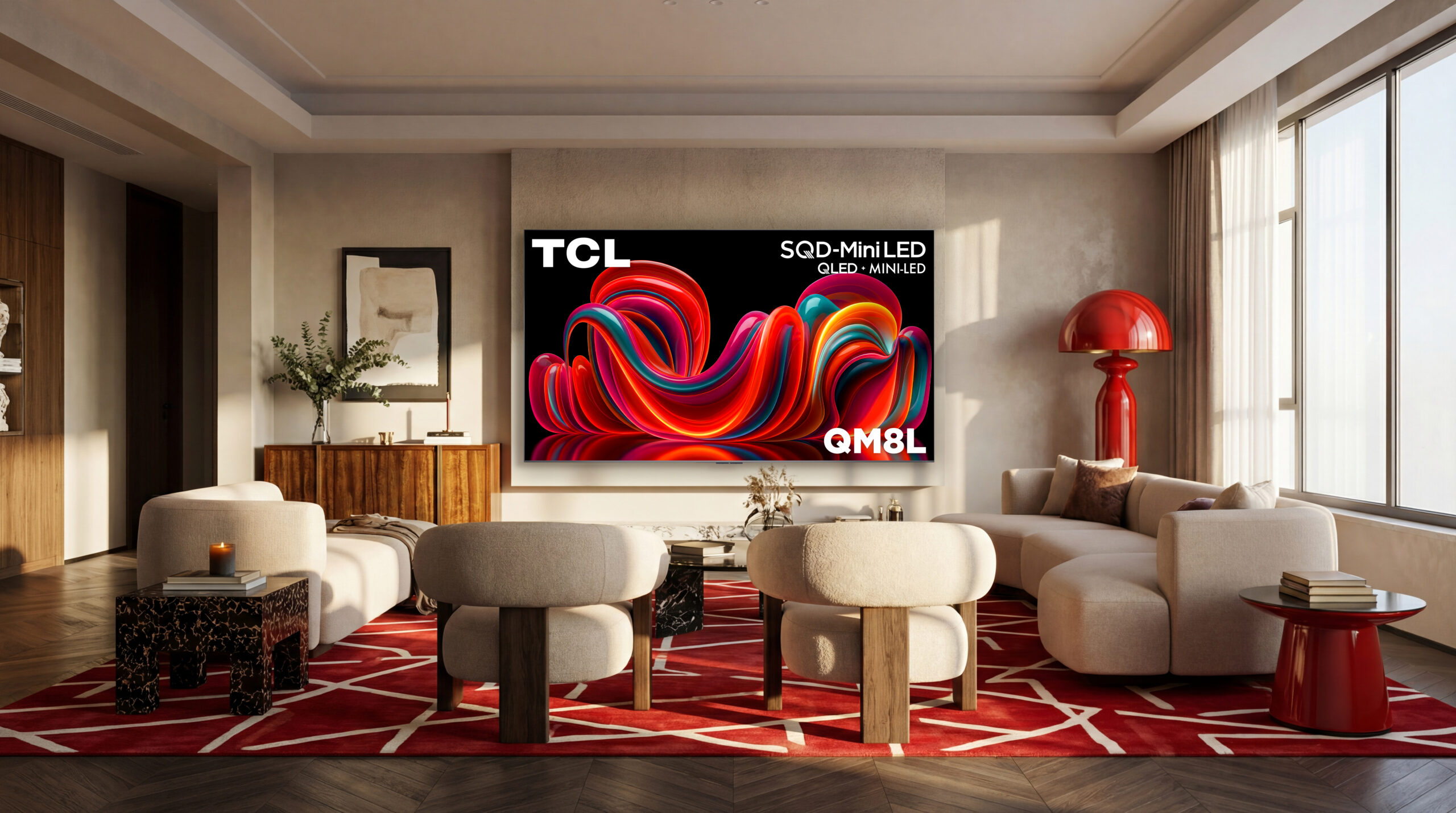
Image courtesy of TCL
As is the case with other members of the SQL-Mini LED series announced earlier this year, both the QM8L and QM7L feature TCL’s Deep Color System and Halo Control System. The former is set up to minimize color crosstalk and boost accuracy while the latter provides local area dimming control to boost contrasts and shadows during darker scenes.
Both TVs are positioned below the flagship X11L, with TCL referring to it as the best overall TV within the SQL series. The QM8L fits in the middle of the pack, while the QM7L is set up to be the most “affordable” of TCL’s premium lineup.
The differences between the models mainly fall within the reported brightness and dimming zones. While the X11L has a max achievable brightness of 10,000 nits with 20,000 discreet dimming zones, the QM8L has 6,000 and 4,000, respectively. The QM7L has 3,000 and 2,400, still putting it at a higher brightness than the average OLED.
The QM8L also features a wider purported viewing angle over the QM7L in addition to having a “borderless” viewing experience.
Both the QM8L and QM7L will also feature audio provided by Bang & Olufsen. Similar to the X1LL, however, users can add an optional wireless subwoofer to build upon the TVs’ existing sound profile. All three TVs have planned OTA updates that will add Dolby Vision 2 Max support, starting with the QM8L.
RM9L Features
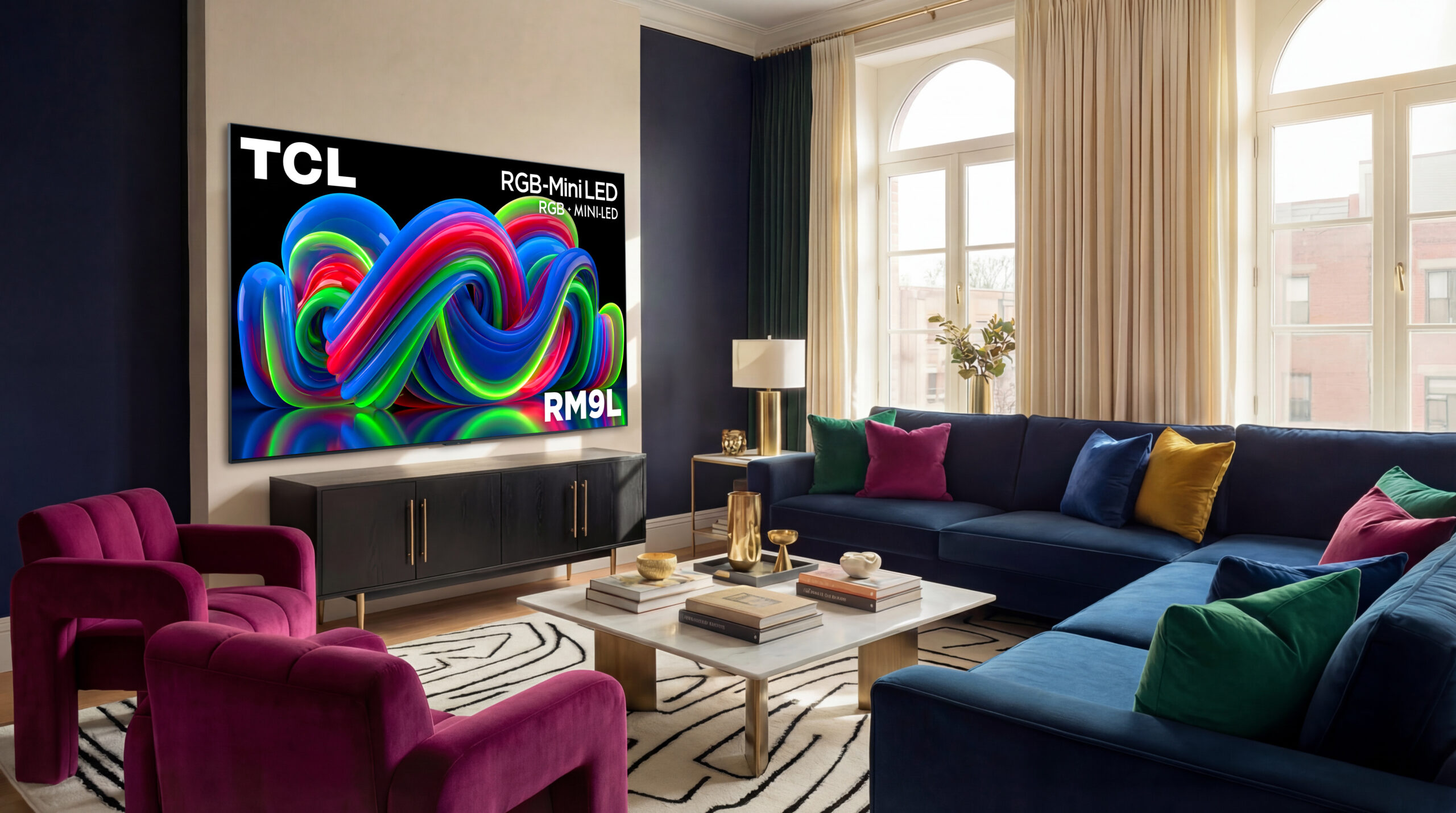
Image courtesy of TCL
As TCL’s take on existing RGB LED tech, the RM9L slaps the same color filter used in the SQD-Mini LEDs onto the existing RGB architecture for more consistent color saturation. The RM9L also adds new 30-bit, 3 backlight controllers as part of its 120-bit color system.
The TV also incorporates some of the features of the QM8L and QM7L including TCL’s Halo Control System, high contrast panels and an upgraded version of the TSR AI processor for image post-processing and upscaling. The RM9L is also slated to receive Dolby Vision 2 Max support via a future, planned OTA update.
According to TCL, the RM9L has a peak brightness performance of up to 6,000 nits with over 3,800 discrete local dimming zones and over 11,000 color zones. Built-in audio will also be provided by Bang & Olufsen with additional options available through Dolby Flex Connect.
Pricing & Availability
Both the QM8L and QM7L models are available for direct purchase now, with the RM9L only being available for pre-orders. No set release date for he RM9L has been announced.
Sizing and prices are as follows:
QM8L
- 65” Model: $2,499.99 MSRP
- 75” Model: $2,999.99 MSRP
- 85” Model: $3,999.99 MSRP
- 98” Model: $5,999.99 MSRP
QM7L
- 55” Model: $1,199.99 MSRP
- 65” Model: $1,499.99 MSRP
- 75” Model: $1,999.99 MSRP
- 85” Model: $2,499.99 MSRP
- 98” Model: $3,999.99 MSRP
RM9L
- 85” Model: $7,999.99 MSRP
- 98” Model: $9,999.99 MSRP
- 115” Model: $29,999.99 MSRP
CE Pro Analysis
TCL’s entry into the RGB LED TV race is unsurprising given the increased pressure the brand has been placing on the portfolios of opponents across home entertainment. The company was one of many who, two years prior, introduced competing models to Samsung’s The Frame art TV, and with the rumors that TCL is working on developing its own OLED models to compete with existing offerings, it’s likely that the company will continue to pursue many of the major TV technologies to further grow market share.
Whether or not this pressure will remain relegated to the consumer space is to be seen, however, as forthcoming data from the CE Pro 100 Brand Analysis reveals that the increased pressure from both it and competitor Hisense have yet to translate into wider adoption of the two brands within the pro-install channel. It might not have to have to compete with other brands in the CI channel in order to exert an effect, however.
Already, mounting pressures within the category have resulted in Sony–whose TVs are prominently used in the CI channel–handing over its core display business to be run by TCL. The deal, inked earlier this year, has seen both Sony and TCL coming together in a joint venture to create BRAVIA Inc., where Sony will continue to provide the technology behind the BRAVIA brand, while TCL handles the operational capabilities.
The move is by no means a full exit of Sony from the category, nor does it represent TCL gaining Sony’s market share. What it does represent however, is a careful recalculation by a major brand as to how it engages with the category. That, while not meant to directly impact the availability or quality of existing TVs, does have a subtler effect in changing the way how business is conducted.