1. Watch Parties Drive Premium TV Sales
Sports entertainment continues to be an absolute mess, at least when it comes to trying to find what streaming services or channels are hosting your preferred sports games. That hasn’t stopped people from watching, however. Who knows? Maybe all that frustration in finding suitable viewing options is why watch parties are on the rise in the U.S. right now. Rather than trying to figure it out on your own, you just find a friend that has it already.
I’m oversimplifying it, of course. It’s not just sports content that people love to congregate over. Social viewing is on the rise throughout the U.S., and I think that speaks to something more within the public zeitgeist: it’s way too expensive to go out to even a restaurant to watch a game, and yet most people still feel starved for social interactions. People are also realizing that they get a lot more control over the experience if they’re the ones running it.
They get to pick the food. They get to curate the evening. And of course, they get to dazzle guests with whatever fun little toys they have to help run the show (I’m talking about their home entertainment systems).
The fun part (at least for the guys selling AV systems) is that this habit tends to have both dealers and clients seeing different shades of green.
Why integrators should take notice
Screen envy is a very real thing, and if you don’t believe me, just think of how viewing preferences have changed over the years. When streaming was in its nascency, not a single person batted an eye about having to watch something in 480p online. That was the standard then; it was to be expected. Now, imagine trying to go back to that when you have experienced and are aware of the fidelity a 1080p resolution brings to the table. You can’t.
With that in mind, put yourself into the shoes of an attendee at a watch party. You have QLED back at your house you like to use for your general watching pleasure, but one night, you visit a friend to watch a game, and they just so happen to have recently bought a new RGB TV in anticipation of having a big crowd over. You go back home; that QLED isn’t looking colorful anymore.
According to a recent report by Hisense, that’s the experience at least 30% of watch party guests have (with me dramatizing the actual scenario for effect). If you’re in the business of selling TVs, that’s a really good number. It means that every time there’s a watch party, nearly a third of those in attendance will genuinely start to consider getting a new TV as a result—provided that the host had a more premium TV.
As an integrator, that’s nothing to scoff at considering: one, more clients are asking integrators to develop entertainment systems centered around hosting; two, many integrators have businesses built largely off of word of mouth and referrals; and three, multipurpose rooms, the kind commonly used for hosting, have been on the rise for a couple of years at this point.
2. Josh.ai Releases AI X OS
I feel as though whether you treat the AI race like a marathon or a sprint depends largely on where your audience falls. On the consumer electronics side, I can see that manifesting a more of a mad dash to get features out to what is increasingly turning into a public beta. The fact Josh.ai is one of the first pro companies to have had a large-scale AI deployment across its entire control platform should tell you how the CI channel has been handling it.
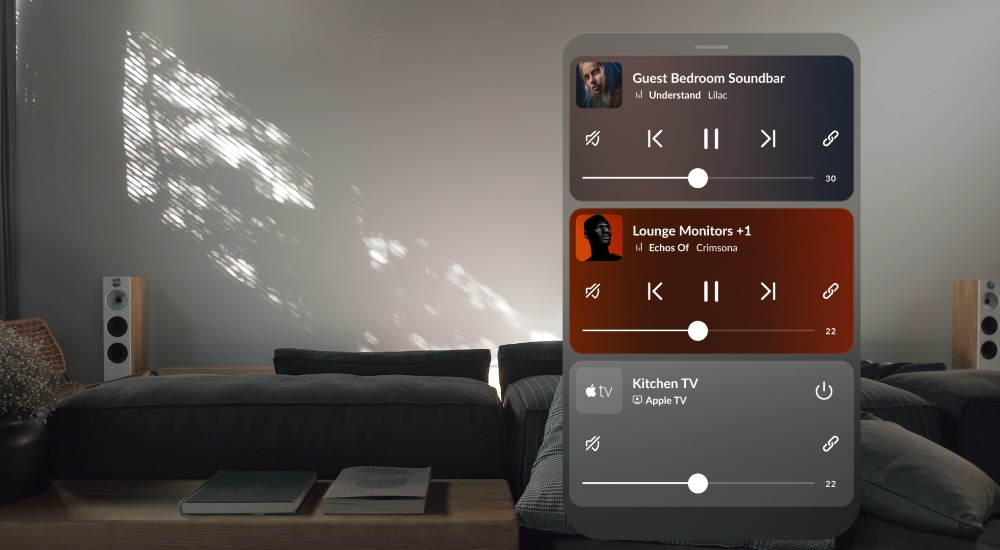
AI X OS has existed for a little over half a year at this point, but it has only existed as a very closed beta shared between Josh.ai dealers since September, 2025. That changed on June 16, as now, the OS has been officially released to the public version of Josh.ai, integrating AI across nearly every aspect of the control ecosystem.
Obviously, being a piece of software, this isn’t a final definitive version. More updates are likely to come, expanding AI capabilities across more aspects of the Josh.ai ecosystem. But the release still stands, in my opinion, as a massive step forward towards that dreamy AI butler that has crystalized in everyone’s minds ever since this latest iteration of AI has hit the mainstream consciousness like a depth charge.
Of course, I’m just pleased to hear that the load times for commands haven’t gone the way of the marathon themselves.
Why integrators should take notice
To give you a perspective of how fast expectations are moving around AI now, it already feels like old hat to talk about natural language scene generation and proactive scene recommendations. Both Josh.ai, Google and URC have been hyping up these features for multiple years combined at this point, and as a result, it feels like they are just expected at this point.
That’s a big deal if you’re a manufacturer still developing your own AI solution at this point because that means expectations surrounding AI are being built up and dismantled all while you’re trying to build your own offering around those expectations.
The one expectation I don’t hear a lot of people talk about, however, is speed. Sure, development being treated like a marathon is largely a good thing, but processing absolutely needs to be a sprint, and that’s the one thing I’ve noticed in AI that could pose a problem to any implementation in the smart home.
Google caught the most publicized stray there with the initial release of Gemini AI on its Home platform being plagued by long load times on certain commands. I’m not going to bash Google on that one, though, because, as Alex Capecelatro (the CEO of Josh.ai) stated, smart homes are becoming incredibly complex. AI takes a bit of time processing complex commands. See where the hurdles might start to come up?
All that means is that, as much as we focus on intuitiveness and proactiveness, we should also be focusing on the potential time cost that comes with that. Time is never on anyone’s side, and the shortest route to irritation on the client side is to make the whole command process take a tiny bit too long. How long? Nobody really knows until it’s too late, but what we do know is that when technology takes too long to do something, a lot of people start to reconsider if analog was ever really all that bad.
The Week in Playback is CE Pro’s weekly recap segment providing extra opinions and analysis on major news stories from across the custom integration (CI) and smart home industries, focusing on recent and breaking stories ranked on importance and interest to the professional install channel. Any opinions expressed here do not reflect the opinions of other editors or that of CE Pro as a whole.