For Rocco’s Tacos, music is an integral part of the restaurant experience, transitioning the atmosphere from energetic during lunch and dinner to a vibrant “pump and thump” rhythm during happy hour and late evenings. That made audio performance particularly important when Sound Insight began working with Rocco’s Tacos at its Huntington Station, New York, location, and ultimately led to a SoundTube system becoming the blueprint for a second restaurant in Burlington, Massachusetts.
Audio that moves the atmosphere of Rocco’s Tacos
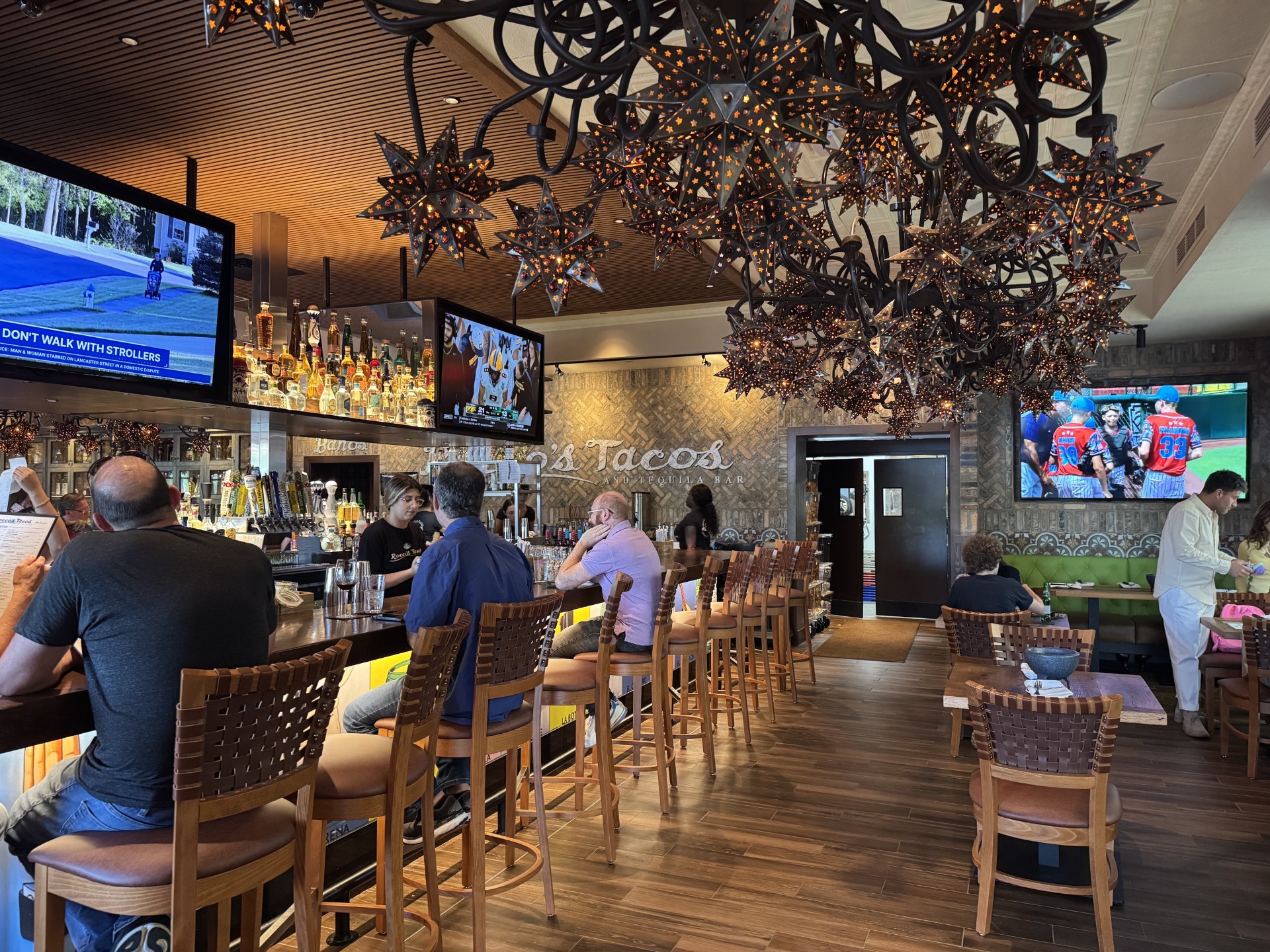
Rocco’s Tacos is very particular in how it chooses to levy music throughout its space. During lunch and dinner, the system needs to provide music throughout the restaurant at levels noticeably above conventional background audio while maintaining a comfortable dining environment.
As the restaurant transitions into happy hour and late evening, the audio system becomes a much more prominent part of the experience, requiring substantially greater output and low-frequency impact.
Kaplan describes the environment as a hybrid between a restaurant and a bar, making loudspeaker coverage, output and subwoofer performance particularly important.
Building from the base of a proven system
When Sound Insight started work on Rocco’s Huntington Station space, the integrator did so with loudspeakers already installed by the previous restaurant. The pendant loudspeakers were mounted at improper heights and spacing for the room, the existing system did not provide adequate coverage and several subwoofers had already failed.
Rather than discarding equipment that could still perform, however, Sound Insight worked with SoundTube technical support and engineering to evaluate the existing system so that it could then optimize the loudspeakers, replace or supplement equipment where necessary and overall build the system to what Rocco’s wanted off this existing structure.
Starting with predictive design in Massachusetts
Unlike the New York restaurant, where Sound Insight began with an existing installation, the Burlington location provided an opportunity to design the audio system from the ground up.
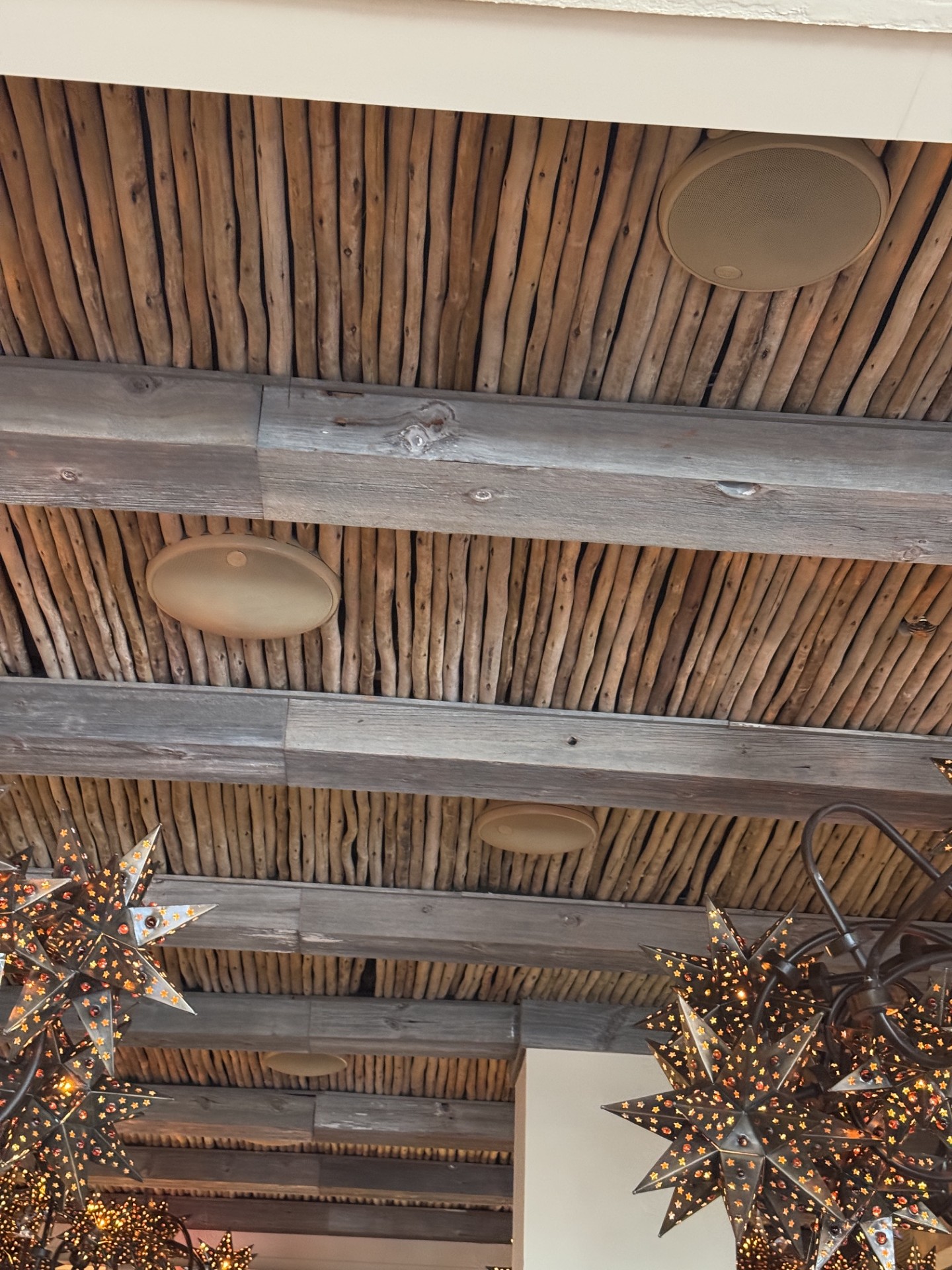
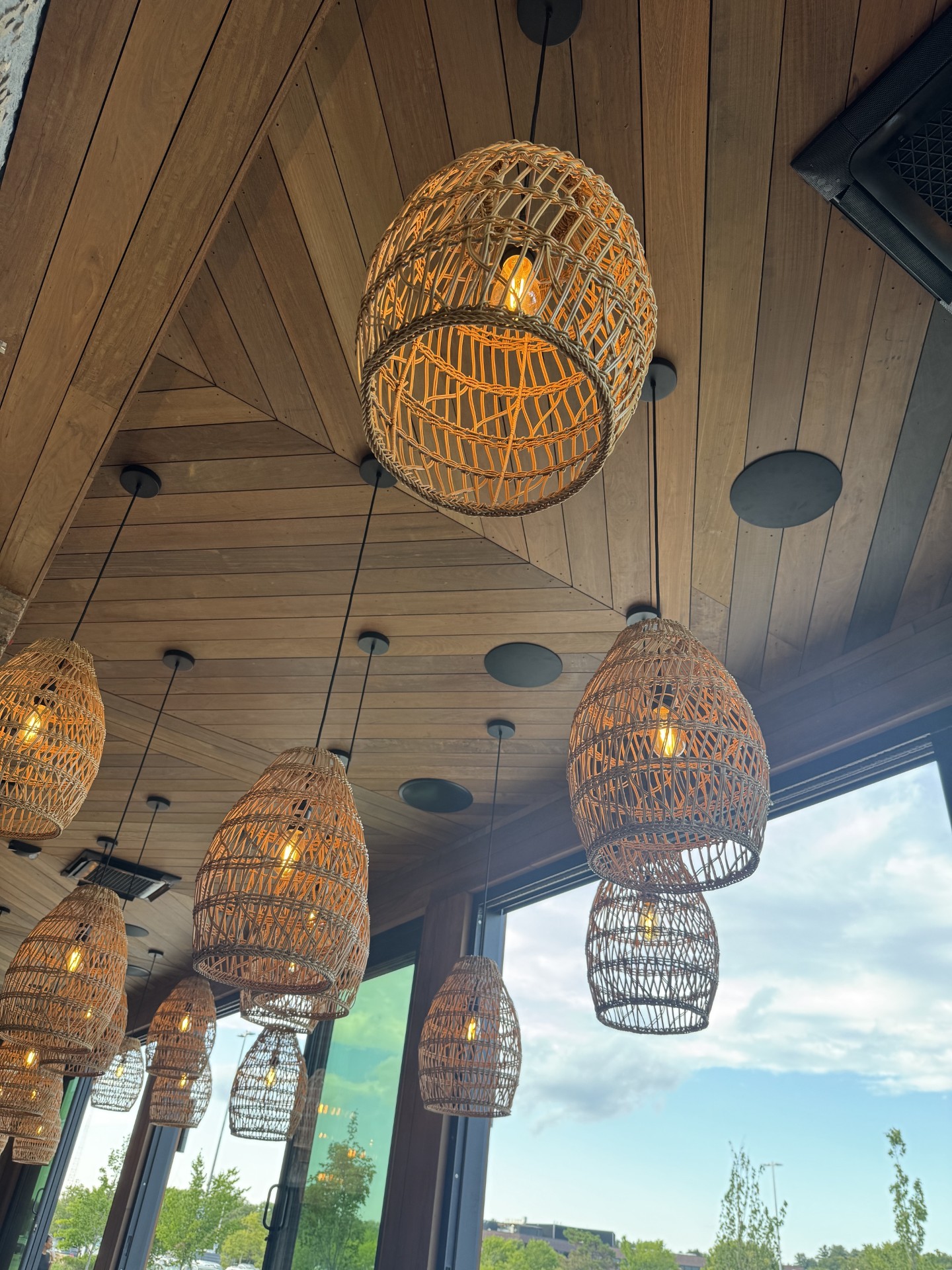
The architecture also presented different conditions. Ceiling heights varied significantly from those in New York, and the restaurant included distinctive architectural elements such as a suspended bamboo drop ceiling and an open solarium with a solid wood ceiling.
Sound Insight turned to SoundTube’s design team to model the space before installation. Sound and heat mapping helped establish loudspeaker quantities, locations, mounting heights and predicted coverage.
While some speaker positions ultimately required minor field adjustments to accommodate architectural elements, the fundamental loudspeaker count and system design remained consistent with the predictive model.
Making pendant audio part of the architecture
In building out the space, Sound Insight found a way to incorporate the pendant loudspeakers into the suspended bamboo ceiling, capitalizing on the flexibility of the pendants while maintaining the appearance of a built-in system.
The Burlington installation included 26 pendant loudspeakers supported by 10 subwoofers. Ten loudspeakers and two additional subwoofers provided additional coverage in other areas of the restaurant. The approach was adapted from the successful New York system, with slight adjustments made to accommodate the different spaces.
Multiple zones for a changing restaurant environment
Behind the loudspeakers, a Control4 platform provides management of multiple audio zones and sources throughout the restaurant. Episode 70-volt, 1,200-watt amplifiers with DSP provide amplification and system processing, while a Triad audio matrix supplies source distribution and independent gain control.
Systems & equipment
SoundTube Audio
- 26 RS600i Series pendant loudspeakers
- 10 RS1001i-II-T subwoofers
- 10 CM82-BGM-II loudspeakers
- 2 CM1001d-T subwoofers
Audio and Control
- Control4 multi-zone, multi-source control platform
- Episode 70V 1,200-watt amplifiers with DSP
- Triad audio matrix with independent input gain control