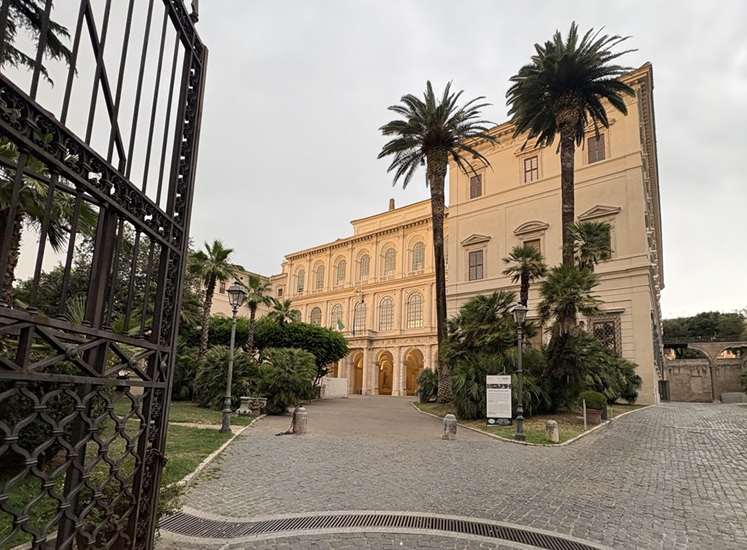
I just got back from a week-long trip to Italy for a wedding that my wife and I turned into a full Italian experience, complete with a cross-country drive and stops in Rome, Abruzzo, and Florence.
I didn’t go looking for inspiration for the custom integration industry. I went to eat my weight in pasta, drink great wine, and immerse myself in a different culture for a change. But somewhere between wandering through Renaissance architecture, touring historic villas, and eating dinner in restaurants housed in buildings older than the United States, I couldn’t help but notice something familiar.
Italy is a modern, first-world country that places enormous value on preserving its history and architecture. Nowhere was that more apparent than in the way technology was integrated into that history. Whether it was discreet lighting, modern climate control, hidden speakers, or carefully concealed electrical systems, today’s conveniences existed without competing with the spaces around them. In many cases, you barely noticed they were there at all. The experience comes first, and the technology simply supports it.
One example that stood out was air conditioning, or more accurately, the lack thereof or how carefully it’s hidden. Before the trip, I came across an article discussing Europe’s relatively slow adoption of air conditioning, in part because visible outdoor units can detract from historic architecture. After spending a week walking through Italian cities during a heat wave that saw temperatures well into the 90s (in Fahrenheit, sorry Europeans), that perspective made a lot more sense. Where modern HVAC systems had been added to some buildings (and unfortunately not to one of our Airbnbs), they were often tucked out of sight or incorporated as discreetly as possible. Preserving the character of the building clearly mattered.
Technology Should Support the Space, Not Define It
That’s a lesson our industry could stand to remember. Custom integration has made incredible strides over the past two decades. Displays are larger, audio is more immersive, lighting systems are smarter, and home control platforms are more capable than ever, yet sometimes we still fall into the trap of treating technology as the destination instead of the vehicle.
It’s easy to celebrate the perfectly organized rack room, the impressive equipment list, or the home theater packed with every available feature. Those projects deserve recognition because they require tremendous skill and craftsmanship, but homeowners don’t wake up every morning thinking about HDMI matrices or network switches. They think about how their home feels to live in.
The best projects in the industry aren’t memorable because they contain the most technology. They’re memorable because the technology quietly fades into the background of the beautiful home.
That’s exactly what stood out to me in Italy. Some of the world’s most beautiful buildings have been adapted for modern life without sacrificing their identity. Electrical systems, Wi-Fi, security, lighting, and climate control have all been integrated into structures that were never designed to accommodate them. The objective wasn’t to showcase the technology. It was to preserve the experience.
As we gear up for another awards season and Home of the Year judging, I remind you all that what catches our eyes is how these systems live within the home. These homes you all work in are stunning, and it’s your responsibility to preserve that architecture and design at all costs while still offering the comfort of technology.
That philosophy also changes how we think about luxury. Luxury isn’t defined by the number of speakers in a room or the size of a video wall. Walking through Italy, luxury revealed itself in different ways: thoughtful proportions, timeless materials, exceptional craftsmanship, and spaces designed to encourage conversation, comfort, and connection.
As integrators increasingly collaborate with architects, builders, and interior designers, that distinction becomes even more important. Clients aren’t investing in technology for technology’s sake. They’re investing in homes that are comfortable, functional, beautiful, and built to last. The best integration enhances those qualities rather than competing with them.
Great Design Outlasts Great Technology
Italy also offers another reminder that feels especially relevant in an industry driven by annual product launches: great design endures.
Many of the buildings that attract millions of visitors every year have survived for centuries because they were designed around enduring principles rather than passing trends. While displays, processors, and streaming platforms will inevitably evolve, the infrastructure we install and the design decisions we make should be able to evolve alongside them.
That means thinking beyond today’s products. It means designing flexible systems, investing in robust wiring and networking, planning for future upgrades, and creating spaces that won’t feel dated when the next generation of technology arrives.
If my trip to Italy reminded me of anything, it’s that the most memorable spaces aren’t defined by what has been added to them. They’re defined by how thoughtfully everything works together to the point where you stop noticing the technology altogether and simply enjoy being there.