CEDIA today announced that the U.S. Department of Labor has approved its national apprenticeship framework for the Technology Integrator occupation.
The framework was approved Nov. 3, coinciding with Global Smart Home Day, and brings the profession into the nation’s recognized apprenticeship system alongside other home-based and construction trades. CEDIA says it is the first apprenticeship program created and owned by the association to receive federal endorsement.
“Our industry has evolved significantly, and the work of today’s technology integrators requires expertise across a wide range of technical disciplines,” Friedman said in the announcement. “This approval recognizes that level of skill, brings our profession into the broader skilled trades community, and gives businesses another tool to invest in the people who will shape its future.”
The approval delivers on one of the advocacy goals Friedman has pressed hardest during his tenure, and it lays groundwork for a larger one: getting the federal government to recognize technology integrator as an official occupation.
What the Framework Includes
The hybrid framework calls for 4,000 to 6,000 hours of on-the-job learning, 630 hours of related technical instruction and 83 competencies. Training spans integrated system installation, networking, audio and video, lighting, programming, automation, cybersecurity and troubleshooting. Related instruction includes passing CEDIA’s Cabling Infrastructure Technician (CIT) and Integrated Systems Technician (IST) exams.
One notable provision is a supervision ratio of two apprentices to one qualified journeyworker, which CEDIA describes as rare. In practice, that lets an integration firm train more new technicians using the experienced staff it already has.
The framework is also built to work with trade schools, which can fold classroom instruction, content and hands-on labs into their curricula. Graduates can then complete the on-the-job hours and demonstrate competencies while employed by a participating integrator.
Paul Dolenc, CEDIA’s vice president of education and training, said the approval “creates opportunities to pursue federal and state workforce development funding and grants” and supports the school partnerships CEDIA is developing. “This is an important step toward addressing the industry’s long-term workforce challenges,” he said.
Henry Clifford, a CEDIA board director and founder of Livewire, helped shape the framework and said he expects to be among the first employers to put it into practice.
The approval does have limits. It covers CEDIA’s national guidelines, not individual employer programs. Integration businesses that want to participate still have to complete the applicable federal or state registration process and meet requirements for qualified supervision, training opportunities and documentation. CEDIA says further guidance for businesses will come as implementation plans are finalized, and an FAQ is available at cedia.org/apprenticeship.
A Goal Years in the Making
Friedman has framed CEDIA’s mission around three pillars he calls ACE: advocacy, connection and education. In a July interview on the CE Pro Podcast, he said CEDIA had taken its long-running state-level advocacy program, led by Director of Government Relations Darren Reaman, to the federal level. One bill had already passed that helps families save for their children to enter the field, he said.
“The next big thing is we had a Department of Labor meeting in March, and we want to establish an official government apprenticeship program so people can have an entry point into this industry,” Friedman said, “and also have the integrator occupation standardized and accepted by the government.”
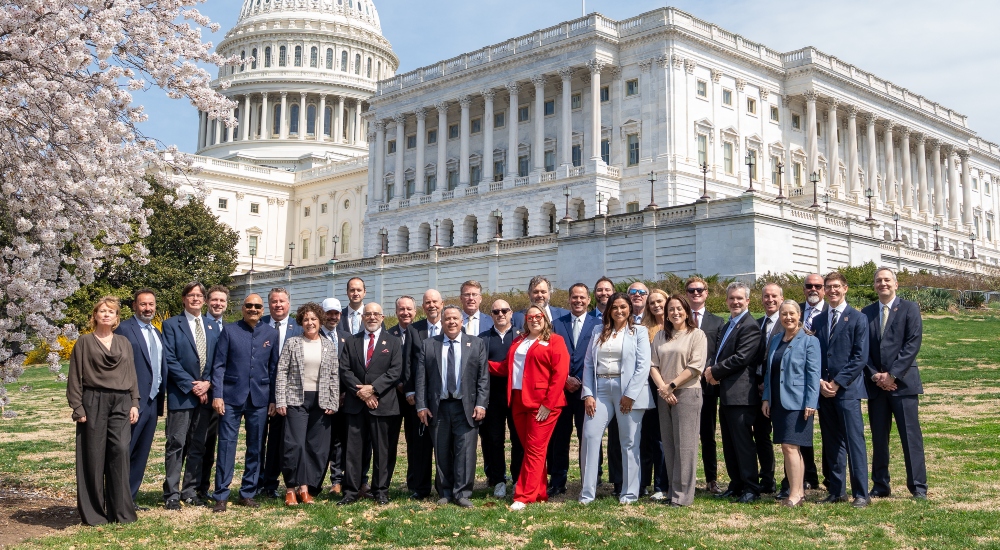
That meeting came during CEDIA’s third annual Day on Capitol Hill in March 2026, when association leaders, the CEDIA Board of Directors and industry partners traveled to Washington. According to CE Pro’s coverage, CEDIA engaged with the Department of Labor to advance its push for an official “Technology Integrator” classification, building on efforts from 2025, and explored a national apprenticeship pathway to strengthen the industry’s talent pipeline.
The same trip included lobbying on workforce bills, including the Student Debt Alternative and CTE Awareness Act (H.R. 1641), which would require the Department of Education to publish data on career and technical education programs, and the Veterans Energy Transition Act (H.R. 4105), which would fund grants connecting veterans and their spouses to skilled energy careers, including CEDIA industry careers.
By May, Friedman was predicting the outcome. In an open letter to the CEDIA community published by CE Pro, he wrote that CEDIA’s meetings with the Department of Labor “will result in the first-ever official U.S. apprenticeship for our channel.”
“Imagine… young people seeing the integrator’s job as a recognized career path by the United States Government,” he wrote, adding that similar work is happening around the world. The letter also pointed to the CEDIA Foundation’s free training for new entrants as part of the same talent-pipeline effort.
The Bigger Prize: An Official Occupation
The apprenticeship runs parallel to CEDIA’s effort to have technology integrator added to the federal government’s list of recognized occupations, which is revised roughly every 10 years.
“Technology integrator has never been an official occupation,” Friedman told CE Pro in July, noting that the current revision process began about three years ago and is set to finish in 2028. “I would love to be sitting in this seat when the United States government announces that technology integrator is an official occupation of the country.”
For Friedman, both efforts serve a broader goal: having integrators treated as an equal partner alongside architects, designers, electricians and HVAC contractors from the start of a project. “Having that technology integrator occupation will help us with that as well,” he said.
He pointed to CEDIA research with NKBA that found a lack of awareness among designers about what integrators do, and to CEDIA’s new design and build department, led by designer Andrea Harvey, as part of the association’s response.
CE Pro’s coverage of the Capitol Hill visit made a similar point, noting that the industry broadly remains relatively unknown, including among policymakers. To address that, CEDIA Chairperson Amanda Wildman and Immediate Past Chairperson Alex Capecelatro presented an “AI Comes Home” smart home demonstration at the Rayburn House Office Building. Rep. Rudy Yakym (R-Ind.) hosted it, in cooperation with the Congressional Smart Cities Caucus.
“I think we’re going into an era where the integrator becomes as essential as the electrician, as the plumber, as any other home systems professional is,” Friedman said in a July 2026 CE Pro Podcast. “I would encourage them to start thinking that way today, because I think we’re gonna get there.”
A Milestone in Friedman’s Final Stretch
The approval arrives as Friedman prepares to step down. In his May letter, he announced he will retire in 2027, saying he gave the board a long notice period for an unrushed search because CEDIA has never had a CEO overlap. He set no official end date and promised to stay on as long as his successor needs him.
In July, he said he expected a successor to be in place early in 2027. That timeline means the occupation decision he hopes to see will likely come after he leaves the job, which he acknowledged, saying he plans to champion it “from the sidelines.”