Power and energy systems remain sparse on lighting projects according to recent data gleamed from CE Pro’s 2026 Lighting & Shading Survey, despite the importance of these systems being able to work in unison with one another.
CE Pro’s 2026 Lighting & Shading Survey seeks to better understand home ecosystems
This year for the 2026 Lighting & Shading Deep Dive, CE Pro asked integrators what other systems are commonly integrated into lighting and shading systems. The purpose was to get a better understanding of how lighting and shading supports an integrator’s other solutions both in function and sales given data we’ve gathered on the latter.
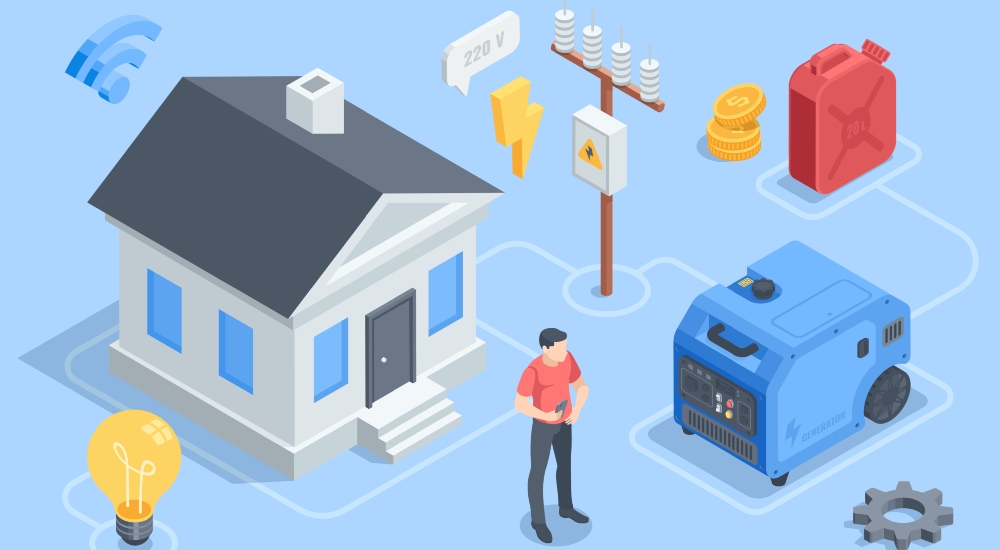
Energy and power by far the least connected systems
Energy management solutions were by far the least connected systems with respect to lighting and shading. Only 3% of respondents said they “Always” included Energy Management systems on their lighting and shading projects. The larger share (62%) said they either “Rarely” or “Never” installed Energy systems alongside lighting and shading.
Why that’s a big deal
If you’ve ever been to Lightapalooza, you know that while “Light” is in the name, the show encompasses the broader spectrum of technologies that make up lighting design, with power and energy being the first add-ons to the show in terms of product categories.
There’s a few reasons as to why energy and power management is so important:
- Bad power will quickly cook the microprocessors found in most integrator-grade lighting, leading to shorter lifespans.
- Issues with power can translate to the dreaded flicker one might get from dimming LED bulbs.
- Proper load management is critical to ensuring lighting can still be run during outages without overtaxing the home grid.
Some extra context
Energy management in general remains underrepresented on projects, especially compared to some of the more established product categories like AV and security.
In CE Pro’s 2026 State of the Industry, energy management was a category that continued to generate a lot of hype with little action from integrators, with one of the main challenges cited being a lack of sales knowledge to present the category effectively for clients.
AV most popular to pair with lighting & shading (aside from the obvious)
Unsurprisingly, Control/Automation and Lighting/Shading themselves are the most common, but right behind that with 56.7% of firms saying it’s a common occurrence (classed as “Often” in the survey), are AV systems. Another 16.7% go so far as to say every project featuring lighting and shading integrates with AV.
“Lighting is a natural extension of AV control,” says Cole Hathcock, Lighting Designer for Logic Integration. “Unified control platforms allow for the development of scene-based experience between lighting, audio and shading, and that in turn feeds into expanded service and maintenance agreements.”
Are there other systems integrators should be integrating with lighting and shading?
While a lack of sales knowledge is an understandable limitation when it comes to selling energy management systems, that’s still a big opportunity being left on the table given the importance of the category in supporting lighting and shading post-install. But are there any other systems integrators should be looking at as good companions to go along with lighting and shading?
Taking up the middle of the pack in our findings, security has its list of supporters with 42.8% saying they either Always or Often integrate. That’s a little surprising given how both lighting and shading play into privacy and crime prevention strategies.
You also have HVAC systems getting less love, with 35% falling into that Always or Often range. Again, it’s surprising given the role that shading plays when it comes to thermal regulation, but that could also come down to how difficult it can be to integrate other home technology into HVAC systems.
The point is this: plenty of the less paired systems aren’t that way because they make no sense. Quite the contrary. They make some of the most sense to pair with lighting and shading; the problem is they all have a degree of difficulty when it comes to their integration. That makes it a challenge for many, but a massive opportunity for those who can overcome.
Interested in learning more about the state of the Lighting & Shading category in 2026? Stay tuned for our continued coverage as part of our Lighting & Shading Deep Dive, and download the full report for all the insights needed to keep your business in the know when it becomes available.
FAQ
What’s the methodology behind CE Pro’s Lighting & Shading Survey?
Soliciting open participation from members of the custom integration (CI) industry, CE Pro opened its Lighting & Shading survey for the months of March and April, asking integrators to respond to questions related to their lighting and shading businesses for the 2025 fiscal year.
Analysis of these findings was conducted by CE Pro editors as well as Cole Hathcock, Lighting Designer for Logic Integration; and Jake Vitrofsky, COO of HEDSouth.
What is CE Pro’s Lighting & Shading Deep Dive?
The CE Pro Lighting & Shading Deep Dive holds a magnifying glass up to two of the fastest growing categories within custom integration (CI). For 2026, CE Pro has mixed up the formula, combining both categories into a single, extensive look into two areas of an integrator’s business that have become inextricably linked to one another in attempt to not only identify opportunity and growth for business, but also to see how these powerhouse categories are uplifting other technology stacks within an integrator’s arsenal.
This article is part of a series for CE Pro’s Lighting & Shading Deep Dive exploring different aspects of the lighting and shading categories for custom integration.