WASP Brings Wireless Audio, Amplification to In-Wall Speakers
Wireless audio system includes amplifiers that fit behind the wall and receive power via low-voltage cables that don't require an electrician.
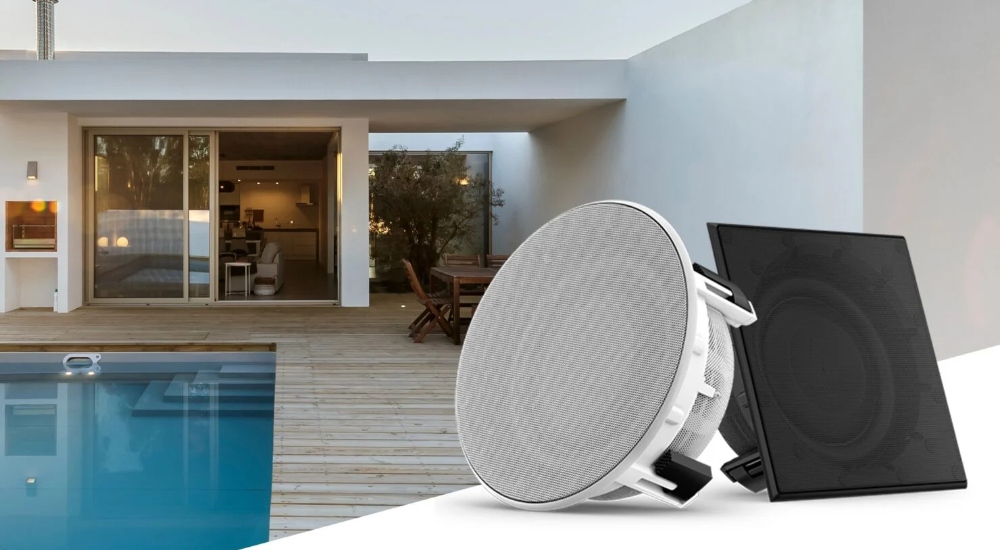
WASP’s 50-watt digital amplifier powers speakers from behind the wall.
Last year we saw some great modules for wireless-enabling your freestanding speakers, like the Proficient AirFlex.
Most of the devices comprise a wireless transmitter that plugs into a source or a surround sound processor, and an RF receiver that powers and distributes audio to a pair of speakers, most notably the rear surrounds.
As handy as these RF transceivers may be, they generally ignore in-wall and on-wall speakers.
Now WASP Audio Technologies has a solution for making architectural speakers wireless. The Wireless Audio Solution Products (WASP) basically feature the same two elements of other wireless speaker modules: an RF transmitter and an RF receiver with amplification to power the speakers.
The difference is that the WASP receivers were built specifically for installing in the wall, with patents pending for the design.
A low-voltage cable runs behind the wall from the receiver/amp down to a receptacle that would be installed near an AC outlet. Simply run a jumper cable from the WASP receptacle to the power.
Although the company demonstrated 75-watt amplifiers during CES 2011, WASP founder David Tschirpke told CE Pro that the power is probably overkill for most in-wall speakers. The final version of the products will feature 50 Watt Class D amps.
Currently, WASP is using 2.4 GHz wireless technology from STS, a popular maker of wireless audio technology that was acquired last year by SMSC.
A WASP system with a two-channel hub and two RF speaker amp modules will retail for $599 – about $100 to $200 more than the out-of-wall solutions offered by competitors.
A 5.1- and 7.1-channel RF system is in the works.
The company is seeking distributors.

The WASP amplifier slips behind the wall. It hooks up to a low-voltage cable that drops down to a companion receptacle that is patched to a nearby AC outlet via DC transformer. No electrician required.

The first WASP product is a two-channel wireless audio system, but 5.1- and 7.1-speaker solutions (below) will follow.

---------------------------------------------

Follow us on Twitter!
@juliejacobson
@ce_pro
Most of the devices comprise a wireless transmitter that plugs into a source or a surround sound processor, and an RF receiver that powers and distributes audio to a pair of speakers, most notably the rear surrounds.
As handy as these RF transceivers may be, they generally ignore in-wall and on-wall speakers.
Now WASP Audio Technologies has a solution for making architectural speakers wireless. The Wireless Audio Solution Products (WASP) basically feature the same two elements of other wireless speaker modules: an RF transmitter and an RF receiver with amplification to power the speakers.
The difference is that the WASP receivers were built specifically for installing in the wall, with patents pending for the design.
A low-voltage cable runs behind the wall from the receiver/amp down to a receptacle that would be installed near an AC outlet. Simply run a jumper cable from the WASP receptacle to the power.
Although the company demonstrated 75-watt amplifiers during CES 2011, WASP founder David Tschirpke told CE Pro that the power is probably overkill for most in-wall speakers. The final version of the products will feature 50 Watt Class D amps.
Currently, WASP is using 2.4 GHz wireless technology from STS, a popular maker of wireless audio technology that was acquired last year by SMSC.
A WASP system with a two-channel hub and two RF speaker amp modules will retail for $599 – about $100 to $200 more than the out-of-wall solutions offered by competitors.
A 5.1- and 7.1-channel RF system is in the works.
The company is seeking distributors.

The WASP amplifier slips behind the wall. It hooks up to a low-voltage cable that drops down to a companion receptacle that is patched to a nearby AC outlet via DC transformer. No electrician required.

The first WASP product is a two-channel wireless audio system, but 5.1- and 7.1-speaker solutions (below) will follow.

---------------------------------------------
Follow us on Twitter!
@juliejacobson
@ce_pro
CES Spotlight
|
Why Key Suppliers Are Skipping Trade Shows CES 2012 Sets Attendance Record Samsung ‘Smart Window’ Converts Windows to TVs, Touchscreens Inside Sanus Systems’ CES 2012 Booth 6 Best Demos of CES 2012 Best Products of CES 2012 CES Dubious Achievement Awards: Smartest, Dumbest, Most Surprising HDBaseT Still Dreams of Major CE Adopters More filed in CES |
My Tour of High-Performance Audio at CES
Top Products of CES 2011 |
Subscribe to the CE Pro Newsletter
Read more Wireless A/V stories
The Next Big Thing From Sonos: What Could it Be?Atlona at ISE 2012: 4X4 HDBaseT, More Wireless Coming
NuVo Readies Wireless Multiroom Audio System, Android Controller
Russound DMS3.1 is First Player with Multiple AirPlay Streams
WiSA to Set Standard for Wireless Audio
More in Wireless A/V
Article Topics
News · Product News · Audio · Speakers · Events · CES · Wireless A/V · Wireless Av · Ces 2011 · Wasp ·About the Author

Julie Jacobson, Editor-at-large, CE Pro
Julie Jacobson is co-founder of EH Publishing and currently spends most of her time writing for CE Pro, mostly in the areas of home automation, networked A/V and the business of home systems integration. She majored in Economics at the University of Michigan, earned an MBA from the University of Texas at Austin, and has never taken a journalism class in her life. Julie is a washed-up Ultimate Frisbee player with the scars to prove it. Follow her on Twitter @juliejacobson.
1 Comments (displayed in order by date/time)
Page 1 of 1 comment pages


Julie,
I hope you are well. Two things: the 2.4GHz band is saturated with other devices interfering with operation. It would be interesting to see how this system functions in a busy environment. Second, look at Tom’s comment - people use (abuse) CEPro for SEO, that’s not cool.