A home office is easy to get right on paper when focusing exclusively on the raw components. Creating a workspace that actively supports the way a person thinks, creates and recovers between projects is far harder. It’s that distinction that Baltimore-based custom integrator Gramophone set out to achieve in a residential project in Lutherville, Maryland, employing smart home technology to create a home office design that supports both deep focus work and restorative mental resets.
The Challenge: Convincing the Client to Embrace the Dark
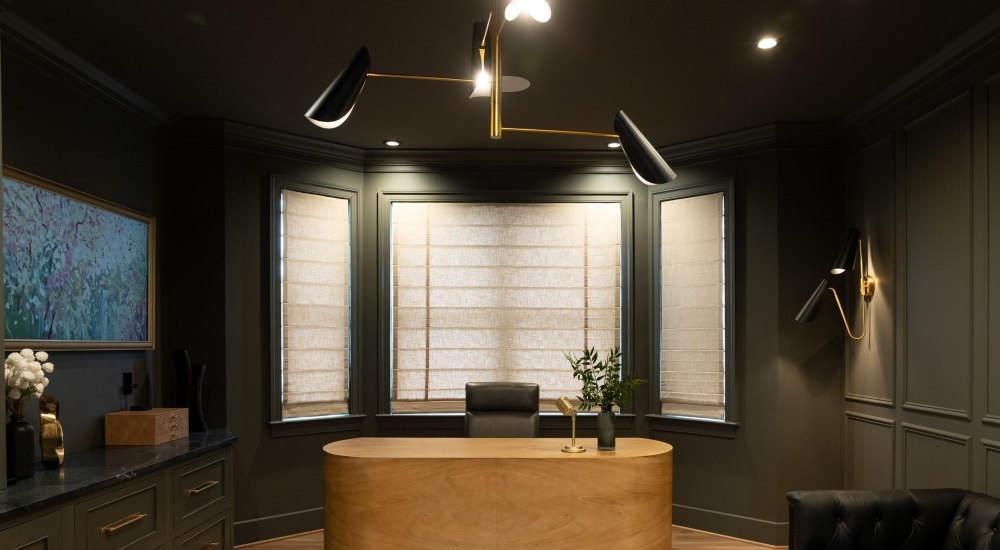
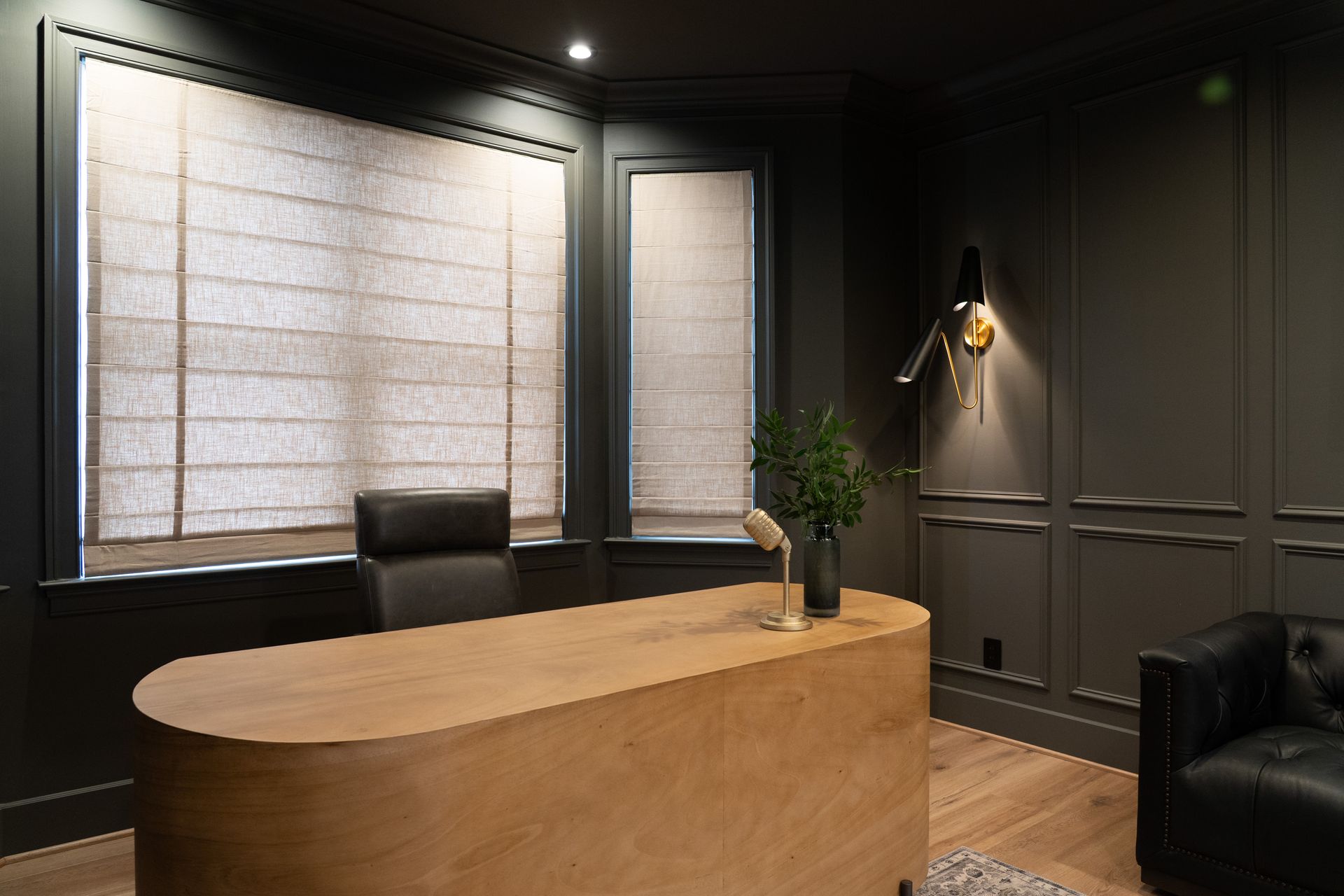
One look at the finished space tells you the most significant obstacle had nothing to do with wiring. The room is enveloped in a deep, olive-toned color drench punctuated by warm brass hardware and the honey tones of a sculptural oval wood desk.
Every surface absorbs light rather than reflecting it. Getting the homeowners to embrace this over the traditional open, bright office designs was its own project.
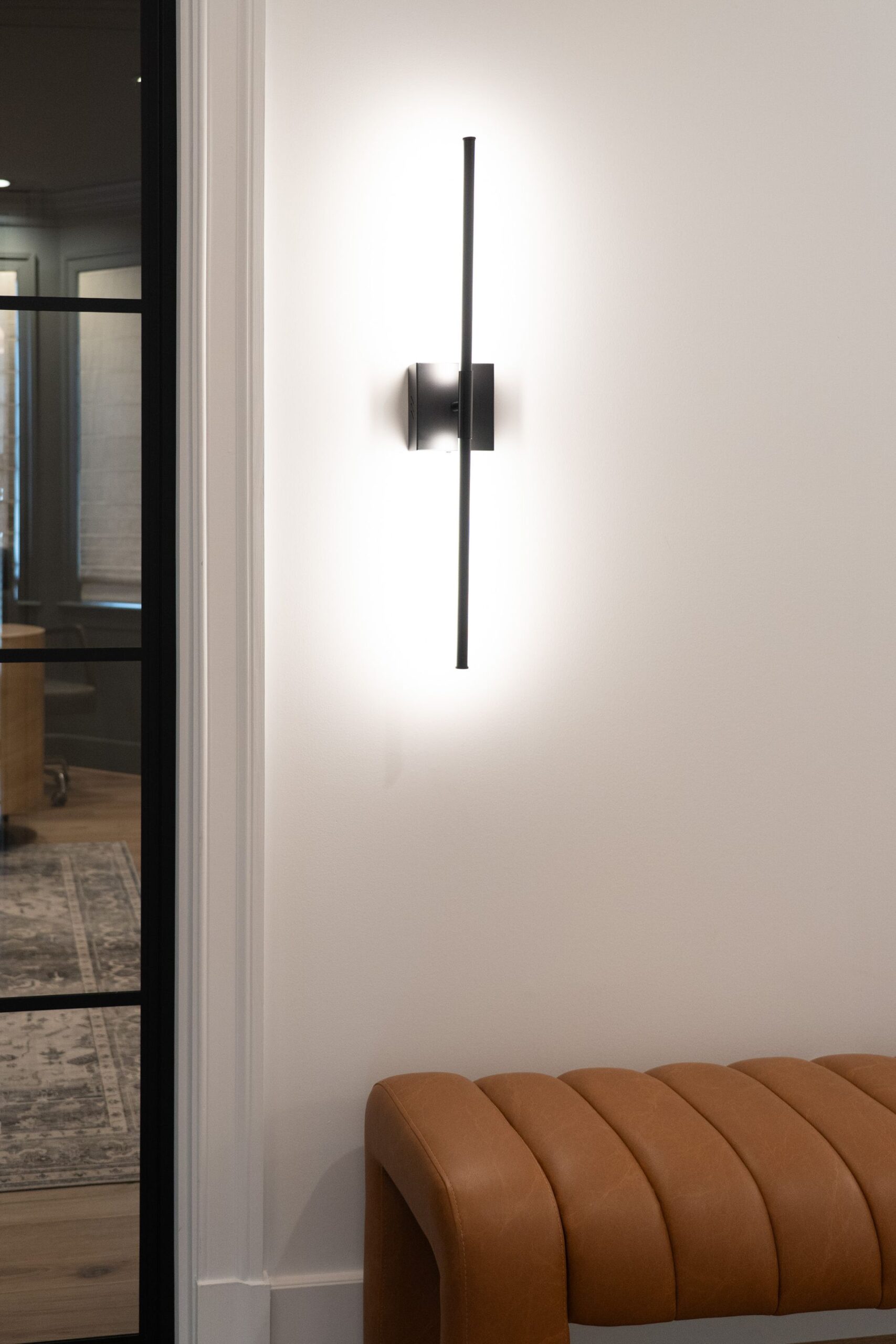
“The design intention was to create a cocoon-like environment for deep, focused work,” the Gramophone team explained, “but balancing this aesthetic with functional lighting was a technical and emotional hurdle.”
Persuading clients to commit to a dramatically dark palette for a space they depend on daily required building the case slowly. Ultimately, lighting plan was where Gramophone’s integration expertise became the deciding factor.
Layered Lighting as the Core Technology
A standard residential layout would have left the space feeling underlit regardless of fixture count. The solution required abandoning a single-layer approach entirely.
Gramophone engineered a three-tier lighting strategy. Recessed ambient fixtures handle the room’s foundational brightness, calibrated to work with the surface tones rather than fight them.
Architectural tape lighting then traces the room’s geometry in warm light, giving the space visual definition and perceived height without introducing a visible direct source.
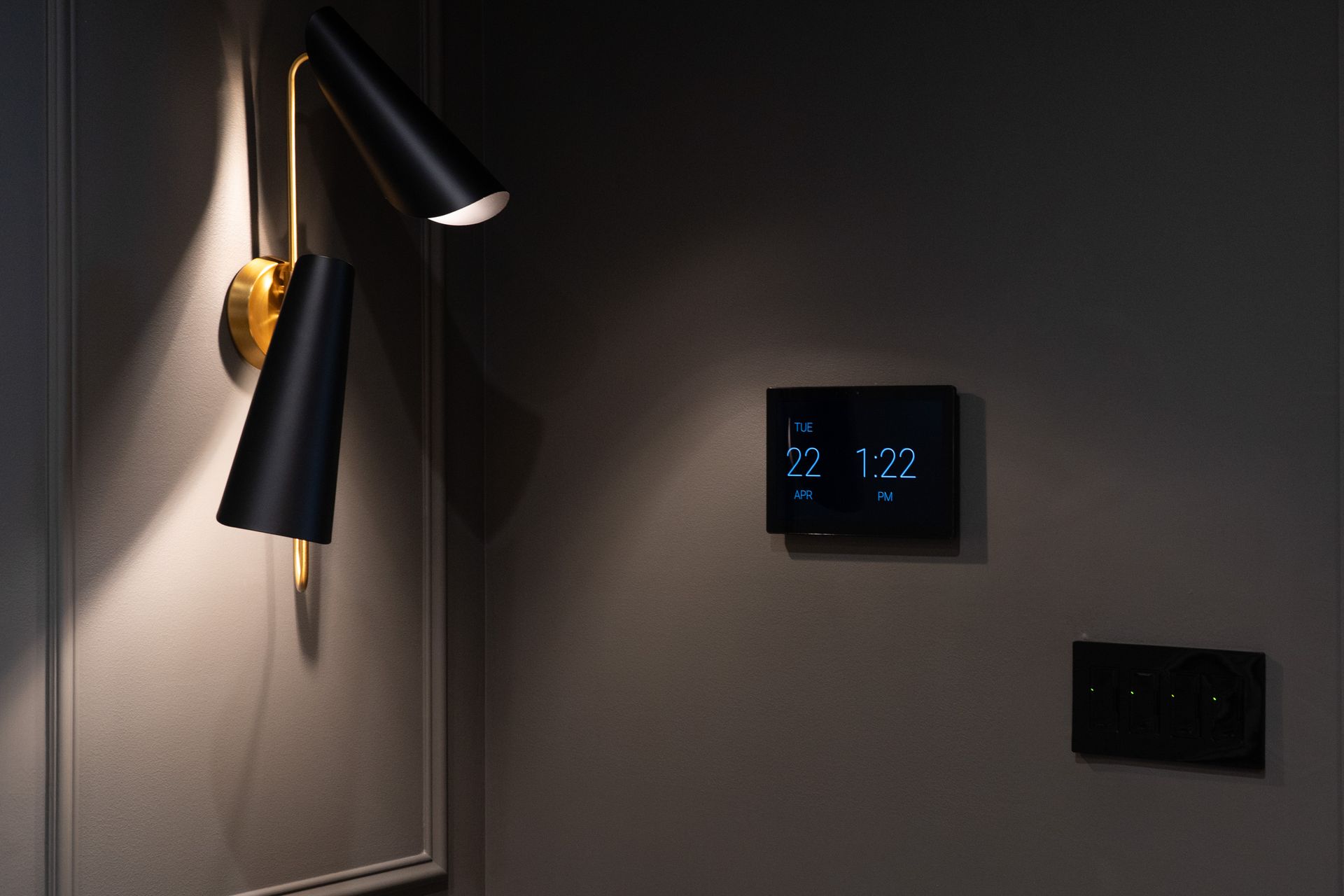
Finally, dedicated task lighting at the primary workstation and secondary surface deliver targeted clarity exactly where focus demands it, eliminating shadows at the desk while preserving the moody atmosphere of the broader room.
Critically, none of these layers operate independently. The system is fully dimmable and programmable, shifting automatically based on time of day and intended activity through custom-built scenes.
This kind of human-centric, circadian-aware smart lighting control is among the defining trends in high-performance residential design heading into 2026, and this project makes a concrete case for why it matters specifically at the home office scale.
Hiding the Infrastructure
The second challenge is one that all design-forward residential spaces face in custom integration: making the technology invisible without removing access from it.
A functioning home office is not a clean environment by nature. The administrative backbone of a working professional’s day generates real visual noise.
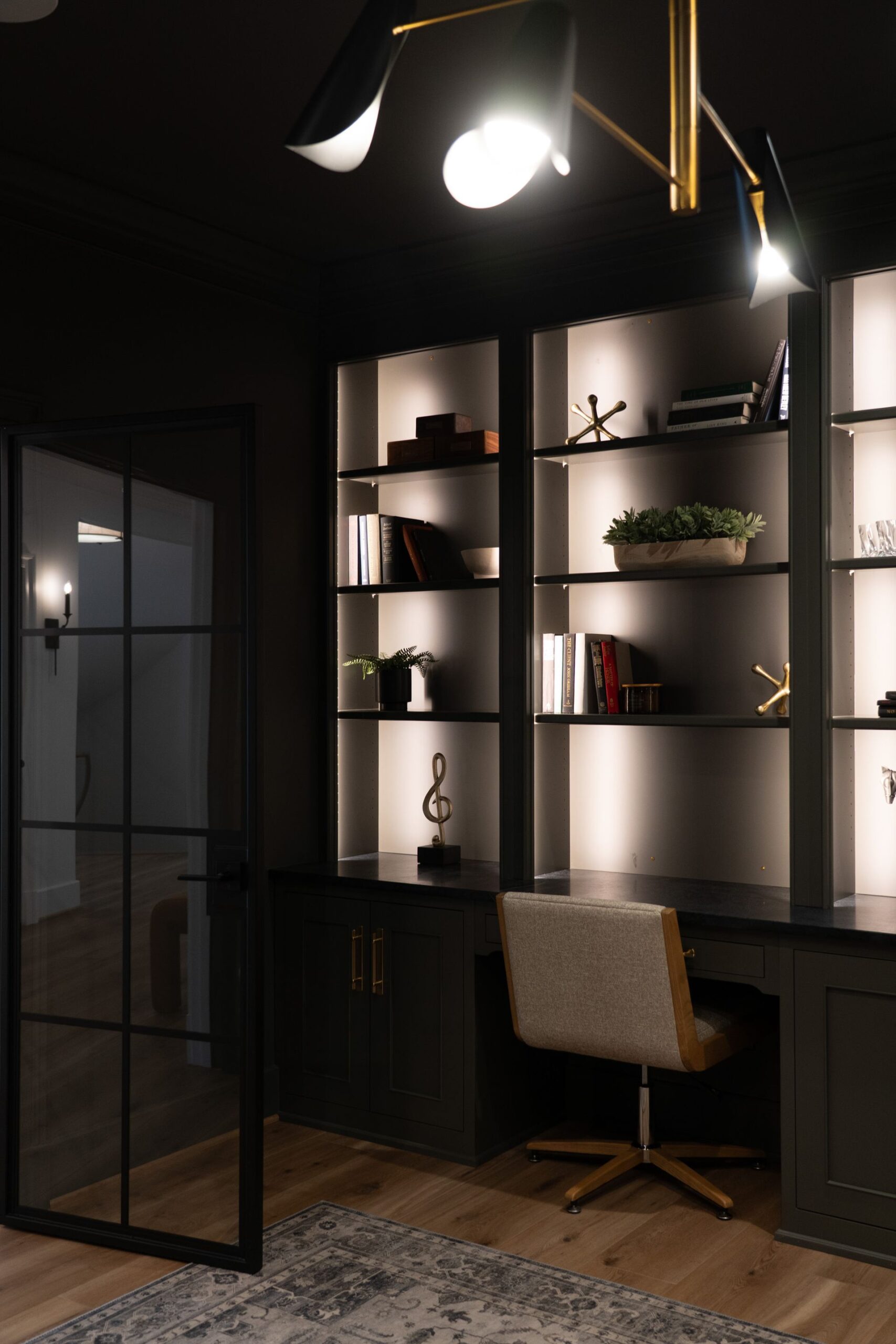
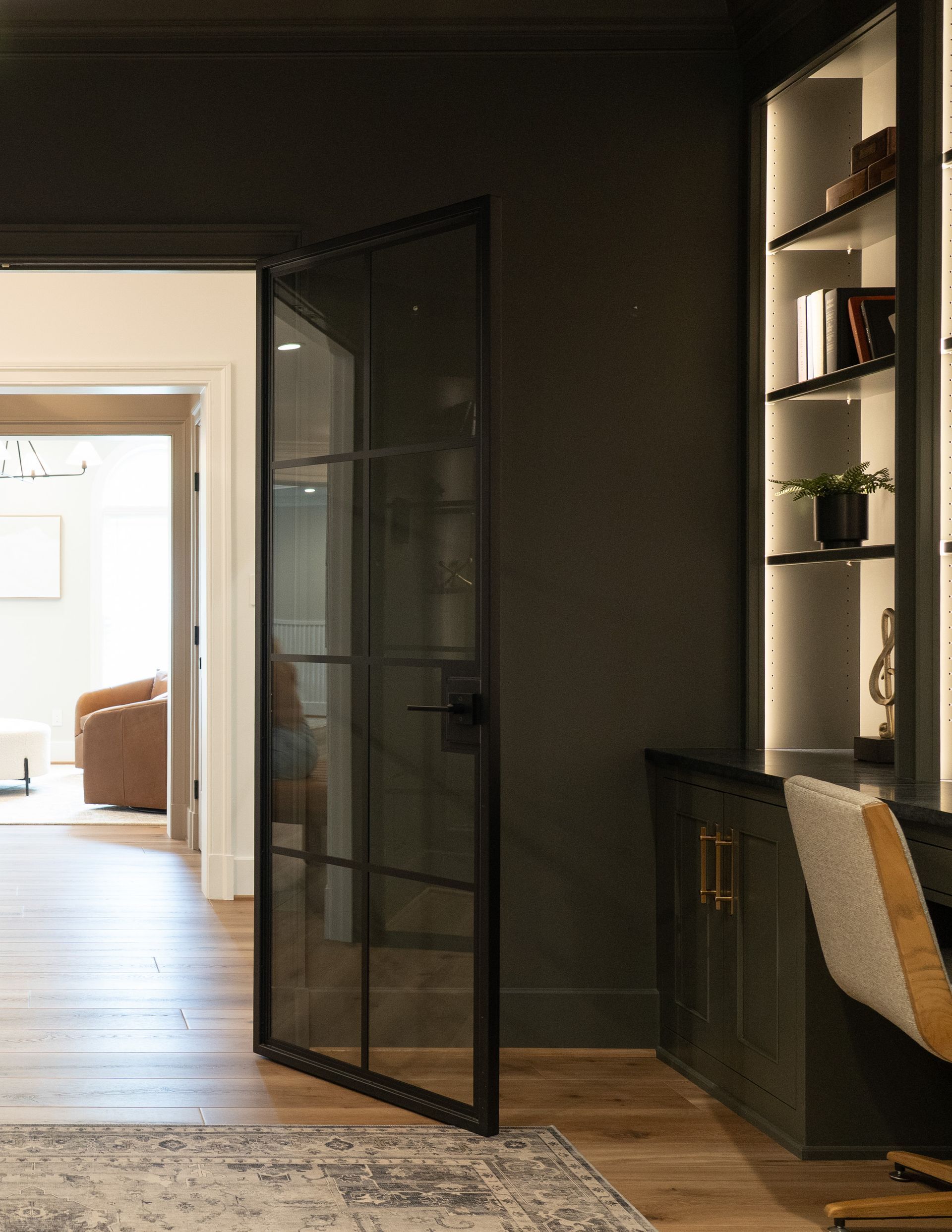
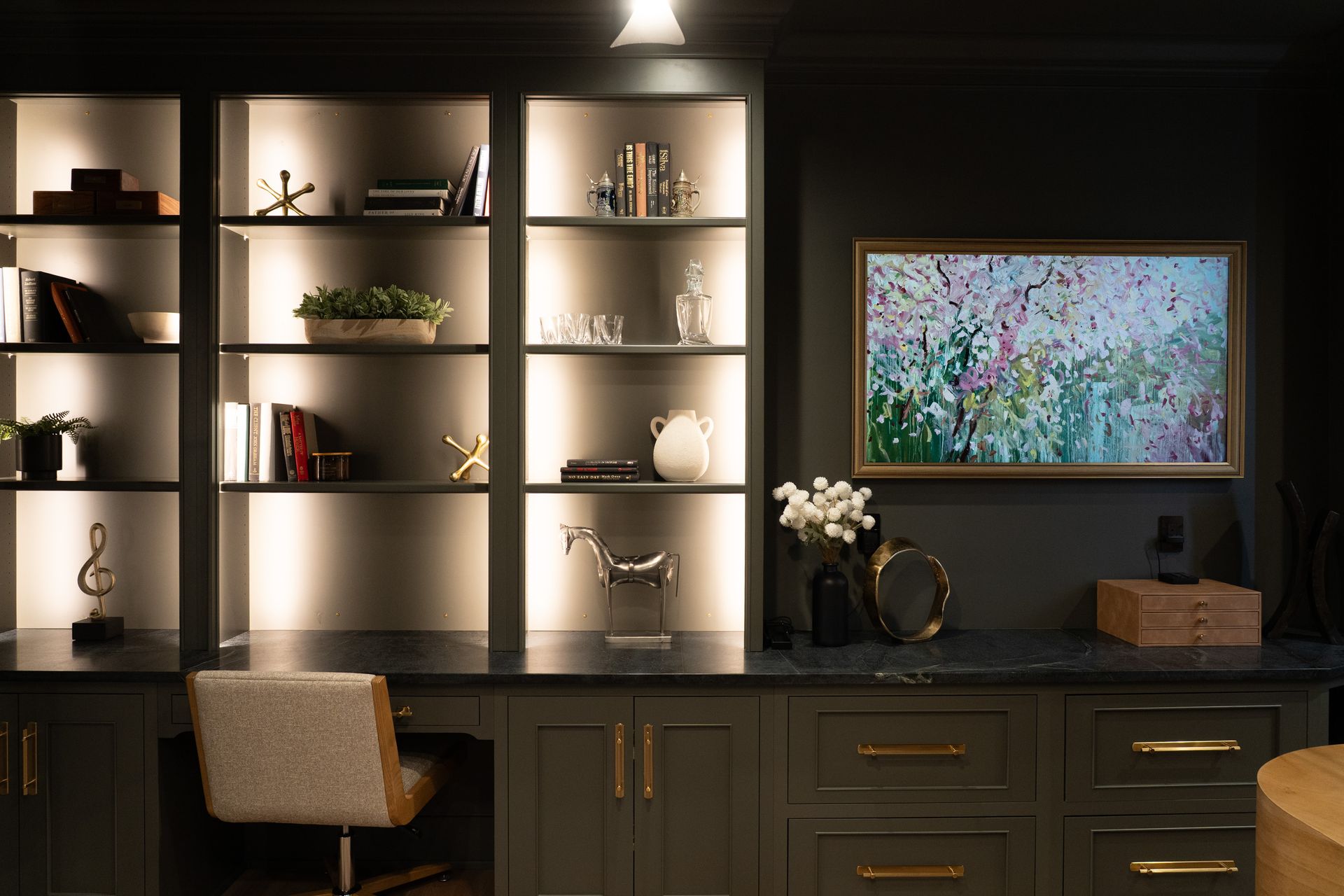
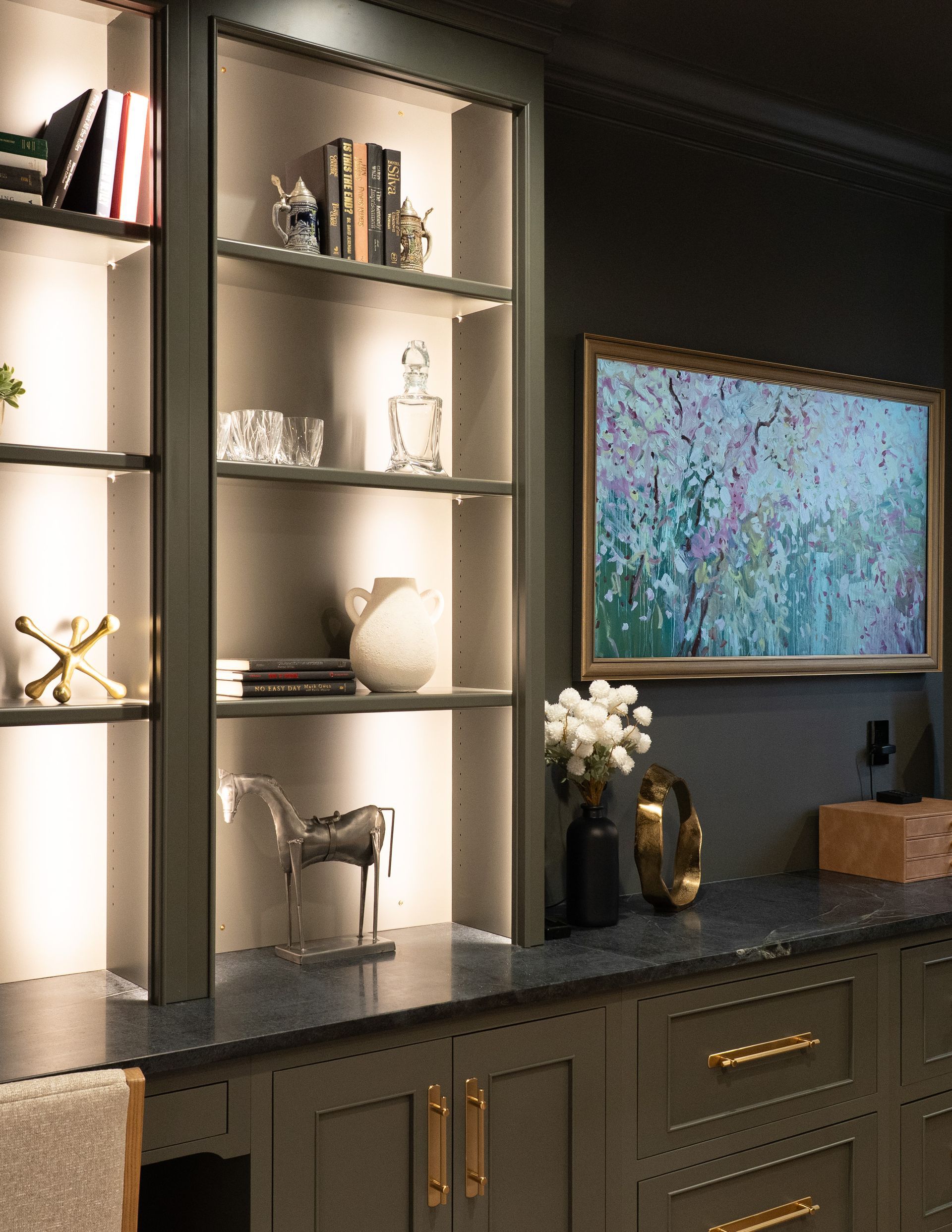
Gramophone addressed this through a custom cabinetry system running the length of one wall. The dark-painted cabinetry with brass-finish pulls conceals printer access, file drawers and equipment storage behind a unified facade that reads as architecture rather than furniture.
Above, open shelving above allows for personal expression that prevents a highly controlled environment from tipping into sterility.
Two Zones, One Room
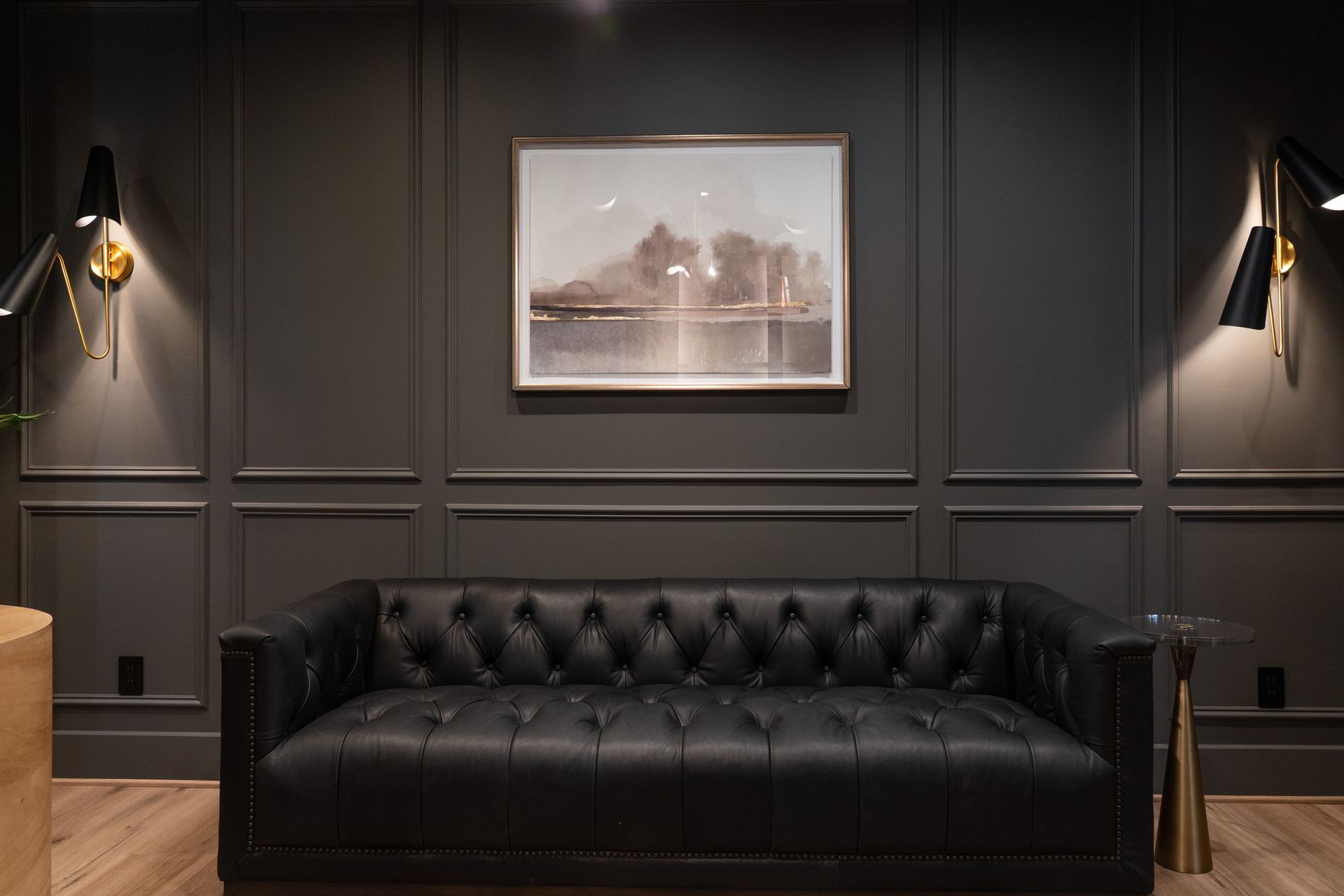
The workspace itself is structured around workflow flexibility rather than a single fixed mode. The primary workstation is encapsulated by an oval wood desk positioned at the bay window, naturally lit from behind by three sets of woven Roman shades that diffuse incoming daylight.
A secondary work surface and comfortable lounge seating provide space for collaborative work, informal conversation or the mental-reset moments sustained deep focus requires.
This multi-zone approach reflects a broader maturation in how high-end custom home office integration is now being specified. The pandemic-era desk-in-a-corner has given way spaces that accommodate solo deep work, casual collaboration and active recovery within the same four walls, supported by technology that adapts to each mode.
Equipment List
- Audio/Video
- Samsung 55” Frame TV
- Sonance Invisible IS8 speakers
- Audioquest cabling
- Control
- Control 4 automation system with
- 10” Control 4 Color Touch panel
- Control 4 handheld remote
- Lutron QSX lighting control
- Lighting
- Diode LED RGBW lighting
- Visual Comfort Lighting Fixtures
- Networking
- Luxul Switches
- EERO WiFi
- Power
- Furman/ Panamax surge protection
This project is part of our coverage for the 2025 CE Pro Home of the Year Awards. Presented annually at CEDIA Expo alongside the BEST Product Awards, the Home of the Year Awards represent the best of the best smart home innovations within the CEDIA channel. If you have a project you would like to submit to the Home of the Year Awards, consider following CE Pro on social media or subscribing to our newsletter for when we announce the next submission round.