Q&A: Richie Sambora, Bon Jovi Guitarist
Bon Jovi guitarist Richie Sambora says he prefers to use Marshall Amplification because the sound quality is good regardless of what guitar he uses.
Led by the songwriting duo of singer Jon Bon Jovi and guitar player Richie Sambora, the band’s hit list includes classics like “You Give Love a Bad Name,” “Wanted Dead or Alive,” and “It’s My Life” plus soon-to-be classics like “Have a Nice Day” and “Who Says You Can’t Go Home.”
It’s been a milestone past year for Bon Jovi, Sambora, keyboard player David Bryan and drummer Tico Torres, who along with their original bass player Alec John Such, received the Hall of Fame nomination (the band was passed over for induction this time around), journeyed through another world tour and released a Greatest Hits album.
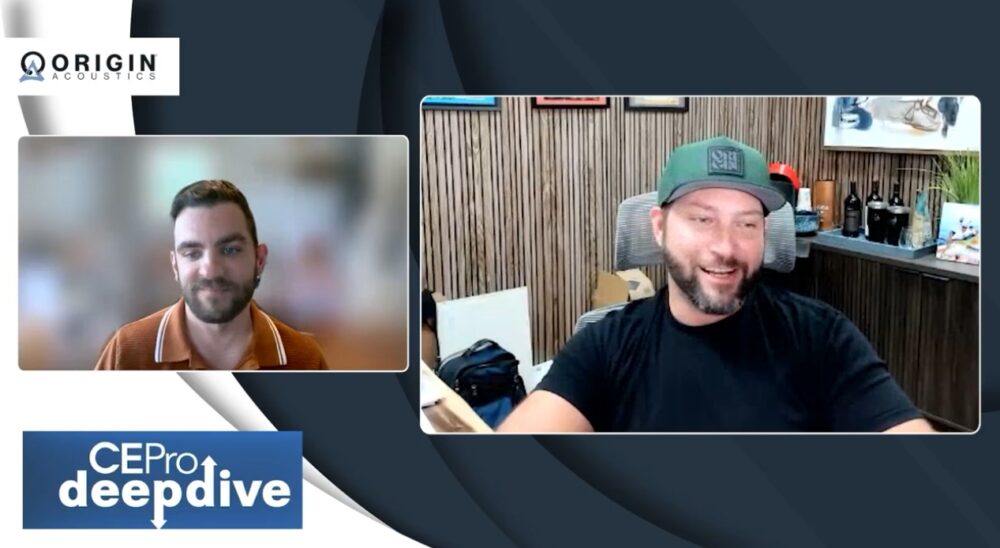
We recently sat down with Sambora to talk about the music business and home theater.
How does a veteran musician like yourself adapt to the trends of the music industry and sustain a career that’s been as successful as yours for so long?
There are a lot of components to that question. Number one, it’s the songs … they are the foundation of the business, whether you are selling records or touring. Number two is the dedication to evolution, from continuing to learn - I still learn all the time - to the dedication to touring. The most simple analogy I can make is, if you have a dog and you don’t pet it, it’s not going to like you - it’s going to bite you. So, in essence, when I play South America, South Africa or Australia, I have to keep going back to those places.
Very interesting, on stage [recently] in Toronto Jon said, “Now finally after 27 years we’ve effectively played every venue in Toronto” - starting out at the El Mocambo club, where the Stones played and where they recorded that live album [side three of Love You Live], to two nights at the Rogers Center.
The dedication to touring is a very important component [to long-term success]. Making sure that you go back to the area, doing the press to other commitments, it’s a very meat-and-potatoes kind of way to look at things.
Is being a musician different now than it was when you were breaking into the industry?
Yes! It’s lifestyle basically. Obviously, you mature and as you get older you have to take care of yourself physically. So the approach is very different in that respect. In the 1980s, everyone was [just] living. Think about it - just imagine what one of the biggest bands in the world was doing, and multiply it by about 20 on a daily basis. So the approach now is a lot different.
Essentially, the playing part of it is just the same. The way the band plays, our dedication to putting on great shows, but now we couldn’t live that way [we did back then].
How has technology aided you and the band to create and record music, and do you prefer the older analog technologies to digital technologies?
Yes, basically Jon and I recorded a lot of our songwriting sessions on iPhones. Both of us backed them up on iPhones. But we’re also old-school guys. Pro Tools [popular recording software] has become a great help to be able to edit and move things around so quickly, it’s a definite help.
If you listen to our older records, which are analog, they sound great too.
People listen to everything from low-resolution MP3 files to high-res 24-bit/96kHz WAV files. Do you have preferences?
The WAV file is better than a low-resolution file. It’s harder to transport, because it’s a dense file when compared to low-resolution file. Look,compressed music is not going to sound as good as analog ever, it just can’t, but the ear does get use to it.
From a musician/songwriter’s perspective, do you think that compressed music takes away from the listening experience?
Honestly, what happens is the ear trains itself to listen to it. A lot of people don’t know what analog sound is - I would say the majority of people. You have to be, what, 40 to know what analog was even, and then to actually remember it?
Subscribe to the CE Pro Newsletter
Read more News stories
People On the Move: Milestone AV, Definitive Technology, JL Audio, NACECEDIA White Paper Examines How to Build Mobile Device Wireless Networks
Arizona Passes Statewide Alarm Licensing Law
6 Pop Songs Great for Audio Demos
Channel Vision Adds 6710, 6721 Outdoor PTZ Cameras
More in News
About the Author

6 Comments (displayed in order by date/time)
There are a number of recording apps they could have potentially used, including one I believe that’s called Four Tracks.
Four tracks allows users to record up to four tracks and transfer it to a larger program.
In Richie’s case I’m sure all they were doing was mapping out song structures and other ideas.
Thanks Robert. I like learning about real world uses for technology and would like to see more interviews with musicians, film makers, etc.
thanks for reading Dana, the conversation about the iPhone started when I put my phone on the table to backup the interview, which was being videotaped.
Good article. I hope Richie will really catch on to the analog side of things and champion the idea of releasing all their stuff on LP, preferably recorded on analog tape.
I’d like to say, “Hi,” to Jon & David because I installed their 2 channel audio systems in their Jersey homes right after Slippery When Wet was released and they were already practicing songs, (at full volume), in Jon’s basement for their New Jersey album. I still remember the deafening hum that just came out of their amps when no one was playing at all.
When I first went to David’s condo to see the room where he wanted the system, he had an empty Steinway piano in the living room… it had not guts in it at all. When I asked him what was going on, he told me he was a trained classical pianist and Steinway was doing a custom job on it.
After he told me that, I immediately insisted that he come to my home to hear a true high end system because he was being proposed Bose 901’s and huge Polks, (I don’t remember the model number on the Polks, but they were the ones that you had to connect an umbilical cable between the 2 speakers), by another dealer. He was completely unfamiliar with the brands I was throwing at him.
At the time, I had 2 pairs of Magnepans lined up in a row driven by 2 Amber 200w amps, 1 Technics 400w Radio & Broadcasting amp with matching R&B vertical playing CD player, (it had a whopping 2x oversampling rate and weighed 30+ lbs), an Audio Research preamp, an Audio Pro 12” powered sub, and a JVC QLAF 55 turntable with a Dynavector 10X2 Ruby phono cartridge.
When David first saw the Maggies, he asked, “Those are speakers? Cool!” I sat him down dead center and put Slippery into the CD player. He kept saying, “Louder, louder, louder!”
Just before the Maggies began to brap from being over powered, I told him, “That’s as loud as it goes Dave, but what do you think about the detail and imaging?” He said it was different from anything else he heard, but I knew he wasn’t thrilled. I immediately threw on a vinyl copy of Slippery and he then perked up. Starting both the vinyl and CD at the same time, I I gave him an A/B demo of the 2 formats. There’s no question that David has an ear!
In any case, both Jon & David wound up purchasing Dahlquist DQ 20’s, Aragon 4004’s, ARC preamps, and Sony CD players from me and they were both very happy. Loud enough to get the job done, and much better than a Bose or Polk system.
Lastly, Jon & David are truly down to earth guys. Even back then when their success just began to really sky rocket , I didn’t get any attitude or ego from them at all. It was truly an honor and a privilege to work for them, and it sure didn’t hurt my resume. Thanks guys for everything and we all wish you guys the best of luck!!!


Good article, Thanks! I wish Richie would have talked more about how the iPhone played a role in their composing and recording, or was it as simple as turning on the Record feature?