Editor’s Note: This article originally appeared in the November/December 2026 issue of CE Pro.
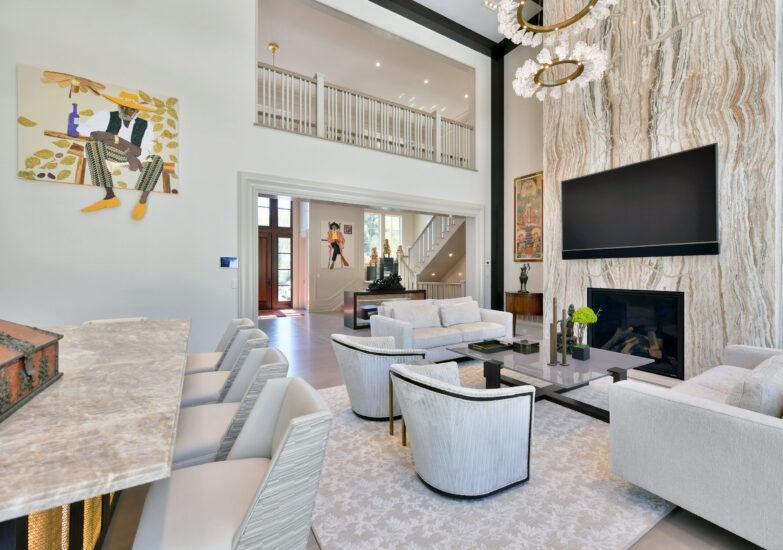
This year the Interior Design Society (IDS) added a Best Smart Home category to its awards for the first time, a sign of how closely the two trades now work together. The winner was Sights-N-Sounds, a New York integrator led by father and son Joe and Joey Calise, for a Long Island home designed by Keith Baltimore of Baltimore Design Group. Joe Calise is also vice president of the IDS national board, and he says the category reflects a shift he has watched build for years. CEDIA Expo was once a show almost entirely of integrators, and now designers walk the floor.
“I think designers are realizing that homeowners want technology,” Calise says. “It was destined to happen the same way our industries are kind of merging together.”
Two thousand miles west, Nerve of Park City, Utah, won three 2026 CE Pro Home of the Year awards for Pinnacle 2, an 18,000-square-foot home with 163 motorized shades. Founder and CEO Todd Astill sums up what today’s luxury clients want: “more tech with less awareness of the technology.”
CE Pro’s 2026 Design & Tech survey of integrators and builders points the same way. Lighting control and motorized shading are growing fastest, invisible technology matters to most clients, and the biggest friction point is still getting involved early enough.
By the numbers
The integrators and builders who answered CE Pro’s 2026 Design & Tech survey are mostly established small to mid-sized shops. About 82% are integrators or dealers and 6% are builders. The most common revenue range is $1 million to $2.49 million, and project budgets are spread fairly evenly between $25,000 and $249,999.
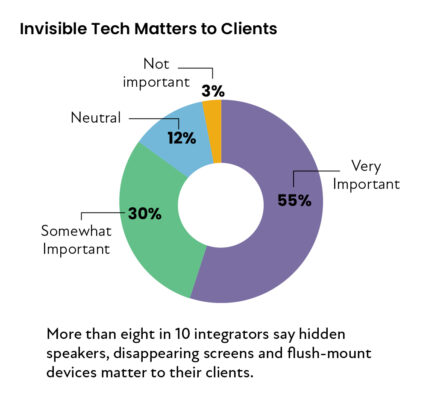
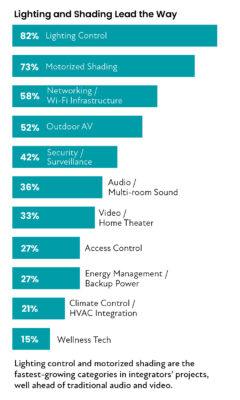
Their answers describe an industry increasingly judged by how little of its work shows. Lighting control and motorized shading lead the fastest-growing categories, named by 82% and 73% of respondents, well ahead of audio and video. More than half say their clients consider invisible technology very important. Another 79% say matching keypads, speakers and panels to the interior finishes matters on most or every project.
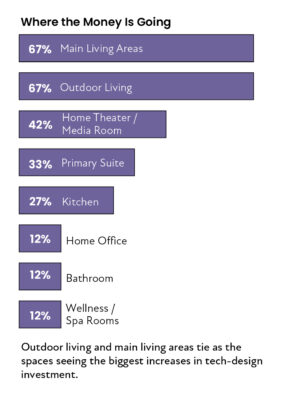
The work is spreading outdoors and into main living areas, which tie as the spaces drawing the most new investment. AI shows up more in integrators’ own proposals than in clients’ homes, and sustainability rarely drives a decision.
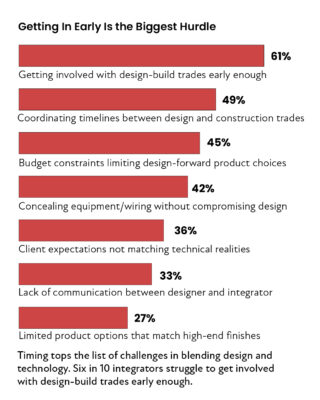
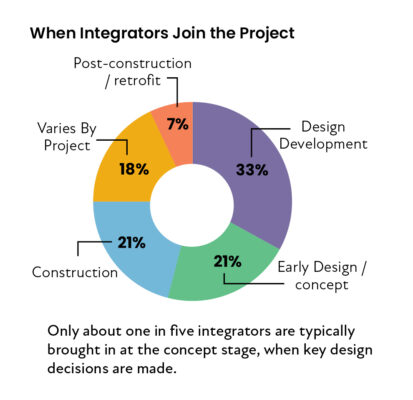
The sticking point is timing. The top challenge, named by 61% of respondents, is getting involved with design-build trades early enough, and nearly half struggle to keep schedules in step with them. Yet only about one in five are typically brought in at the concept stage, when those decisions are made.
Inside the award winner: a “mini Radio City” on Long Island
According to the Calises, the clients already had a Long Island home they loved but wanted to move closer to their grandchildren. The husband made it clear that if they were going to build, they would do it right. Sights-N-Sounds was on the project before the foundation was poured, working with a builder it knew well. Baltimore came in through the homeowner, and he usually partners with a different integrator, one Joe Calise counts as a friend. Calise says that instead of causing friction, the arrangement showed how two firms can share a project.
“At the end of the project, we take our awards, we shake our hands, and he’s still working with our counterpart,” the elder Calise says. “Collaboration is really something that we should all embrace.”
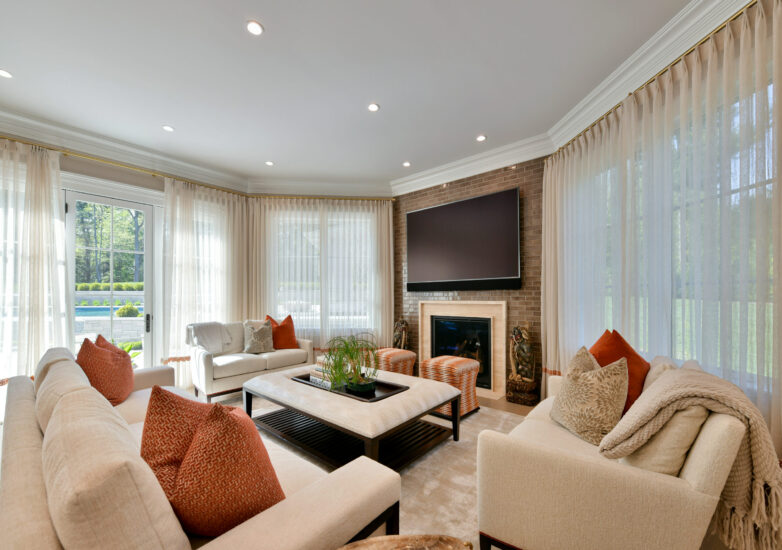
Image/Sights-N-Sounds
By Calise’s account, it was one of the smoothest large jobs the firm has done. Sights-N-Sounds was in early, the designer and builder were aligned, and the trades already knew each other, so the usual surprises never showed up.
“You always expect to have those challenges along the way, or somebody forgot something,” he says. “It’s a combination of the experience, the talent, as well as the proper planning.”
The theater was the one non-negotiable. The homeowner already loved a theater Baltimore had designed for him in Florida, so the team went to see it. The finished room has two rows of seating and an old-school movie-palace look.
Elsewhere, technology sits in the open but stays quiet. The homeowner wanted TVs where he would actually watch them, so none are hidden. The Crestron lighting system uses one keypad per room or entryway, plus a few well-placed touch panels for the gate and doorbell. That let Baltimore design each room without planning around a wall of switches.
“You don’t walk into the foyer and have 17 light switches,” Calise says. “One simple keypad, and that really let the design speak for itself.”
Inside Pinnacle 2: 163 shades in Park City
It’s really no surprise that award-winning projects feature standout designs in luxury homes, and CE Pro’s Home of the Year Awards are no different.
Nerve’s Pinnacle 2 won Gold for Best Master Suite, Silver for Best Whole Home Project over $1 million, and Silver for Best Lighting & Shading Control. The owners were repeat clients who brought Nerve in at the earliest stage, and the build took almost four years. Every pane of glass on the home’s bridges, one of them curved, has its own shade hidden in a custom valance. That meant Nerve had to plan shade pockets into the home’s structure long before the glass went in.
“That is the largest shade project that we’ve ever done, largest shade project I’ve heard of or seen,” Astill says.
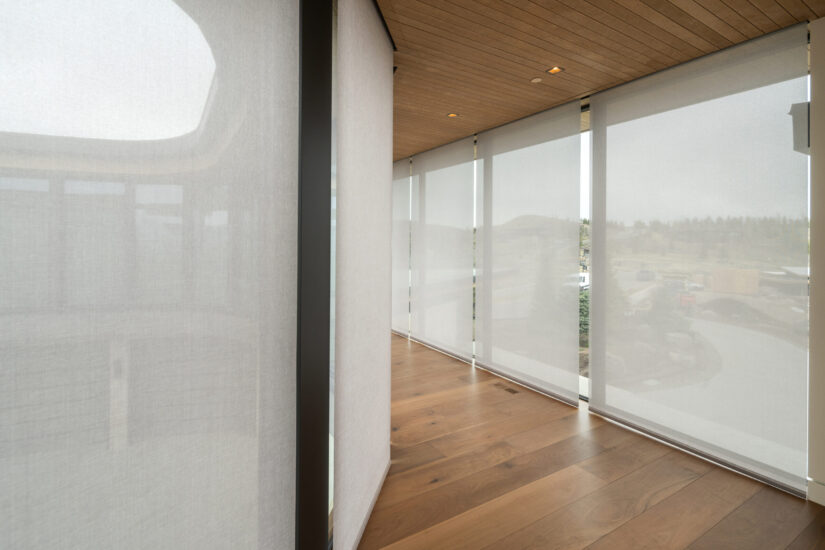
Image/Nerve
The shades are only part of the automation. Photocells run them by daylight, and exterior sensors match the indoor tunable white lighting to the color of natural light. Nerve also tied radiant and forced-air heating and cooling into the Crestron interface, so the owners never have to understand how those systems talk to each other. Astill says the goal on every project is to take as much work off the homeowner as possible.
“As much as we can automate, we want to do,” Astill says.
The primary suite shows how it comes together. Wake-up scenes reach the gym, sauna and steam shower on the floor below. Leaving the suite, the owners cross a bridge with a water feature, and late enough in the morning, the shades roll up as they walk across. Astill says touches like these come from knowing a client well, and Nerve had already done these owners’ previous home.
“Those little touches just make you feel like, wow, my home is alive,” Astill says.
The private cinema, finished in wool acoustic fabric, brass and German leather, was the first client installation of a Trinnov Altitude CI. After almost a year in the home, Astill says, about 97% to 98% of the programming hasn’t needed changes. When the owners hesitated over some of the bigger expenses early on, he gave them his word.
“I put my reputation on the line and said, I can promise you that you’re going to be happy that you did this,” he says. “The feedback is that they don’t regret anything.”
Timing is still the biggest hurdle
Most integrators don’t get in as early as these two firms did. Only 21% of respondents are usually brought in at the early design or concept phase. The top challenge, cited by 61%, is getting involved with design-build trades early enough, followed by coordinating timelines between design and construction trades (49%). For Joe Calise, getting in before the foundation was poured changed how everyone else on the job saw his team.
“We’ve always struggled as integrators to be like that fifth trade,” Calise says. “On this project, we were one of the trades. We weren’t an afterthought.”
Designers agree. On a CEDIA Expo 2026 Smart Stage panel about working with the design-build industry, interior designer Natasa Obradovic, founder of KN Design, said technology belongs in a project’s first conversations. Designers are usually the ones asking clients how they want a space to feel, she says, so they are well placed to ask how clients use technology, too.
“Technology just needs to be part of our initial programming phase,” she says. “It’s just as important as electrical, plumbing, cabinetry, appliances.”
 Without that coordination, small misses become permanent. Sean Bartram, an integrator with Triphase Technologies who spoke on the same panel, recalled a show home where his team had prepped an in-wall subwoofer at framing. No one ever told them what the finished front wall would look like.
“They ended up putting wood paneling right over the subwoofer,” he says. “Nobody discussed that with us, despite the fact it had to be fairly evident it was hiding there.”
For Bartram, the fix starts with understanding each other’s schedules. Designers and integrators work on different timelines, he says, and neither side always knows what the other needs or when.
“I don’t know that integrators fully understand the timeline for a designer, and vice versa,” he says. “The more that you can communicate and discuss ahead of time, the better relationship you forge with the designer.”
Thirty-nine percent of respondents say they collaborate very closely with designers from the start. For the rest, Joe Calise’s advice is to drop the ego. He calls it the most common mistake when designers and integrators first work together.
“The designer wants to overpower the integrator and the integrator wants to overpower the designer,” he says. “Until you establish that collaboration between the two, all you’re going to do is stress yourselves out.”
His pitch to designers is simple: make the integrator part of what you offer, so the client isn’t left to sort out the technology alone.
“You don’t have to know the tech,” he tells them. “You just have to know us.”
Invisible, but not hidden
Fifty-five percent of respondents say invisible technology is very important to their clients, and 79% say matching tech finishes to the design is very or extremely important. Most (88%) rely on in-wall and in-ceiling installation. Warm modern is the most-requested aesthetic (52%), followed by minimalist (36%).
Asked what makes technology feel truly integrated rather than added on, Obradovic answered in three words.
“It’s intentional, intuitive and visually quiet,” she says.
Manufacturers are making that easier. At an Origin Acoustics showroom tour for designers at the IDS conference, the hit was a workshop that put wood, paint or fabric finishes on speaker grilles. Joe Calise says two designers cried during the demos, overcome by the movie scenes and music.
“They didn’t realize how immersive it could be and how important it is to their client,” Calise says.
Bartram says the old trade-off between looks and sound is fading. Clients once had to choose between invisible speakers and floor-standing towers with separate amplifiers. Now some products do both.
“The great thing is, with the manufacturers and the partnerships we have, that isn’t something you have to pick either-or anymore,” he says. “There are integrated products that can sound just as good and disappear into the design.”
Joe Calise’s line on simplicity is one many integrators will recognize. When a designer asks him to keep things simple, he explains that the client’s single button, in place of four remotes on the coffee table, takes more work behind the scenes.
“In order for it to be simple for you and simple for the client, what we have to do is a little more complicated on the back end,” he tells designers. “Keeping it simple is complex somewhere along the way.”
Lighting leads the growth
Lighting control is the fastest-growing category for 82% of respondents, followed by motorized shading (73%) and networking (58%). Architectural lighting is the top lighting priority (82%), followed by scene-based smart lighting (67%), and more than half (55%) report growing interest in circadian or tunable white.
 Designers’ grasp of lighting varies widely, Joe Calise says. Some arrive fluent in color temperature and circadian settings, and others have never thought about lighting control at all.
“Some of them are so knowledgeable that they’ll start rattling off Kelvin temperatures, and I feel like I’m talking to another integrator,” he says. “Then there are other designers that just say, what do you mean lighting? You flip the switch and the lights go on.”
Obradovic uses lighting to start the technology conversation with clients. Many can’t say how they use technology at home, so she asks about something familiar: walking into a wall on the way to the bathroom at night, or bumping a counter on the way to the fridge.
“Easy. We get automated lighting. We put it in the baseboard, we’re putting it up the stairs,” she says. “That’s where the design can go anywhere.”
Once clients hear that, she says, they start describing how they listen to music while cooking or showering, and she can design it all in.
On Pinnacle 2, reliability shaped how the lighting was built. Nerve worked with Crestron engineers to give lighting its own processor, separate from AV and automation, so a problem elsewhere in the system can’t leave the owners in the dark.
“The biggest challenge with having an issue with a control system is lighting, always,” Astill says.
Survey respondents are betting on the trimless look. Asked what will define the next two years, one pointed to small-aperture fixtures that make a project look planned from day one.
“Small aperture mud-in fixtures in the ceiling of every single project,” one writes. “No more trim rings, not on speakers or lights.”
Outdoors and the living room draw the investment
Outdoor living and main living areas tie as the rooms seeing the biggest tech-design investment increases, at 67% each, and 55% say outdoor spaces are a significant and growing part of their scope. Even where summers are short, integrators say clients want to get the most from those spaces.
“Believe it or not, here in the Northeast, the outdoors is very important,” Joe Calise says. “It’s only used a percentage of the year, but that part of the year, people want to be able to get the most use out of that space.”
Dedicated rooms still draw big budgets too. Golf simulators are Nerve’s specialty in Park City, where the golf season lasts only four or five months. Astill says the rooms have moved well beyond practice bays.
“These are entertainment spaces. These are what we call golf lounges. They’re chic, they’re high-tech,” Astill says.
AI is in the office before the home
The most common AI use, at 41%, is generative AI in integrators’ own design or proposal work. Voice control (28%) and AI-enhanced security (25%) follow, and 22% say AI isn’t in their projects yet.
Sights-N-Sounds uses AI internally to review proposals and crunch data, Joey Calise says. In clients’ homes, the firm still learns each household’s routines and programs them by hand, and he sees real hesitation among private, high-end clients.
“I think there’s a layer of fear with AI,” he says. “I don’t think people are ready to take that jump.”
Astill thinks natural language will change that. Voice control has been around for years, he notes, but it has always depended on clients remembering exact commands.
“It isn’t a reasonable thing for our clients to memorize a list of commands,” he says. “AI presents this opportunity for them to speak naturally to their system.”
With AI, a homeowner could dim a scene, quiet the music in a wake-up routine or add a little bass without texting the integrator to make the change.
“It’s like having a custom programmer there for you,” he adds.
Nerve is already using AI behind the scenes. Its lead project manager used it to build a full video wall driver for Crestron and Control4 in days rather than months.
Wellness: “the tip of the iceberg”
Sustainability rarely drives client decisions; 39% of respondents say it rarely or never comes up. Aging-in-place requests come up occasionally for 49%. Only 15% name wellness tech among their fastest-growing categories, but Astill thinks the industry is underselling it.
“Wellness is a story that is literally, I think, we’re just at the tip of the iceberg,” he says. “We’re just tapping into that opportunity as an integration community.”
For Astill, wellness starts with controlling light, through tunable white fixtures and daylight-responsive shading. It extends to saunas, cold plunges and the oxygen enrichment systems common in high-altitude homes. Few other experts on a project are in a position to bring all of that together, he says.
“The opportunity in our industry is that we can become the experts in that,” he says. “Who else is going to advise them on that?”
Clients often assume tunable white will be complicated. Astill says the way Nerve sets it up, it never is.
“You set your sleep time, you set your wake time, and the system’s automatically going to do what it needs to do,” Astill says.
That simplicity is the point, he says. Clients want their audio and video to perform, but the small comforts are what they notice every day.
“Luxury is often more about comfort and convenience than it is about performance,” he adds.
What integrators want from manufacturers
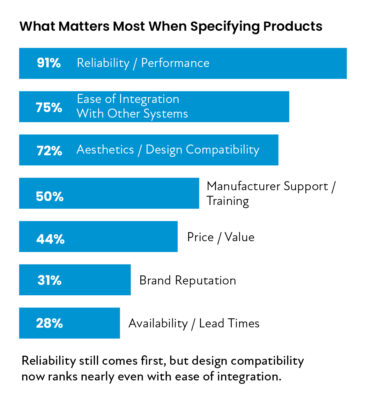
Reliability and performance matter most when specifying products (91%), followed by ease of integration (75%) and aesthetics (72%). Sonance was named most often as a design-forward brand, followed by Crestron and Lutron, then Leon and Origin Acoustics.
Asked what’s missing from the market, respondents wanted wireless keypads with the look of Lutron’s Palladiom, a simple touchscreen alternative to wall-mounted tablets, longer product life, more PoE support and faster response to dealer requests. Others want safety and security devices to match the design quality of today’s lighting controls.
“I don’t think the aesthetics of a motion detector or smoke alarm has changed since the 1960s,” one respondent writes.
What’s next: from selling tech to designing it in
Respondents expect AI, trimless lighting, video walls and wellness spaces to define the next two years. Chris Fiscus, sales manager at Jamiesons AV in Toledo, Ohio, sees a broader shift in how dealers present their work. Audio, lighting, networking and automation are becoming parts of one designed system rather than separate sales.
“The industry is moving away from simply selling technology and toward designing technology into the home,” he writes.
Showing, not telling, is how integrators get there. Rather than pour money into a large showroom of their own, the Calises bring designers and clients to manufacturer spaces such as Crestron’s design centers and the Lutron Experience Center in Manhattan.
“It’s no longer that we have to invest hundreds of thousands of dollars into our showroom,” Joe Calise says. “We have to utilize the resources that are available to us.”
Triphase does it in its own showroom, where it hosts continuing education classes for designers. Bartram says the events keep introducing the firm to new designers and new projects.
“Host events at your showroom, invite them in,” Bartram says. “Excite them, educate them, and then when they’re asked the questions by the homeowner, you’re their first thought.”
Astill sees video walls as the next big category. They work for viewing and as digital canvases that can show family photos, a ski-lodge camera or the morning snow report.
“Literally, these things are a window into another world,” he says.
Advice for integrators: put the ego aside
For IDS, Joe Calise says, you have to put in the time. He has been involved with the group for about 15 years, on its Long Island and national boards, and says networking groups only pay off for members who invest in them.
“You can’t just join and then say, I didn’t get any business from it,” he says. “Relationships usually lead to business.”
For integrators who still think of designers as the people who make them hide things in walls, Joe Calise has a blunt warning.
“This business changes all the time,” Calise says. “If you don’t adapt, at some point the smoke’s going to clear and you’re not going to be standing anymore.”