IPTV Rollout to Continue, Growth Expected

With consumers implementing networking infrastructures that support streaming media, a new medium of entertainment is developing that enables end users to access Web-based content.

image
By Robert Archer
January 02, 2008
Americans were first introduced to the immeasurable value of television in the 1950s with the improbable situations that confronted the Kramdens and the Ricardos.

Today, television continues to push the boundaries of entertainment. Technology leaders such as Microsoft, Disney, AT&T, Verizon and others are forging a new Golden Age in which the restrictions of the living room no longer apply.

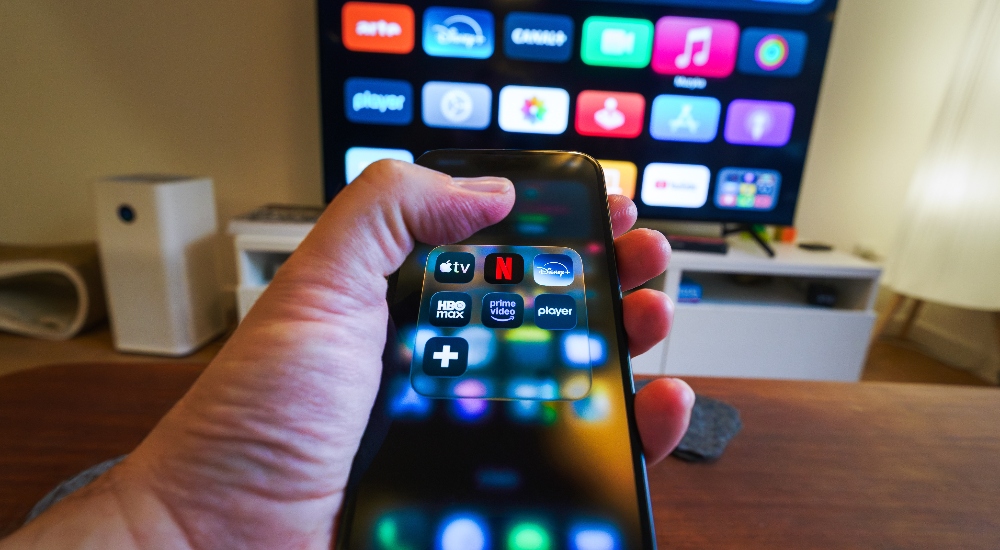
Through the use of the Internet and the increasing capabilities afforded by fiber optics and broadband-based home networks, consumers are now able to stream high-definition (HD) video into their homes -- and even onto their mobile devices.

This, in turn, is increasing the numbers of products and services from which consumers can choose. To the uninitiated, it's easy to get confused by so many seemingly interchangeable terms -- Internet TV and Internet protocol television (IPTV) for instance.

Sean Kollenkark, senior program manager for Microsoft's eHome group, says there are differences in the terms. He points out that Microsoft dedicates separate resources to each market.

According to Kollenkark, Internet TV is a free service that is accessible through such products as Microsoft's Media Center platform and delivers streaming content directly from the Internet. Conversely, he says, IPTV is a pay-per-view service that Microsoft is targeting through its Mediaroom IPTV software platform.

IPTV is designed to address that market by offering content providers a technology that enables them to create, deliver and manage their own digital TV service.

Kollenkark's colleague, Dan Poling, director of product planning for Microsoft's eHome division, adds that consumer adoption of Internet TV is growing in some segments, but the rate of growth will be determined by such factors as the popularity of the content, the simplicity of the setup and usage of the hardware and the category's ability to market itself against other competitive technologies.

Looking ahead, Poling estimates that growth will take place in the category, but it may not be as sweeping as other format introductions.

How Does an Installer Fit In?


With Windows Vista's inclusion of Media Center and the free nature of Internet TV, the learning curve for professional integrators shouldn't be dramatic, especially with greater opportunity to seek out actual exposure to the technology.

The details of IPTV, though, may be more complicated.

Mark Komanecky, president of SimpleHome, an integrator with offices in Massachusetts, Pennsylvania and Vermont, has experience in the realm of IT and networking.

He says the fundamental infrastructure necessary to install IPTV systems is comparable to other subscription services, but there are exceptions.

"Currently available IPTV services, such as AT&T's U-verse and the on-demand components of Verizon's FiOS service, leverage a receiver that connects to the subscriber's audio/video system in a similar manner to today's satellite and cable receivers," he says.

"So, at a high level, the requirements for an audio/video installer are not much different for these services."

He does concede, however, that there are notable differences. "For example," he explains, "IPTV's receiver may require a network [Ethernet] connection in addition to traditional audio/video connections. Also, some IPTV providers, like AT&T, deliver all channels via IP to the home. This allows AT&T to cost-effectively leverage the same receiver for SD and HD services to simplify the system design."

He adds, "Verizon [though] uses a combination of standard RF-based programming and IPTV programming for their services. So, they leverage different receiver hardware for their services based on what the subscriber wants at a particular TV location."

What about the reliability of IPTV? What about the technology's opportunity to provide installers with another potential revenue stream?

To these questions, Komanecky says that, based on his experience, IPTV is as reliable as the services offered from the cable and satellite companies, but there are currently no real revenue opportunities for integrators from the installation of the service.


Return to full story:
http://www.cepro.com/article/iptv_rollout_to_continue_growth_expected/