Automated Environments: Honing Business Practices
How one integrator adjusted its processes -- and why.
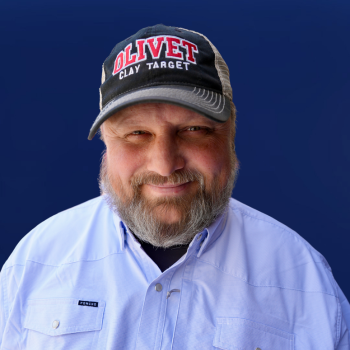
Jason Fischbeck, owner, Arizona-based Automated Environments.
Anyone running their own business will admit that sometimes, at the end of the day, you're just glad to have made it to the end of that day. It's so easy to get caught up in the small stuff and lose sight of the big picture. That's when you know it's time to strike that elusive balance and make your business work as hard for you as you work for it.
That revelation came about two and a half years ago to Jason Fischbeck, owner of Arizona-based Automated Environments. As the head of the systems integration company, Fischbeck had achieved admirable success. His scope of services was impressive, spanning all aspects of home automation, home theater, structured wiring, A/V, lighting systems, central vac, security systems -- the whole smash.
He was doing well. But upon looking at his business through more discerning eyes, he realized he could be doing even better. The time had come to hone some of his business practices and attain greater efficiency.
"I was getting burnt out," Fischbeck concedes. "I was always Mr. Everything. The buck stopped at my desk all day, every day. I juggled it but I wanted more out of my life."
Although he'd recently purchased D-Tools software at CEDIA to try to make things a bit easier, he hadn't even found time to pull it out of the box. His timing proved better when he happened upon Susan Sipe, an Arizona-based consultant who helps business owners put into place the processes they need to increase efficiency. It didn't hurt, either, that Susan ran an integration company of her own for years before starting her consulting firm, Abacus Prime.
"She brought a wealth of knowledge and had run a business like mine," Fischbeck says. "I was fortunate to work with her and her husband, Mark. We established an Employee Handbook that set forth the policies of my business. It's a lot of work, but we're finishing up our business processes now."
Just one of the improvements includes paperless storage in the office. Paperless copies have also been created for the guys to take into the field, although Fischbeck does add that some documentation does need to be on paper as it can't always be seen effectively on a PDA.
The one thing that is consistently at the heart of Fischbeck's efficiency processes is empowerment of his 12 employees. "I don't want to be the point person forever and had to empower people to do the job. With Susan's help, I'm grooming people in position to take on more decision-making. Before now, everyone was a utility person who helped get the job done, which is fine. But, in the real world, you shouldn't have a business that will fall apart if someone, me in this case, isn't there. Repeatable processes have to be in place."
Another huge catalyst for improving processes, and specifically profits, is being aware of what time is, what it costs, and how to bill for it. "In the past, we provided some services at no extra charge. It was like a Club Med -- all-inclusive. Now we keep track of inventory, time spent -- every aspect of the business."
Despite the push to improve professional processes, Fischbeck remains a very personable guy. "We base who we hire on how they'll integrate into the family we call the business. The bottom line is we've got dynamite employees and approach the business as a family. We're a tight knit group and have fun when we work. There's pressure but because of the closeness we have, we get through it."
With a purchaser, designer, salesperson, two project managers, two technicians, general manager administrative assistant and a scheduler on staff, Fischbeck asserts that attitude is everything. "There are times we must look for specific experience, but it's not as important as a person's attitude. Either they have it or they don't. The intangibles are even more important than the skills they bring."
That's because the intangibles sustain relationships. "Supporting our customers after an installation is done is one of our strong points," he says. "When we do a job, we're all about relationships. They're key to our success."
They're also at the heart of the high-end installs that are synonymous with Automated Environments. "We're definitely more comfortable and make more money in the mid-to-high installs. We steer away from the lower end because at that price point, price becomes everything. We sell experience, not equipment."
Fischbeck adds that customers choose his company because it doesn't cater to the track market. His is a custom business. "Our bread and butter come from the high end. But on the other hand, we're not talking multi-million dollar jobs. There's a lot of liability and headaches there and life is too short for those."
It's been a healthy balance for Automated Environments to strike. In terms of selecting products, Fischbeck says that he doesn't want to slug it out over pricing and, consequently, hasn't established relationships with vendors that customers can look up on the Internet. "That'd be like shooting myself in the foot. I need to deliver service and installs." As a result, he goes with more specialized products, including Runco and AMX.
About 80 percent of work comes from new construction. Builders, Fischbeck notes, steer homeowners to his company. One of the reasons may be that he's not just out to make money off them. "They put their trust in me. The customers are doing business with the builder first and if I can make them happy and it reflects well on their builders, that's great."
More good news: Fischbeck isn't seeing a slowdown on the custom side. "We've never been slow because when people with money want something, they buy it," he says. "If they want that new plasma, they call us. So, retrofits are becoming a larger part of our business."
Strong-arming is not Fischbeck's style. "We discuss what the customer wants. We don't peddle things nor do we want to close at every corner. There's more of a human element at work. I'd rather that the customer be happy and not sell them something they didn't need. I try to be a moral good-guy but I do educate them on all that's available. People put a lot of trust in what we do. We establish relationships and that's made us successful. We have their best interest in mind; once you hit that you can sell them anything."
It's a philosophy that's gleaned a lot of repeat and referral business for Automated Environments, a company that's never coughed up so much as a buck for advertising.
It stays ahead of the competition by staying aware of emerging market trends. "Once you sit pretty and think all is well, the rug can be pulled out from under you."
Fischbeck knows firsthand how critical a strong foundation is. He was raised with one.
His father, a general contractor who ran his own business, recognized young Jason's affinity for running a company of his own, as well. "I was 22, hot to trot, and my Dad gave me the initial investment to start the business. I paid him back in six months and he mentored me for the first few years. It was a great way to start."
Now, all these years later, he and his Dad are still together in that they share space in the same building, a building that today houses Automated Environments' listening and demo room for clients with questions, who want to get up close and personal with the equipment. Realizing that his Dad may soon be retiring, Fischbeck adds, "I don't know how much longer he'll be working. I'm his oldest son and realize this time working in close proximity to him is priceless. I'm very lucky."
In a broader scope, Fischbeck -- a son, husband, father, business owner, boss and individual -- also realizes that time in general is priceless and doesn't take too long to pass us by. Putting efficiency processes in place has been a positive byproduct of that realization. "It was a tough decision to become a more process-oriented company. We managed chaos on a daily basis and I had become very good at it. This was difficult because we were moving along and doing great, but I realized I'd eventually burnout if we didn't make the changes."
One thing that will not change for Fischbeck or Automated Environments is the value placed on relationships. A member of CEDIA since 1996, that association continues to help him forge strong alliances. "The relationships I have with other people in my market are so important to me. You can never have too many friends in this business. I'd never cut my neighbor's throat to make a buck. We have to support and have mutual respect for one another."
For Fischbeck, at the end of the day, the most rewarding part of running his business is that it enables him to serve his family. "The work you do should bless your life -- not run it. Your work should be a means to a happy life. I travel and take time to play a bit. I can do things with and for my family. The business should serve my family and it does."
Erin Harrington is a freelance writer based in Lindenhurst, N.Y.
That revelation came about two and a half years ago to Jason Fischbeck, owner of Arizona-based Automated Environments. As the head of the systems integration company, Fischbeck had achieved admirable success. His scope of services was impressive, spanning all aspects of home automation, home theater, structured wiring, A/V, lighting systems, central vac, security systems -- the whole smash.
He was doing well. But upon looking at his business through more discerning eyes, he realized he could be doing even better. The time had come to hone some of his business practices and attain greater efficiency.
"I was getting burnt out," Fischbeck concedes. "I was always Mr. Everything. The buck stopped at my desk all day, every day. I juggled it but I wanted more out of my life."
Although he'd recently purchased D-Tools software at CEDIA to try to make things a bit easier, he hadn't even found time to pull it out of the box. His timing proved better when he happened upon Susan Sipe, an Arizona-based consultant who helps business owners put into place the processes they need to increase efficiency. It didn't hurt, either, that Susan ran an integration company of her own for years before starting her consulting firm, Abacus Prime.
"She brought a wealth of knowledge and had run a business like mine," Fischbeck says. "I was fortunate to work with her and her husband, Mark. We established an Employee Handbook that set forth the policies of my business. It's a lot of work, but we're finishing up our business processes now."
Just one of the improvements includes paperless storage in the office. Paperless copies have also been created for the guys to take into the field, although Fischbeck does add that some documentation does need to be on paper as it can't always be seen effectively on a PDA.
Elements of Change
The one thing that is consistently at the heart of Fischbeck's efficiency processes is empowerment of his 12 employees. "I don't want to be the point person forever and had to empower people to do the job. With Susan's help, I'm grooming people in position to take on more decision-making. Before now, everyone was a utility person who helped get the job done, which is fine. But, in the real world, you shouldn't have a business that will fall apart if someone, me in this case, isn't there. Repeatable processes have to be in place."
Another huge catalyst for improving processes, and specifically profits, is being aware of what time is, what it costs, and how to bill for it. "In the past, we provided some services at no extra charge. It was like a Club Med -- all-inclusive. Now we keep track of inventory, time spent -- every aspect of the business."
Quick StatsAutomated Environments Inc.
- Location: Mesa, Ariz.
- Web site: http://www.aearizona.com
- Principal: Jason Fischbeck
- Years in Business: 13
- Number of Employees: 13
- FYI: Your business or your job should bless your life -- not run it. If you can’t be happy outside of the business, you can’t be happy at your job. Your work should be a means to a happy life.
Despite the push to improve professional processes, Fischbeck remains a very personable guy. "We base who we hire on how they'll integrate into the family we call the business. The bottom line is we've got dynamite employees and approach the business as a family. We're a tight knit group and have fun when we work. There's pressure but because of the closeness we have, we get through it."
With a purchaser, designer, salesperson, two project managers, two technicians, general manager administrative assistant and a scheduler on staff, Fischbeck asserts that attitude is everything. "There are times we must look for specific experience, but it's not as important as a person's attitude. Either they have it or they don't. The intangibles are even more important than the skills they bring."
That's because the intangibles sustain relationships. "Supporting our customers after an installation is done is one of our strong points," he says. "When we do a job, we're all about relationships. They're key to our success."
They're also at the heart of the high-end installs that are synonymous with Automated Environments. "We're definitely more comfortable and make more money in the mid-to-high installs. We steer away from the lower end because at that price point, price becomes everything. We sell experience, not equipment."
Fischbeck adds that customers choose his company because it doesn't cater to the track market. His is a custom business. "Our bread and butter come from the high end. But on the other hand, we're not talking multi-million dollar jobs. There's a lot of liability and headaches there and life is too short for those."
It's been a healthy balance for Automated Environments to strike. In terms of selecting products, Fischbeck says that he doesn't want to slug it out over pricing and, consequently, hasn't established relationships with vendors that customers can look up on the Internet. "That'd be like shooting myself in the foot. I need to deliver service and installs." As a result, he goes with more specialized products, including Runco and AMX.
Relationships and Time
About 80 percent of work comes from new construction. Builders, Fischbeck notes, steer homeowners to his company. One of the reasons may be that he's not just out to make money off them. "They put their trust in me. The customers are doing business with the builder first and if I can make them happy and it reflects well on their builders, that's great."
More good news: Fischbeck isn't seeing a slowdown on the custom side. "We've never been slow because when people with money want something, they buy it," he says. "If they want that new plasma, they call us. So, retrofits are becoming a larger part of our business."
Strong-arming is not Fischbeck's style. "We discuss what the customer wants. We don't peddle things nor do we want to close at every corner. There's more of a human element at work. I'd rather that the customer be happy and not sell them something they didn't need. I try to be a moral good-guy but I do educate them on all that's available. People put a lot of trust in what we do. We establish relationships and that's made us successful. We have their best interest in mind; once you hit that you can sell them anything."
It's a philosophy that's gleaned a lot of repeat and referral business for Automated Environments, a company that's never coughed up so much as a buck for advertising.
It stays ahead of the competition by staying aware of emerging market trends. "Once you sit pretty and think all is well, the rug can be pulled out from under you."
Fischbeck knows firsthand how critical a strong foundation is. He was raised with one.
His father, a general contractor who ran his own business, recognized young Jason's affinity for running a company of his own, as well. "I was 22, hot to trot, and my Dad gave me the initial investment to start the business. I paid him back in six months and he mentored me for the first few years. It was a great way to start."
Now, all these years later, he and his Dad are still together in that they share space in the same building, a building that today houses Automated Environments' listening and demo room for clients with questions, who want to get up close and personal with the equipment. Realizing that his Dad may soon be retiring, Fischbeck adds, "I don't know how much longer he'll be working. I'm his oldest son and realize this time working in close proximity to him is priceless. I'm very lucky."
In a broader scope, Fischbeck -- a son, husband, father, business owner, boss and individual -- also realizes that time in general is priceless and doesn't take too long to pass us by. Putting efficiency processes in place has been a positive byproduct of that realization. "It was a tough decision to become a more process-oriented company. We managed chaos on a daily basis and I had become very good at it. This was difficult because we were moving along and doing great, but I realized I'd eventually burnout if we didn't make the changes."
One thing that will not change for Fischbeck or Automated Environments is the value placed on relationships. A member of CEDIA since 1996, that association continues to help him forge strong alliances. "The relationships I have with other people in my market are so important to me. You can never have too many friends in this business. I'd never cut my neighbor's throat to make a buck. We have to support and have mutual respect for one another."
For Fischbeck, at the end of the day, the most rewarding part of running his business is that it enables him to serve his family. "The work you do should bless your life -- not run it. Your work should be a means to a happy life. I travel and take time to play a bit. I can do things with and for my family. The business should serve my family and it does."
Erin Harrington is a freelance writer based in Lindenhurst, N.Y.


Post a comment