Search CE Pro


Print  |  Email  |  Comments (6)  |  Share  |  News  |  Follow on Twitter, Facebook or RSS

When is High Speed HDMI Required?

HDMI Licensing identifies four types of cables and outlines when each is necessary for 1080p.


In an attempt to minimize confusion surrounding HDMI 1.4, HDMI Licensing LLC has created a four-category labeling system. There previously were only two types of HDMI cables:

Standard HDMI Cable: Supports up to 720p/1080i up to bandwidth of 2.25Gbps.

image

High Speed HDMI Cable: Supports 1080p or higher, including 3D or 4k/2k, up to bandwidth of 10.2Gbps.

image

With the introduction of HDMI 1.4, there are two new cables:

Standard HDMI Cable with Ethernet: Supports up to 720p/1080i supporting up to a total uncompressed bandwidth of 2.25Gbps. Adds support for HDMI Ethernet Channel (up to 100Mbps).

image

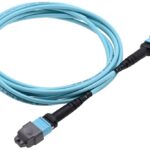
High Speed HDMI Cable with Ethernet: Supports 1080p or higher up to an uncompressed bandwidth of 10.2Gbps. Adds support for HDMI Ethernet Channel (up to 100Mbps).

image

Only home theaters with Internet connections will require an HDMI cable with Ethernet. All other existing cables will support the remaining features of HDMI 1.4.

"With HDMI 1.4, only the Ethernet Channel requires a new upgraded cable," reiterates Jeff Park, technology evangelist for HDMI Licensing LLC. "That is only exception that requires a new cable."

Below is a chart of all the possible features of HDMI and what cables are required for each feature. When a homeowner is watching TV (or a projector) in any format below 1080p, there are only two instances when he will need a High Speed Cable:
  1. Deep Color
  2. 120Hz from the source
In both of these cases, if the homeowner is viewing 720p or 1080i content, a High Speed Cable is necessary because those features require almost double the bandwidth of standard definition.

Finally, 120Hz from the source is very different from the 120Hz or 240Hz achieved through upscaling built into the TV. All TVs manufactured today upscale the signal inside the display. If the signal is being upscaled, having a High Speed Cable will not make a difference.

image

Spotlight on HDMI
Sponsored by Straight Wire.
Get the best performance, reliability and value from your HDMI cables. Get Straight Wire.
HDMI has been evolving over the years. In this spotlight on HDMI we present information, tips and the future of HDMI.
The Evolution of HDMI
The spec has changed five times since its 2002 inception to mimic the landscape of digital media.
HDMI Growth Surges, Reaches 1 Billion Devices
Growth spurred by PCs, gaming consoles, personal media players, digital cameras and more.
3 HDMI Troubleshooting Tips
Revisiting three gems from HDMI Corner columnist Jeff Boccaccio.
4 Tips for Choosing the Right HDMI Cable
CE pro offers tips on choosing the right cable.
Discuss: Concerns About HDMI
Share your thoughts on HDMI so that manufacturers can address them.
The Importance of Good Signal Integrity
Ninety percent of the time, HDMI-related system failures are related to poor signal integrity.
Aren't All Cables the Same?
Jeff Boccaccio explains why cable choice can make or break a system.
Who Has the Toughest HDMI Cable?
Strongmen from PPC and DirectConnect put their products through the paces.
When is High Speed HDMI Required?
HDMI Licensing identifies four types of cables and outlines when each is necessary for 1080p.

Subscribe to the CE Pro Newsletter

Article Topics

News · Wire and Cable · HDMI · Spotlight · Hdmi · Hdmi Licensing · All topics

About the Author

Jason Knott, Editor, CE Pro
Jason has covered low-voltage electronics as an editor since 1990. He joined EH Publishing in 2000, and before that served as publisher and editor of Security Sales, a leading magazine for the security industry. He served as chairman of the Security Industry Association’s Education Committee from 2000-2004 and sat on the board of that association from 1998-2002. He is also a former board member of the Alarm Industry Research and Educational Foundation. He is currently a member of the CEDIA Education Action Team for Electronic Systems Business. Jason graduated from the University of Southern California.

6 Comments (displayed in order by date/time)

Posted by selden ball  on  01/27  at  09:47 AM

If I’m reading that right, it’s a change in the bandwidth of “high speed” cables.

According to that well known paragon of accuracy, Wikipedia, Category 2 high speed cables are rated at 340MHz for 1080p60 and 2160p30, not for 1080p120 as supposedly is needed for full resolution 3D.

Am I misunderstanding something?

Posted by Luke Palsy  on  01/27  at  10:39 AM

Possibly if you used a black box you could negate both bypasses.  I probably wouldn’t want to use a conductor though.  Version 5.1 might be suitable through cognition but to maintain proper flow I’d suggest copulating a 3.1 out through a thigger majigger.

Posted by jbrown  on  02/05  at  09:33 AM

OMG, what a fustercluck. Why would they introduce a new spec with a minimum bandwidth that is LOWER than the 4.95Gbps limit of HDMI 1.0? That’s what the minimum bandwidth for a low-speed cable should be - 165MHz, not 75MHz.

And by the way, who in the heck is gonna watch 1080i at 120Hz or with deep color? Any source or display device that only supports 1080i won’t support either of those things.

-Jason Brown
http://www.asktheadvisors.com

Posted by longislandsurfer  on  02/12  at  02:09 PM

I think it’s time that the industry move away from proprietary solutions like HDMI.  I don’t believe HDMI officially supports lengths beyond approximately 15 feet.  If that’s the case, what good is it?  Anything beyond that is going to involve voodoo, pixie dust and finger pointing.  Anyone that’s installed a TV above a fireplace and needs to connect to a switcher/receiver/repeater, knows that that 15 feet is going to be used up way before you get to the equipment location.  Why can’t the manufacturers settle on CAT-6 as the transport medium, like the computer industry is doing, or some other kind of inexpensive twisted cable solution that can deliever audio and video over IP.  Cisco, when are you going to buy Crestron?

Posted by Tim Leahy  on  02/15  at  12:04 AM

1) I am slightly confused regarding your chart. But I believe that comes from HDMI.org. It is regarding the ARC spec which HDMI claims will be able to use an High Speed or Standard Speed HDMI cable without Ethernet. Your chart (column 6) refers to it as well. But according to the 2009_11_18 RevisedTradeLogo_Guidelines_FINAL document released by HDMI they feature an input/output labeled HEC & ARC which utilizes the High Speed or Standard Speed with Ethernet: See page 12. Does the spec need to allow two way audio communication which is the idea for the re wiring of the HDMI cable to accomodate Ethernet as well. The hardware manufacturer has to modify the input/output slighly to be able to allow Etnernet or Audio Return Channel. Shouldn’t the cable (with Ethernet) be the same as well?

2) I understand the HDMI cable with Ethernet is supposedly backwards compatible with all HDMI versions. can you verify this?

3) You neglected to list a column for the 3D format in your chart. Was that by design or did you just leave it out becuase it has not been truly defined?

Posted by Jason Knott  on  02/15  at  06:00 AM

Tim
The way I understand it is that the ARC feature works on all four types of HDMI cables in every viewing format except for 1080p. If you want to watch in 1080p, you need a High-Speed HDMI cable or a High-Speed HDMI with Ethernet cable.
To your second point, the HDMI cable with Ethernet is backward compatible with all previous versions of HDMI.
The chart did come from HDMI Licensing LLC and 3D was not included. I believe they were still finalizing that spec when the chart was prepared.

Page 1 of 1 comment pages
Post a comment
Name:
Email:
Choose smileys | View comment guidelines
Remember my personal information
Notify me of follow-up comments?

Please answer the question below:


Sponsored Links

  About Us Customer Service Privacy Policy Contact Us Advertise With Us Dealer Services Subscribe ©2012 CE Pro
  EH Network: Electronic House Electronic House Ideas Commercial Integrator ChannelPro ProSoundWeb Church Production Worship Facilities Electronic House Expo Worship Facilities Expo