simpleHome: Running on Autopilot
Layers of processes allow this home automation-centric integrator to open stores in faraway markets, and still operate like they're right next door.
Mark Komanecky, simpleHome founder, says he and his group saw a lot of opportunity “a notch below the high-end [home control] market.”
The unique way that simpleHome does business was reflected in the way it handled its interview with CE Pro.
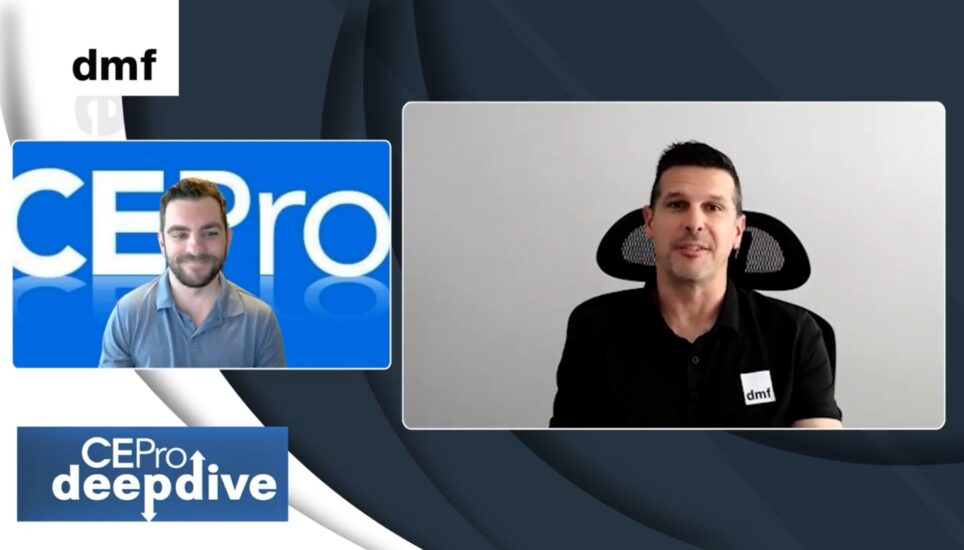
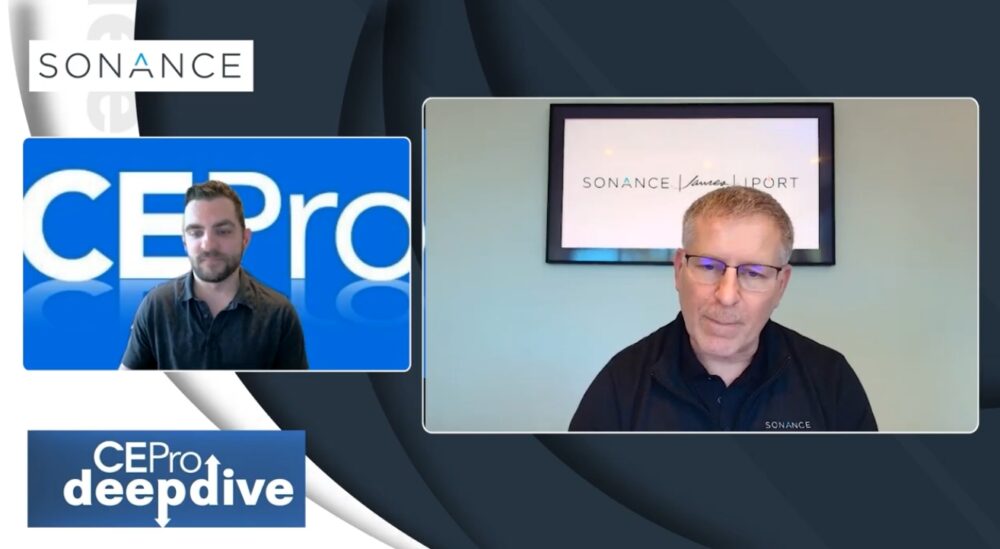
The chat took place in the company's flagship Westborough, Mass. showroom, where founder Mark Komanecky sat. Live via video conference on a nearby 42-inch flat panel was Dan Ressler, who sat in the company's Paoli, Pa. showroom. Despite Ressler being 302 miles away, the conversation flowed as if he had been in the same room.
That's the way simpleHome aims to do business. Though spread out across the Northeast -- with offices near Boston, near Philadelphia and in Stowe, Vermont -- the company has policies in place that allow those in different locations to interact like they are all in the same room, all on the same page.
That page is distinctive. While the majority of integration companies began with an audio/video focus and migrated toward home control, simpleHome took the opposite route when it launched in 2004.
Komanecky, who was looking for his next venture after exiting a company he co-founded, watched the home technology market. He and his partners recognized that -- with the converging of audio, video, IT and networking technologies -- the opportunities lied in pulling it all together.
"We quickly centered on home automation and home control as an area that was primarily untapped outside of traditional solutions from Crestron and AMX. We're an AMX dealer," he quickly adds, "but we saw a huge opportunity that was a notch below the high-end market.
"We also understood that to be successful we need to have appropriate higher-end solutions. We're not going for everybody. We're not looking to be the Wal-Mart of home automation, but we certainly are looking to provide solutions without six-figure prices tags."
Those home automation roots, according to Ressler, give simpleHome an edge. He says that in an industry that's largely about creating custom-solutions for clients, it makes sense to have a core competency in control -- and then evolve the audio/video part of it.
"There are [integration companies] that start out selling amps and speakers and sort of stumble onto a control job and then grow in that direction. That's just not ever the way we thought about this," he says. "We thought about how to meet clients' needs. In order to do that you almost always need some level of control."
The control roots also have facilitated simpleHome's expansion into new markets, explains Ressler. First, it's important to note that -- with stores in Massachusetts, Vermont and Pennsylvania -- the company is geographically agnostic when it comes to expansion.
Convenience when it comes to shuttling back and forth between locations isn't important; the paramount concerns are finding folks with "a set of behaviors and an orientation that's consistent with what we want our company to be" versus finding folks "that just happen to live close," says Ressler.
Such was the case with the Westborough, Paoli and Stowe locations. "It's less about trying to draw a continuous area so the truck rolls are easy, and it's more about making sure we have principals in each location that get it," he says.
The markets in those areas were important, too. The demographics in and around Paoli, for instance, are similar to those in and around the original Westborough location where simpleHome honed its business processes. In those markets, simpleHome enjoys a mix of retrofit and new-construction opportunities.
The Stowe market, however, is different. In the affluent vacation community, Komanecky recognized an opportunity to work with a slew of architects and builders.
Still, just because the demographics make sense and it can find the right personnel, that doesn't mean expansion into a particular market always makes sense.
"Nearly any major metropolitan area is going to have a location or locations where this kind of business could be very successful," Ressler says, "but that doesn't take into account the level of competition in the market. Our focus on control first and then bringing along A/V changes the game so we don't have to worry as much about market saturation."
The addition of the Stowe office was pretty seamless. Komanecky and his wife have a house in Stowe and he is able to run the operation in addition to running the Westborough operation. Since the home is decked out with home automation equipment, Komanecky can bring builders and architects in for demonstrations.
Opening the Paoli location -- because it's intended to operate similarly to the original Westborough location -- was more of a challenge. Komanecky wanted to create an expansion model that allows the two offices to share processes and resources, thus creating a model for future expansions.
To help him sculpt that model, Komanecky enlisted Ressler, a veteran business and technology consultant for large companies, and Mike Hoey, the former head of a software company. "They were both looking for their next big opportunity," Komanecky says.
Their backgrounds were critical. Hoey's software experience lends itself well to a company focused on creating control interfaces. Ressler's consulting experience, meanwhile, proved invaluable in developing processes needed in an expansion model.
"Coming out of consulting, I'm a believer in methodology," Ressler says. "You have a standard way of doing things -- the idea being: take the crap off your plate so you can focus your brainpower on being creative in the solutions space. As we look to grow simpleHome and we think about what are going to be the key components that our broader company needs, we recognize that a consistency of method is one of those."
After "consistency of method," the next most important component for sustaining the growth of simpleHome, according to Ressler, is a focus on customer service.
It comes as no surprise, therefore, that the company has established a four-step formula to maintaining its standards for client service on a consistent basis.
Ressler explains the steps:
Understand and Educate
This step "isn't rocket science," Ressler says. "It's listening to the client's goals through conversation and trying to provide some education whenever possible." It's a particularly important step, though, because few clients truly understand what's offered in the home control arena.
"People will come in and say, 'I've heard about smart home and I'd like to have music in my house, too.' Maybe that's all they know." Those bits of valuable information help simpleHome decide where it should focus the education. The "understand and education" step usually requires two meetings, Ressler says.
Design and Refine
simpleHome pulls together a list of requirements that it determined during the "understand and educate" phase, plus a "high level design" and an estimate. At this point, "we haven't usually talked much about product unless they've come in with specific products in mind," Ressler says.
Generally, the "design and refine" step is an opportunity for simpleHome to make sure it's heading in the right direction and it completely understands what the client wants. "This allows us to come back with a refined proposal that we hope is 95 to 98 percent right," says Ressler. He adds that this step also usually requires two meetings.
Install and Configure
This is pretty much the work phase. It involves getting the equipment, installing it and doing all the programming. "It can last three days, three months or much longer," Ressler says.
Training and Delivery
This step, "unfortunately, is a bit unique in this industry," Ressler says. "We've installed the thing. We've configured it. We've put a bunch of technology into the house. So we do a series of training sessions."
Typically, simpleHome does two sessions. The first one follows the completion of the installation. At that stage, Ressler says the clients are probably a little sick of having installers in their home "and they're only kind of listening."
simpleHome aims to solve that issue by coming back in a week or so. "At that point the homeowners remember part of what we told them in the last session, plus they've lived with it. So as we go through the training the questions are more educated and there are specific situational questions." This stage also opens the door to a conversation about maintenance programs.
The point of establishing these processes isn't just to have a common vernacular, although "we want that, too," Ressler says. "I know it can sound a bit overly procedural or overly structured, but establishing some kind of common lexicon is important for us to be able to take advantage of the multi-office structure. We've been up and running in Paoli for about a year. I believe, though, that we're able to compete as if we have three or four years of experience because of the way we're able to get some leverage from what the guys in Boston know how to do."
The common lexicon is a byproduct of approaching projects the same way, client to client, geographic region to geographic region. Processes, though, need reinforcement. Komanecky says simpleHome provides that reinforcement through constant communication. "We are always interacting via phone, e-mail and video conferencing," he says. "It's really taking advantage of any way we can communicate depending on the situation."
Indeed, the company has an elaborate video conferencing setup. As part of its commercial business (which makes up 30 percent of the Paoli office's work), the company offers clients video conferencing and using it to keep its locations in sync is a way of "practicing what we preach," Ressler says.
One of the things that simpleHome talks about -- through video and in person -- is exactly how much the locations need to be on the same page. As it considers further expansion it hopes to figure out what really needs to be nailed down by processes and what can be open-ended. Ressler explains that it's a question of what is "really needed from the central location, where it is important to do things similarly and where it is good to be flexible and use your own creativity."
It's a delicate balance. The point, though, explains Ressler, is "we don't want to leave margin on the table." Also, should it decide to expand to another market, simpleHome hopes its processes will position the person in charge "to spin out that office and become successful as quickly as possible. Being thoughtful about this, we think is beneficial as we engage future principals for future offices."
Komanecky and Ressler won't commit, but further expansion appears imminent. Much in the way the Stowe market provides an affluent new-construction-centered complement to the Boston market, the New Jersey Shore could provide a similar complement to the Philadelphia market. Ressler says that simpleHome has explored that possibility. He also brings up the possibility of moving into the Washington, D.C. market in the future.
There is, of course, the risk of expanding too quickly and overextending. "I don't think we're there right now," Komanecky says. Still, he adds, the company wants to further refine its processes over the next six to 12 months. That way, if it does decide to open a location on the Jersey Shore, in Washington, D.C. or somewhere else, "we can better comprehend how we can communicate our processes to somebody that we'd bring in as a principal for a new location."
The chat took place in the company's flagship Westborough, Mass. showroom, where founder Mark Komanecky sat. Live via video conference on a nearby 42-inch flat panel was Dan Ressler, who sat in the company's Paoli, Pa. showroom. Despite Ressler being 302 miles away, the conversation flowed as if he had been in the same room.
That's the way simpleHome aims to do business. Though spread out across the Northeast -- with offices near Boston, near Philadelphia and in Stowe, Vermont -- the company has policies in place that allow those in different locations to interact like they are all in the same room, all on the same page.
That page is distinctive. While the majority of integration companies began with an audio/video focus and migrated toward home control, simpleHome took the opposite route when it launched in 2004.
Quick Stats
- Company: simpleHome
- Locations: Westborough, Mass., Stowe, Vt. and Paoli, Pa.
- Web site: http://www.simplehome.net
- Principals: Mark Komanecky, Eileen Komanecky, Mike Hoey and Dan Ressler
- Revenues: $1,000,000 (2006)
- Years in business: 3 (founded in 2004)
- Number of employees: 7
- Specialty: Elegant and easy-to-use whole-home control and home entertainment solutions
- Top brands: AMX, Control4, HomeLogic, ADA, Integra, Klipsch
- FYI: Stay nimble but also focused on your long-term goals.
Komanecky, who was looking for his next venture after exiting a company he co-founded, watched the home technology market. He and his partners recognized that -- with the converging of audio, video, IT and networking technologies -- the opportunities lied in pulling it all together.
"We quickly centered on home automation and home control as an area that was primarily untapped outside of traditional solutions from Crestron and AMX. We're an AMX dealer," he quickly adds, "but we saw a huge opportunity that was a notch below the high-end market.
"We also understood that to be successful we need to have appropriate higher-end solutions. We're not going for everybody. We're not looking to be the Wal-Mart of home automation, but we certainly are looking to provide solutions without six-figure prices tags."
Those home automation roots, according to Ressler, give simpleHome an edge. He says that in an industry that's largely about creating custom-solutions for clients, it makes sense to have a core competency in control -- and then evolve the audio/video part of it.
"There are [integration companies] that start out selling amps and speakers and sort of stumble onto a control job and then grow in that direction. That's just not ever the way we thought about this," he says. "We thought about how to meet clients' needs. In order to do that you almost always need some level of control."
The Processes of Expansion
The control roots also have facilitated simpleHome's expansion into new markets, explains Ressler. First, it's important to note that -- with stores in Massachusetts, Vermont and Pennsylvania -- the company is geographically agnostic when it comes to expansion.
Convenience when it comes to shuttling back and forth between locations isn't important; the paramount concerns are finding folks with "a set of behaviors and an orientation that's consistent with what we want our company to be" versus finding folks "that just happen to live close," says Ressler.
Such was the case with the Westborough, Paoli and Stowe locations. "It's less about trying to draw a continuous area so the truck rolls are easy, and it's more about making sure we have principals in each location that get it," he says.
The markets in those areas were important, too. The demographics in and around Paoli, for instance, are similar to those in and around the original Westborough location where simpleHome honed its business processes. In those markets, simpleHome enjoys a mix of retrofit and new-construction opportunities.
The Stowe market, however, is different. In the affluent vacation community, Komanecky recognized an opportunity to work with a slew of architects and builders.
Still, just because the demographics make sense and it can find the right personnel, that doesn't mean expansion into a particular market always makes sense.
Focusing on Control
With three locations and an emphasis on providing a very high level of control for its clients, it appears that simpleHome's seven employees have their work cut out for them.
They do, but simpleHome contracts a portion of its installation work and programming. Dan Ressler, who came to simpleHome with extensive experience in technology and business consulting, says it makes sense to outsource a lot of labor-intensive work.
"I don't know if that's a common way of doing it in this industry, but I grew very comfortable outsourcing programming," he says. "We asked ourselves do we want to hire and keep busy a team of three or four programmers. And we decided, probably not."
Particularly in the Philadelphia market (simpleHome has locations in Paoli, Pa., Westborough, Mass. and Stowe, Vt.), the company has developed what Ressler calls a "hardcore programming outsource model."
The folks on staff do programming, too. Founder Mark Komanecky explains that the company's model for AMX programming is "somewhat of a hybrid." Some staff members have hands-on AMX experience and that's augmented with third-party programming.
As far as Control4 programming, Komanecky says by the end of the third quarter this year every employee will be certified in Control4 programming. "That's something that I think is important as a company -- to educate and train everybody as much as possible and to give everybody the opportunity to learn as much as they can about what we do."
With three locations and an emphasis on providing a very high level of control for its clients, it appears that simpleHome's seven employees have their work cut out for them.
They do, but simpleHome contracts a portion of its installation work and programming. Dan Ressler, who came to simpleHome with extensive experience in technology and business consulting, says it makes sense to outsource a lot of labor-intensive work.
"I don't know if that's a common way of doing it in this industry, but I grew very comfortable outsourcing programming," he says. "We asked ourselves do we want to hire and keep busy a team of three or four programmers. And we decided, probably not."
Particularly in the Philadelphia market (simpleHome has locations in Paoli, Pa., Westborough, Mass. and Stowe, Vt.), the company has developed what Ressler calls a "hardcore programming outsource model."
The folks on staff do programming, too. Founder Mark Komanecky explains that the company's model for AMX programming is "somewhat of a hybrid." Some staff members have hands-on AMX experience and that's augmented with third-party programming.
As far as Control4 programming, Komanecky says by the end of the third quarter this year every employee will be certified in Control4 programming. "That's something that I think is important as a company -- to educate and train everybody as much as possible and to give everybody the opportunity to learn as much as they can about what we do."
"Nearly any major metropolitan area is going to have a location or locations where this kind of business could be very successful," Ressler says, "but that doesn't take into account the level of competition in the market. Our focus on control first and then bringing along A/V changes the game so we don't have to worry as much about market saturation."
The addition of the Stowe office was pretty seamless. Komanecky and his wife have a house in Stowe and he is able to run the operation in addition to running the Westborough operation. Since the home is decked out with home automation equipment, Komanecky can bring builders and architects in for demonstrations.
Opening the Paoli location -- because it's intended to operate similarly to the original Westborough location -- was more of a challenge. Komanecky wanted to create an expansion model that allows the two offices to share processes and resources, thus creating a model for future expansions.
To help him sculpt that model, Komanecky enlisted Ressler, a veteran business and technology consultant for large companies, and Mike Hoey, the former head of a software company. "They were both looking for their next big opportunity," Komanecky says.
Their backgrounds were critical. Hoey's software experience lends itself well to a company focused on creating control interfaces. Ressler's consulting experience, meanwhile, proved invaluable in developing processes needed in an expansion model.
"Coming out of consulting, I'm a believer in methodology," Ressler says. "You have a standard way of doing things -- the idea being: take the crap off your plate so you can focus your brainpower on being creative in the solutions space. As we look to grow simpleHome and we think about what are going to be the key components that our broader company needs, we recognize that a consistency of method is one of those."
Common Language, Common Ground
After "consistency of method," the next most important component for sustaining the growth of simpleHome, according to Ressler, is a focus on customer service.
It comes as no surprise, therefore, that the company has established a four-step formula to maintaining its standards for client service on a consistent basis.
Ressler explains the steps:
Understand and Educate
This step "isn't rocket science," Ressler says. "It's listening to the client's goals through conversation and trying to provide some education whenever possible." It's a particularly important step, though, because few clients truly understand what's offered in the home control arena.
"People will come in and say, 'I've heard about smart home and I'd like to have music in my house, too.' Maybe that's all they know." Those bits of valuable information help simpleHome decide where it should focus the education. The "understand and education" step usually requires two meetings, Ressler says.
Design and Refine
simpleHome pulls together a list of requirements that it determined during the "understand and educate" phase, plus a "high level design" and an estimate. At this point, "we haven't usually talked much about product unless they've come in with specific products in mind," Ressler says.
Generally, the "design and refine" step is an opportunity for simpleHome to make sure it's heading in the right direction and it completely understands what the client wants. "This allows us to come back with a refined proposal that we hope is 95 to 98 percent right," says Ressler. He adds that this step also usually requires two meetings.
Install and Configure
This is pretty much the work phase. It involves getting the equipment, installing it and doing all the programming. "It can last three days, three months or much longer," Ressler says.
Training and Delivery
This step, "unfortunately, is a bit unique in this industry," Ressler says. "We've installed the thing. We've configured it. We've put a bunch of technology into the house. So we do a series of training sessions."
Typically, simpleHome does two sessions. The first one follows the completion of the installation. At that stage, Ressler says the clients are probably a little sick of having installers in their home "and they're only kind of listening."
simpleHome aims to solve that issue by coming back in a week or so. "At that point the homeowners remember part of what we told them in the last session, plus they've lived with it. So as we go through the training the questions are more educated and there are specific situational questions." This stage also opens the door to a conversation about maintenance programs.
The point of establishing these processes isn't just to have a common vernacular, although "we want that, too," Ressler says. "I know it can sound a bit overly procedural or overly structured, but establishing some kind of common lexicon is important for us to be able to take advantage of the multi-office structure. We've been up and running in Paoli for about a year. I believe, though, that we're able to compete as if we have three or four years of experience because of the way we're able to get some leverage from what the guys in Boston know how to do."
The common lexicon is a byproduct of approaching projects the same way, client to client, geographic region to geographic region. Processes, though, need reinforcement. Komanecky says simpleHome provides that reinforcement through constant communication. "We are always interacting via phone, e-mail and video conferencing," he says. "It's really taking advantage of any way we can communicate depending on the situation."
Indeed, the company has an elaborate video conferencing setup. As part of its commercial business (which makes up 30 percent of the Paoli office's work), the company offers clients video conferencing and using it to keep its locations in sync is a way of "practicing what we preach," Ressler says.
One of the things that simpleHome talks about -- through video and in person -- is exactly how much the locations need to be on the same page. As it considers further expansion it hopes to figure out what really needs to be nailed down by processes and what can be open-ended. Ressler explains that it's a question of what is "really needed from the central location, where it is important to do things similarly and where it is good to be flexible and use your own creativity."
It's a delicate balance. The point, though, explains Ressler, is "we don't want to leave margin on the table." Also, should it decide to expand to another market, simpleHome hopes its processes will position the person in charge "to spin out that office and become successful as quickly as possible. Being thoughtful about this, we think is beneficial as we engage future principals for future offices."
Komanecky and Ressler won't commit, but further expansion appears imminent. Much in the way the Stowe market provides an affluent new-construction-centered complement to the Boston market, the New Jersey Shore could provide a similar complement to the Philadelphia market. Ressler says that simpleHome has explored that possibility. He also brings up the possibility of moving into the Washington, D.C. market in the future.
There is, of course, the risk of expanding too quickly and overextending. "I don't think we're there right now," Komanecky says. Still, he adds, the company wants to further refine its processes over the next six to 12 months. That way, if it does decide to open a location on the Jersey Shore, in Washington, D.C. or somewhere else, "we can better comprehend how we can communicate our processes to somebody that we'd bring in as a principal for a new location."
Subscribe to the CE Pro Newsletter
About the Author

Tom LeBlanc, Senior Writer/Technology Editor, CE Pro
Tom has been covering consumer electronics for six years. Before that, he wrote for the sports department of the Boston Herald. Migrating to magazines, he was a staff editor for a golf publication and an outdoor sports publication. Now, as senior writer/technology editor of CE Pro magazine since 2003, he dabbles in all departments and offers expertise in marketing. Follow him on Twitter @leblanctom.


Post a comment