Wayne Alarm Systems: Monitoring Other Markets

Recurring revenues are appealing to CE pros. High-margin installs are appealing to security pros. Can either have their cake and eat it, too?

image

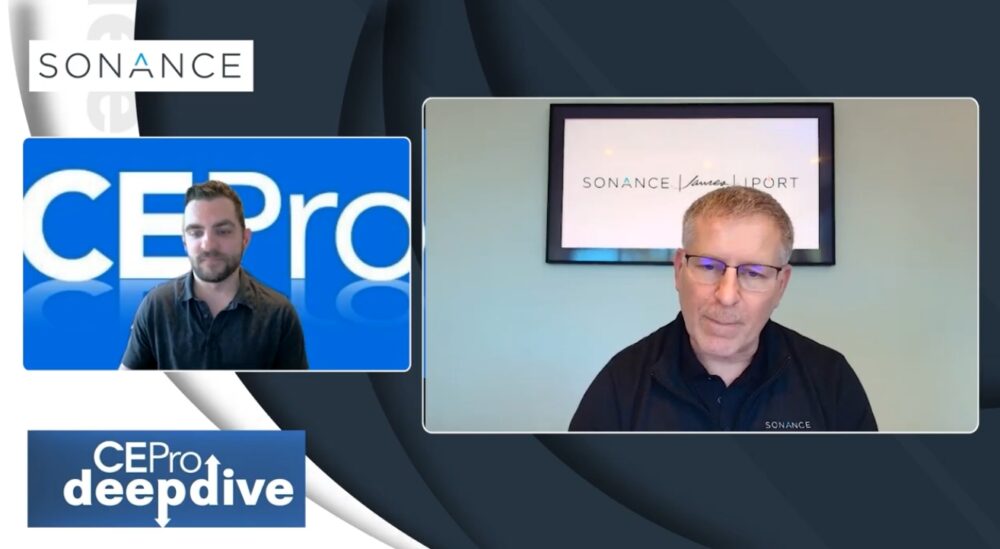
Todd Gaito, sales and marketing manager, left; and Ralph Sevinor, owner and president, right.

By Tom LeBlanc
July 10, 2008
Phones ring constantly as Ralph Sevinor gives a tour of Wayne Alarm Systems.

The noise doesn't seem to faze the owner of the Lynn, Mass.-based company. He simply rattles off the names of employees as he passes them. They're too busy to respond because they are answering the phones.

"We always want a real person answering the phones," Sevinor says. "From a cost-standpoint, it's not economical. From a customer service standpoint, it's far superior."

Customer service is, by far, the No. 1 priority for Wayne Alarm Systems. It has to be, Sevinor explains, since it makes most of its money off of security and fire monitoring contracts.

"Recurring revenue is our heart," he says.

Quick Stats
  • Company: Wayne Alarm Systems
  • Location: Lynn, Mass.
  • Principal: Ralph Sevinor, owner and president
  • Web site: www.waynealarm.com
  • Years in Business: 38
  • Revenue: N/A
  • Number of Employees: 84
  • Commercial/Residential Split: Started out primarily residential, but now doing a majority of commercial
  • Specialty: Whole-house control and dedicated home theaters
  • Top Brands: First Alert and Honeywell
  • FYI: Follow up, follow up, follow up. Touch the customer regularly.
The "recurring" part, though, isn't something that Sevinor thinks he can take for granted. He says it's important to show value to clients who are paying for a 24/7 service.

One way he shows value, he says, is by overstaffing his company. He scoffs at the idea of outsourcing and says voicemail is never a good option.

He's such a stickler for his brand of customer service that Wayne Alarm Systems has its own central station monitoring facility in its 20,000-square-foot headquarters.

"When people call us, especially our central station, they're not calling to say 'have a nice day.' They're calling because they have an issue. The quicker you can take care of that issue, the better it is."

That point rings especially true when clients are essentially paying a company to be at their beck and call. That's why being in the recurring revenues business isn't always easy, Sevinor says.

Meanwhile, many traditional CE pros that primarily offer audio, video and control systems are intrigued by the concept of selling service contracts. Integrators that offer IT, in particular, are apt to offer computer network maintenance contracts.

Some dealers offer system maintenance contracts that include periodic calibrations and other updates. All are motivated by the recurring monthly income that can complement sales or even provide a backbone to the business.

Those integrators won't get an argument from Sevinor. He agrees that companies should seek recurring revenue opportunities. He just thinks that many are at risk of underestimating the manpower and infrastructure it takes to provide a service worthy of those payments.

Diversifying Ain't Easy


It's a two-way street. Just as traditional integrators often look to get into the recurring revenue business, Sevinor would like to see Wayne Alarm Systems get into selling and installing control systems.

It won't, though, until he's confident that it has the expertise and processes in place to do it effectively.

"Just as the majority of [CE Pro] readers are envious of what we do, I'm envious of what they do because of the huge margins and ease of customer sales," Sevinor says.

"What we sell is like insurance policies. Nobody wants to buy insurance. There's no glitz, no instant gratification with the alarm industry. We sell peace of mind."

The company would also like to sell glitz. Sevinor has tasked Todd Gaito, sales and marketing manager, to explore whether Wayne Alarm Systems could compete and profit in the control market.

The tricky part, Gaito says, is "creating a balance between home automation and security." He adds that he's also looking into offering audio/video.

A company like Wayne Alarm Systems can't snap its fingers and start offering control, according to Sevinor. "It's a philosophical change," he says.

"When somebody looks at a home automation system or a TV, they're looking at a life expectancy of two or three years. When somebody is looking at a security system, they're looking at 20 years."

The gap between those two or three years and two decades provides a challenge. Wayne Alarm Systems' clients have come to expect long-term service. They aren't likely to be understanding if their interface can't be repaired because the manufacturer has since been acquired and no longer supplies parts for that old line.

That's something that occurs all too often, Sevinor says. He describes a "Pac-man game" among manufacturers, wherein companies buy up one another.

The inherent problem for Wayne Alarm Systems, Sevinor says, is that "customers come to us and they look for support. When that [manufacturer] goes out of business, Wayne Alarm Systems has a problem. We have to deal with the customer. That is our biggest fear, and we see that problem time and time again."

"Manufacturers haven't really understood that the lifecycle has to be larger than one or two years."

As Sevinor talks, he motions toward a box of files on the floor of Gaito's office. The files are from a company that offered automaton and security and went out of business.

Offering bundled services is something that Wayne Alarm Systems definitely wants to do, he says, but he doesn't want to end up like this company.

"They did a lot of bundled services, and they went out of business -- unfortunately, for a lot of reasons," Sevinor says. "One reason is that they did a lot of services, but I don't know if they were excellent at any one service."

For Wayne Alarm Systems, preserving its reputation is more appealing than the prospect of offering high-margin control installations, according to Gaito. "We know we have a good reputation," he says.

"We know we're good at security; we're good at fire. With new technologies, we didn't dive right into it because we're concerned about our reputation. We don't want to ruin our reputation by not supporting it. I think we're doing the right thing by slowly getting into it."

Acquiring the ability to maintain quality control with control systems will be a step-by-step process, according to Sevinor. "Can we do a good job of it?" he ponders.

"Just because you can do something well once doesn't mean you can repetitively. It means you were lucky."

It's not good enough to be lucky; reputation is everything when it comes to recurring revenues, according to Sevinor and Gaito. So, Gaito will continue to evaluate whether Wayne Alarm Systems can succeed beyond the security realm.

Recurring Processes


Correction: Wayne Alarm Systems isn't a security company, according to Sevinor.

"You say I'm in the security business; I say that's not true. We're in the critical monitoring business."

Indeed, Wayne Alarm Systems goes beyond traditional security, offering monitoring for lots of things. For instance, located in a coastal city just outside Boston, it might have a client that has lobster tanks.

Why does a lobster distributor require monitoring? If, for some reason, the pumps that circulate water from the Atlantic Ocean into the tanks fail, they lose some very valuable lobsters. It's not security, but it's critical.

It appears that Sevinor has built his business around the premise that its clients' critical needs are what is important. Nowhere is that more evident than in its central station.

First of all, most security companies don't have an internal central station. Most outsource.

Sevinor, however, is fanatical about the importance of keeping customer service completely in-house. He is also completely and absolutely against outsourcing. It can't be overstated.

As part of his tour, he took pride in showing a video of a comedy sketch featuring a woman with a residential security emergency. She calls her alarm company and reaches a customer service representative based in India who is ill-equipped to help, constantly putting her on hold to handle unrelated customer service calls.

It's a joke, but it also shows the contrast of what Sevinor tries to represent.

"We overstaff it," Sevinor says of his central station.

There are certain times of the day -- mornings when businesses are opening, afternoon when kids are coming home from school and late-night when bars are closing -- when alarms spike.

"You want to make sure that you have enough people [working] so you can support those customers."

Planning for the maximum amount of work often means having too many people working at any given time.

"You may walk into the monitoring room and see three people watching TV. That's true. We call it 'hours of boredom and seconds of terror.'We want to make sure we have adequate staffing."

As a manager, Sevinor says it's frustrating, of course, to see people not working. He understands, however, that it's a necessary evil -- if he wants to provide a certain level of service.

"If you look at it as a dollar and cents thing, you'd say it's a waste of money," he says. The thing is, though, that at any given moment those employees who are watching TV might be called into critical action.

"If we were ever run by a bean-counter, it would be a whole different operation," Sevinor says. He says customer service is usually the first thing to get trimmed.

The same goes happens when alarm companies are acquired, he says. "They cut back on customer service to show a quicker profit."

Financially, opening a central station is a huge undertaking.

"You're talking over a $1 million just to open it," Sevinor says. He adds that companies can simply "have an outside monitor or one that's outside the country for that matter. So, that's not [much of] an expense."

Sevinor reiterates that it's "understandable" that traditional integrators want to build recurring revenues. As a point of emphasis, however, he shows some of Wayne Alarm Systems' sales brochures.

He explains that most of the company's marketing collateral describes its personalized and tireless service. "You have to be able to back it up," he says.

The company newsletter goes to 11,000 clients. Sevinor points to the contact information. The front page displays his direct office number, his cell phone, his e-mail address and his home number.

"Some calls aren't pleasant," he says, "but I'd rather have a customer call me upset than have him drop off."

This is further evidence that recurring revenue business model comes down to commitment, according to Sevinor. "How many owners of companies will give out their home number?" he asks.

"If I don't drive the commitment, how do I expect my team to do it? It's one thing to say it; it's another thing to do it."


Return to full story:
http://www.cepro.com/article/wayne_alarm_systems_monitoring_other_markets/