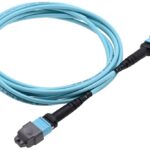
In the HDMI vs. component debate, plenty of people have strong opinions on the subject. CE Pro recently solicited these opinions via an e-mail blast.
The vast majority of respondents far prefer to use component video for a number of reasons. Most of the complaints about HDMI center around distance issues, the challenge of terminating in the field, the fact that the connections easily disconnect, the fragility of the cables, the large connector size and HDMI's far greater expense.
There were also a number of complaints about compatibility issues, the lack of HDMI standards, HDCP issues and a negligible quality improvement.
John Isaac of Blueprint Wiring Systems Inc., in Knoxville, Tenn., delved even deeper into the subject. He wrote:
Why are we having this discussion when the technology to process digital video locally at the display has existed for several years? Imagine something like a TV with an Ethernet jack and a terabyte of memory to store video. Imagine a single cable box that can transmit 10 simultaneous streams over a LAN to various televisions. And if I do not like the local cable provider, I can purchase content from 10 other people who stream video.
Why isn't the industry demanding that manufacturers comply to open standards that exist today? It's high time the audio/video and alarm industries come out of the dark ages and embrace the future. I thought we had made it when Polk Audio announced an IP-addressable speaker more than two years ago ... Our industry should be launching the next killer app, but instead we are debating cable standards. Who cares?
Nevertheless, we divided the the CE pro responses into three camps: Component lovers, those supporting HDMI and those that use both.
Component Video Still Rules
By far, the largest number of respondents believe that component video is the only way to go. While some do believe HDMI offers a better quality picture, they have found that the assorted problems associated with the format far outweigh its benefits.
Many have tried, and failed, to successfully install HDMI and have now written it off. Most agree that until the issues are better addressed by the manufacturers, they will not offer this option to their clientele.
I stay as far away from HDMI as possible. It is unreliable, and often doesn't produce as good a picture as component video. I run all my video in component, with either optical cable or digital coax for audio. --
Bob Bentley, Bentley Electronic Systems, South Glastonbury, Conn.
We use component video distribution because it works every time! No worries about the handshake, or if the connector comes off, or distance limitations -- within reason. --
Greg Calvimontes, Pgh Custom Home Theater, Pittsburgh, Pa.
We use component because it is more reliable and
we can make custom lengths as needed. There doesn't seem to be that much of a difference in quality for most customers to notice. --
Darryl Kuder, Red Dot Audio Video, Carlsbad, Calif.
I guess I am old school and do not convert to the newest and more expensive options right away. I still utilize the component video cables as most of
my runs are rather long so it is very cost effective. And I really cannot see the need to use HDMI at this time for two reasons.
First, there is no material other than HD DVD and Blu-ray DVD that are sending true 1080p to the display. When my local cable or DirecTV or even a broadcast channel make that leap -- and I do not think it will happen soon -- then I may change my mind. And the second reason, there is still confusion over format of HDMI cables! I find this very unsettling for myself and my customers.
Our industry needs to finalize on this format stuff before bringing products to market. Can you imagine if the other industries were this way? Michelin tires only work on Ford and Jeep? Sunbeam toasters only work with Wonder Bread? --
Jim Barto, Conexus Network Systems, Altamonte Springs, Fla.
I use component for distribution for two main reasons:
ease and price. HDMI cables are not conducive to custom installations right now. The parts, accessories and cables that are readily available do not make for a neat and clean install.
How many installers want to ball up an extra foot or two of HDMI cable during an install? Sure we can put numerous HDMI wall plates in a row to make it look clean, but to have five or six really doesn't do it for me. There is only one product that makes an HDMI install fast and clean, but RapidRun is not cheap and is still not as nice as a component install.
I can install component wiring, make it look nice and still be cost effective for both me, as the installer, and the customer. I cannot say the same for HDMI yet. --
Jodi Baganz, Network Audio LLC, Stevens Point, Wis.
Component is easier and cheaper to run longer distances and
it is currently more universal among products. I don't want to have to make sure every component in the installation has HDMI unless that is something the customer wants.
Typically requiring all HDMI components will lower the customer's options and/or push them over their desired budget, unless it is a high-end install in which almost all components come with HDMI. --
John Lucenta, Custom Automation Solutions, Joliet, Ill.
We prefer component. We can make the cables and can go a greater distance without an amp. On some flat panel displays the component picture is better for standard definition signals since it goes through the TV's filters. For high definition we see no difference between component and HDMI. --
Glenn Fowler, Access Innovations, Inc, Virginia Beach, Va.
We use component video distribution (via Cat5 in many cases). We have tried HDMI-over-Ca t5 extenders from Gefen, but have had very little success. High definition video distribution using
component via Cat 5 with B&K's HD6 has worked very well. --
Tony Donahue, WireWorks, Inc., Carlsbad, Calif.
HDMI sucks!
Once you go past 12 feet you will have a ton of service calls with data transfer lock up. Stick with RGB. --
Tony Sambalos, Audio Video Concepts Inc, New York, N.Y.
We prefer component.
HDMI has presented too many issues to work consistently in multi-component systems. If you're only using display and DVD HDMI, it works reasonably well. --
Bob Ireland, Amsafe of Miami, Inc., Ft. Lauderdale, Fla.
We use component for two main reasons: 1) Cost. HDMI is too expensive to run all over the house. 2) Still too many problems and issues with HDMI, even with 1.3! --
Shawn P. Lemay, S&T Enterprises of WNY, Williamsville, N.Y.
We don't use HDMI unless our customers specifically ask for it for a number of reasons including:
reliability, ease of installation and cost. --
Graham S. Hausler, Atlas Smart Homes, Bend, Ore.
I feel that
component video is the gold standard that HDMI needs to live up to but definitely has not. In a video distribution system, the number one requirement is stability. HDMI has yet to show anything near 100 percent stability.
I believe that most installers and designers would agree that we cannot specify HDMI into distribution systems until the technology becomes completely reliable. Any slight advantage gained in picture quality is irrelevant to the client when the picture goes to snow. It's also worth pointing out that matrix video switches that are HDMI compatible either don't have the capacity requirement of most upscale homes or they are incredibly expensive.
One day we may have distributed digital video nirvana, but until then our company will stick to high quality analog solutions via component video. --
Brent Huskins, Media Design Center, Fort Worth, Texas
HDMI is a dream come true, if only it didn't come quickly crashing to the ground with distance limitations and software-encryption-based compatibility issues. The fact of the matter is that no matter how many manufacturers claim 1.1 or 1.2 or even 1.3 compliance, you never know if the setup will work until the components are finally connected and each component agrees that HDCP is successfully negotiated.
Component video cables always work. The quality may vary depending on the electrical interference environment as well as the type of cable used, but you are guaranteed to get a picture even over several hundred feet of cable.
For absolute performance HDMI is clearly the winner, but care must be taken to fully test a system before installation. For reliability, distance, and robustness that just plain works, Component video is the way to go! --
John Carey, Digital Home Technologies, LLC, Leonardtown, Md.
Component is better for our needs right now. HDMI seems to be built for copy protection, not content delivery. I have heard too many stories where high-end systems are not working because HDMI thinks that someone is trying to pirate a video stream. That is a service call I don't need. --
Michael Hoey, simpleHome, Westborough, Mass.
HDMI does work well when it wants to work, component video works every time. I prefer to use component video since
most people cannot see the difference between 1080i and 1080p unless they are sitting within a few feet of the screen. I also use it because it works. If we have a lot of extra time to spend troubleshooting or want to sell some expensive HDMI cables and make some extra money, then I spec HDMI connections. --
David R. Thornton, Circuits Plus LLC, Duluth, Minn.
I prefer component distribution. It is less costly, more reliable and certainty more predictable than HDMI. It always works. --
Mark Malis, Audio Den, Van Nuys, Calif.
Component video hands down! We have done a couple of video distribution systems with HDMI and it creates way too many complications.
HDCP seems to be a constant issue. It seems to me that the HDMI format simply wasn't designed with video distribution in mind. --
Jason Williams, Soundstream, Charlotte, N.C.
We need reliable distribution methods. We've tried products that provide HDMI distribution and they all have failed for one reason or another. Component video works every time. We choose component video. Clients don't want their homes to be laboratories for the consumer electronics industry. --
Ken Briggs, Electronics World, Gainesville, Fla.
Pretty simple really,
if HDMI worked as claimed, we would love to use it. It just doesn't work. Get it right and it will take flight! --
Gene Howarth, Seacoast Sound Inc., Naples, Fla.
Whenever there is a call for HDMI to be prewired, I always run component video with it at that time. The equipment needs regarding component video are much more economical for the consumer and also more reliable.
HDCP is the downfall of HDMI, as is the ever-changing standard.
Component video connections are solid (when using quality connectors) vs. HDMI, which does not secure well enough and can easily become disconnected. The depth needed in an AV cabinet or shelf is greater when using HDMI, due to the large connector heads on the cables, and the extreme sensitivity of the wire to get damaged when bent is problematic.
There is no way to field-terminate HDMI, making retrofitting it more difficult since the size of the connector usually means a larger hole to drill, and fewer places in a wall cavity it can go through without catching on something or otherwise causing foul language to be used by the installer who has to be in the attic/crawlspace that much longer.
Component video is still a great tool, and it is what I use more often than not. If HDMI can evolve to a locking connection, with a smaller connector head, and no HDCP quirks, then bring it on, I will convert. So then will my customers. --
Jeff Huffman, Jeff's Audio Video LLC, Lawrence, Kan.
As far as HDMI is concerned, I think it will be viewed historically as
the connection that never delivered what it promised. It has severe distance limitations which severely impact its useful application in the types of systems that we routinely install. Even the experts argue about the maximum lengths that can be used. It is very expensive per foot and cannot be terminated in the field.
I will stick with the old analog standard because it works well. I am sure that there are other technologies in the works that will promise the concept of a solution to connectivity. I just wish that these "engineer" types would consult with us folks whose job it is to make these systems work well. --
Jon Bourque, Integrated A/V Solutions, Londonderry, N.H.
HDMI for distribution is basically a disaster. It is okay for point-to-point use, but as a connector which needs to be plugged and unplugged multiple times, it just is not a good standard. --
Ian Chapman, MyHomedia, Frisco, Texas
HDMI Users Cite Future Proof, Simplicity
A minority of the respondents do believe that HDMI is the solution of the future. Most do acknowledge there are still a number of problems with the format, but still feel the quality of the picture, simplicity of using one cable and future-proofing aspects outweigh the problems.
We tend to like to use HDMI when both ends accommodate it because it carries the high quality video signal and the audio signal together. Our only downside to it is that the connector has a tendency to fall out easily, which causes great frustration for both the customer and us. --
David R. Carlson, DC Tech Audiovisual, Minneapolis, Minn.
Although I am not happy with the incompatibility issues with HDMI, it is my preferred choice for video distribution. It's one cable, better quality, 1080p and (for the most part) future proof. --
Frank Placa, Amagia Theaters , River Edge, N.J.
When possible I use HDMI and also use a receiver with HDMI switching. To be honest I don't really see the difference between HDMI and component. It is just much better because it carries video and audio over one cable and saves time and clutter. --
Ab Roeterdink, Vector-SI, Inc, Apollo Beach, Fla.
We are currently using HDMI 1.3 in home theater installations. I say 1.3 because we had huge problems with version 1.1 and 1.2 components. So far HDMI 1.3 works but the lip sync issue is a big problem when combining an older 1.1 component like a HD TiVo with a newer unit like a DVD player. We distribute multiroom video over a Cat 5E network via a Fusion DVD server.
If I can sell a client all new equipment that I have picked out than I like HDMI 1.3. If I have to try to integrate my new HDMI 1.3 Denon Surround receiver with a client's older equipment, I would rather use component video. --
Ryk Schoonheim, Sights, Sounds and Such
We are using HDMI wherever possible, as the resulting upscaling of standard definition content is vastly superior using the HDMI on a good HD set. --
David Nelson, Aztech Integrated Systems LLC, Ft. Mohave, Ariz.
I favor HDMI for hookup because it can carry the sound and the video. I have seen a lot of problems in the past two years with the spec, but now that I have some experience, I can usually get everything to work. Most of the problems seem to be caused by the built-in copyright protection.
It's also harder to make long runs because of the amplification needed. Some of the manufacturers don't seem to fully understand the meaning either. Lately, I am finding that most devices that are new enough to be labeled 1.3a seem to have it worked out so that their device will play nice with the other equipment.
The big thing for us is to test the equipment selection here in our shop before we take it out to install so that we already know what to expect. The problems seem to arise trying to use existing equipment to integrate to -- then it's strictly "try it and see."
Given all of these problems you would think that I would be down on it, but I still think it's the future for video hookup. --
Norman Fleenor, Fleenor Security Systems, Johnson City, Tenn.
HDMI is our connection of choice. We try to use digital connections wherever possible so that systems remain current for as long as possible. We believe digital will eventually replace analog completely, and want our clients to benefit from not needing to reconfigure their systems often.
Having video and audio in one cable reduces clutter. Too bad they didn't incorporate an analog audio pathway into the cable construction for typically multizone audio connections. Multiroom video will eventually become predominately wireless so the connections between systems is not worth an expensive, lengthy HDMI cable.
If multiroom video is required, we run Cat 5 or Cat 6 and configure the system to accept the media this way. --
Michael Miller, Integrated Home Technologies LLC, Bonita Springs, Fla.
My business deals much more with security/automation/lighting control than video distribution and home theater, but I have designed and installed a few.
I have used mostly HDMI recently, primarily for cabling simplicity, particularly when switching hi-def sources through an A/V receiver.
Since my installations in new construction include plastic conduit between hubs and entertainment centers or video locations, I have found that factory HDMI cables will generally easily pull through a one-inch tube, with clearance for the connector. I tape up the connector ends to protect them from debris or snagging when making the pull. --
Ken McLeod, Integrated Home Technologies, Eau Claire, Wis.
Both HDMI and Component Are Used
While most installers still believe that Component Video is the "sure-fire" option, they are also including HDMI in their installations as a future-proofing method.
While some believe HDMI truly offers a better quality picture, they will still install component as a backup. Many will only use HDMI with a single-source system. Other installers begrudgingly use HDMI due to customer demand.
We use a combination of both. As a professional integrator, one cannot ignore HDMI (even if we wish we could) because in a couple years our clients will be pretty upset when they cannot view their HD DVD, Blu-ray or other future content that will only be delivered by an HDMI cable.
We always run a BNC-6 Mini Hi Res Cable along with Cat 5 and HDMI so we are covered on all ends. Crestron's new HDMI 1.3 distribution system set for release next summer will solve a lot of the current problems everyone is experiencing with HDMI. --
Greg Pass, SuperVision Audio+Video, Los Angeles, Calif.
HDMI is proving to be a more reliable, but not yet preferred, transmission method for our projects. Sync issues with cable and Sat STB's prove to be the biggest stumbling block for one-room solutions, but are virtually non-existent on HD DVD and Blu-ray material. --
Brian Remington, Connect Source, Longwood, Fla.
I like [HDMI] and use it but I am still skeptical on using it solely without any contingencies. I have had it fail on me from the rack to the projector and without component video back up lines I would have been in a bad situation.
I have also had the ends of an HDMI cable come completely off for no rhyme or reason. In the end, spending the money and time to wire with it was totally useless. And because of the location I was not able to re-wire a new HDMI cable.
However, many customers who have some knowledge of A/V request HDMI because they think it is better than component video. I have yet to see it perform better than component video. --
Joe Bartlett, AVA Innovations LLC, Cape Coral, Fla.
We still use both when installing an AVR receiver. We use HDMI for high quality video and component for displaying the receiver interface on the video display for configuration.
This will probably change once more manufacturers integrate an Ethernet port and internal Web server. Then we can configure the system via a Web browser and use only HDMI. --
Robert Evans, nStructure Technology Solutions, Yardley, Pa.
We only use HDMI for local video, for instance, a DVD player with an HDMI-out connected to a 1080p video display in the same room. Our multiroom video distribution is component and composite only using Crestron PVID and room solution boxes.
We'll wait for Crestron's new HDMI-enabled video distribution to become available before we attempt to distribute HDMI. --
Dean Detton, Prestige Automation, Inc., Reno, Nev.
We use both HDMI and component for long runs. We use HDMI mainly because it distributes 1080p and carries audio as well in a single cable. But since it's a fairly fragile connector, we run Mini 59 for component as well just in case something ever happens to the HDMI cable.
We also run two Cat 5s along with the HDMI and 5-conductor Mini 59 to cover every imaginable signal that an installer would ever need. Of course, you have to use an expensive cable such as Key Digital or Ultralink that will support 1080p.
Sure, clients might not appreciate the higher prices, but if you explain to them that it's the only way to produce an awesome 1080p picture, it makes for an easier sale. --
Lenny Langford, ZBARGAIN, San Diego and San Gabriel, Calif.
When the HDMI 1.3 standard is in place, I will probably prefer it over component. Due to cost of switching and distance limitations, we have been using more component cable installations for video.
We have also found it is usually cheaper to use an A/V receiver than a dedicated video switcher. With the upcoming releases of HDMI over Cat 5 and the promise of 1.3 compatibility, hopefully the use of one cable for video and audio to replace the four or five currently used will become a cost effective reality. --
Stuart Benton, Star Alarm AV LLC, Brighton, Colo.
HDMI is a doubled-edge sword. It is great if it works. We use both and it depends on the install if we pull an HDMI. Component cable works all the time and it looks really good, especially if you have installers who can calibrate a killer-looking picture.
We always make arrangements to be able to pull a HDMI at a later date. We are just waiting for HDMI to be more reliable. --
Jason Hanley, Acme Integration Spokane, Wash. and Post Falls, Idaho
Even though HDMI is young and there are still problems, I use it simply for future-proofing. If I'm retro'ing wires, I always recommend HDMI for the possibility that 1080p becomes more widely offered. But I offer customers the options and my opinion, so many take it, if for nothing other than future-proofing.
I've done a few subjective tests with HDMI vs. component. Visually, I don't see enough difference to justify HDMI, and the drawbacks outweigh the benefits. Also the cost of HDMI really limits the installations that justify it.
I recently installed a 30-meter HDMI cable with a repeater at a retail of about $900 -- almost half the cost of the TV. And with more centralized installs, length becomes an issue. --
Darren J. Grebe, Soundwaves of New England, Yarmouthport, Mass.
We use both. We tend to use HDMI for jobs less than 50 feet and component for longer than that. But we always test to make sure it will work with the equipment before we let the customer see us hook it up. The cost and the compatibility problems are the reasons we don't use it all the time. --
Rob Eldridge, Sound Logic Integrations, Kilgore, Texas