D-Tools University: Despite Bad Economy, Dealers Invest in Better Business Practices

The tough economy did not stop D-Tools users from paying $999 for three-day training on design, proposal and project management software

image
By Julie Jacobson
November 17, 2008
With a recession going on, it may seem like a strange time to invest in company processes. But 75 dealers paid $999 each to participate in the three-day D-Tools University (DTU) last week in Atlanta. Plus airfare. Plus hotel.

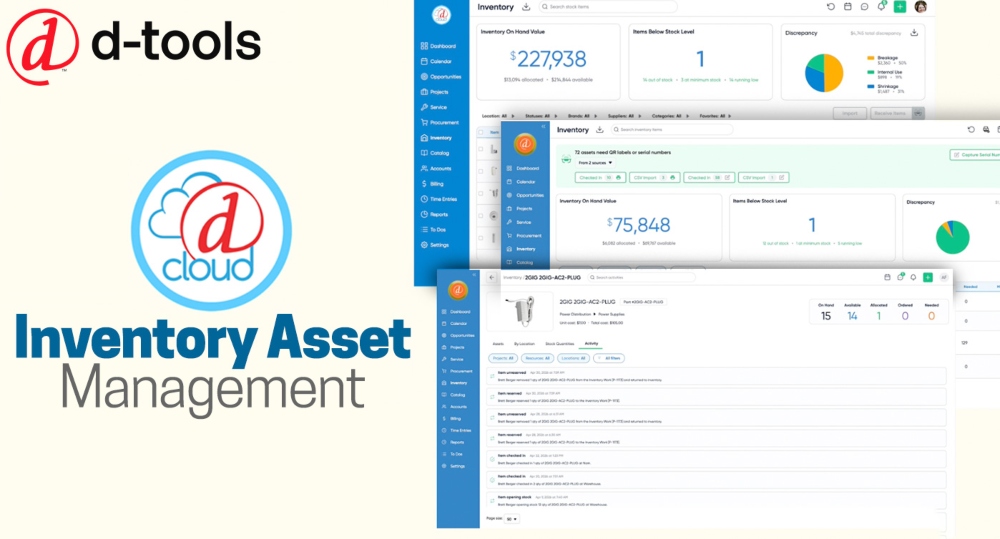
That's on top of the cost of D-Tools' design, project management and proposal software for systems integrators.

The company's flagship SI5 software starts at $4,500 for a single user, plus a monthly maintenance fee of $150. (CORRECTION: $4,500 to buy SI5 outright; $2,900 + $150/month with a plan. A stripped down version called Estimator is available for $999.)

So is today really the time for home systems integrators to fork out that kind of money, when they're watching their cash flow dry up?

"I think some of them [dealers] are hard pressed just to pay their bills," says DTU attendee Michael Pope, president of Medina, Ohio-based Audio Video Interiors (AVI). "But people who make the investment now will be around in a couple of years."

Like other dealers who attended DTU, Pope says his company is "taking advantage of the slow-down" in the economy by focusing on company processes.

Now more than ever, he says, "It's really important that our company get more efficient. … We have five databases right now."

He explains that D-Tools software, which AVI is just starting to utilize, can help the company become more streamlined when it comes to proposals, inventory, scheduling, and project management.

Still, D-Tools isn't cheap, and implementing the software is "a big, big deal," Pope says.

Not so, says D-Tools VP of marketing Tim Bigoness. "The myth that D-Tools is expensive and hard to implement is just that – a myth," he says. "The cost of the software is not that much for a platform that will help your business."

Investment Pays for Itself


Bigoness tells story after story of dealers who saved time and collected more money after using D-Tools.

One dealer, he says, "realized he left 15% on the table" after he re-ran a project with D-Tools.

With the software, integrators can more accurately estimate labor and ensure they recoup the cost of every little cable and connector that could otherwise be forgotten in the proposal process.

The strong attendance at this year's DTU – which included tracks for both beginner and advanced users – was not a big surprise to Bigoness.

In the past, he says, dealers have claimed, "'I don't have the time. Now, I've got the time.'"

Jeannette Howe, executive director of the buying group Specialty Electronics Nationwide – and presenter at DTU -- says her organization is "encouraging dealers to expand efficiency."

That includes improving company processes as well as taking advantage of online training.

For example, she says, "If you're not doing lighting, get one of your employees to go online and take an eight-hour course."

For its part, SEN teams with the training firm Bedrock Learning for online education.

image
Consultants Kevin Mikelonis and Sam Cavitt, who spoke at DTU, provide design, documentation and training for home systems integrators

Outsourcing Requires Process Management


Consultant Kevin Mikelonis of Process Dealer Services Group says that under tough economic conditions integrators are turning to more outsourcing, and that requires better business practices.

"Maybe they're cutting back on rough-in labor and using electrical contractors for that," Mikelonis says. "They need to have better processes in place, like documentation."

Mikelonis, who spoke at DTU, consults on business processes, and creates documentation for home systems integrators.

Also appearing at DTU was Sam Cavitt of the consulting firm Media Environment Design.

He too is seeing a trend of outsourcing, and that includes the use of design firms like his and Mikelonis's.

Dealers have to "create better efficiency," says Cavitt. "If my core competency is sales, and not design, why do design myself?"

He points out that a company's "payroll is fixed costs, but not necessarily fixed need."

That's why outsourcing makes good sense, especially in today's unpredictable economy.

image
Jacobs, Jacobson, what's the difference? I've been called worse.


Return to full story:
http://www.cepro.com/article/d_tools_university_despite_bad_economy_dealers_invest_in_better_business_pr/