If there was a product that had the potential to pay for your company's operating expense through recurring monthly revenue, foster higher customer satisfaction, secure your client's network, and eliminate almost all future service calls, an integrator might feel like he found the nirvana.
Perhaps dealers have found an ideal category to sell in the form of managed service systems. These systems appear to offer a strong potential for recurring revenue, as well as client satisfaction. The systems also can greatly reduce service call expenses and offer a potential differentiator in the market.
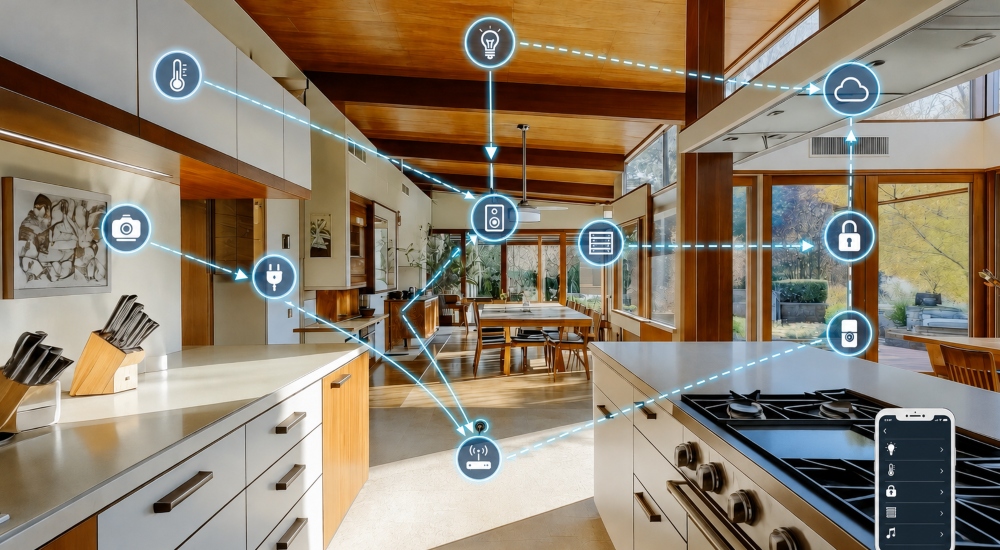
The systems spit out a monitoring "dashboard" for a dealer that can then be used to:
- Track systems' status in the field
- Undertake action remotely to repair a problem over an IP network
- Anticipate repair or service work
- Add a layer of security to an IP-based system to prevent outsiders from gaining access to clients' info
The category broke on the scene a few years ago with Atomoo. Unfortunately,
Atomoo folded in September 2009 due to the loss of a key investor. But other companies do not seem dismayed by that development.
Here's a look at three companies emerging in the managed services market.
CytexOne
"We have the Golden Egg," says Dan Levine, president of New York City-based
CytexOne. He is referring to the company's new Atlas product, a "black box" that remotely monitors every piece of equipment in a home entertainment system via an IP network.
Levine says CytexOne's Atlas product is not a pipe dream. As an integrator himself, Levine already has more than 50 of the devices monitoring more than 1,000 nodes in the field among his customer base. The solution was actually born out of his installation company's own need about seven years ago. Those small servers led to the development of Atlas. The company offers two models: a small shelf unit and larger rack-mount unit.
"In New York City, overhead is so high and dispatching a service vehicle for every problem was costly," he recalls. "We started putting small servers into every system we installed, using it to program and monitor and maintain the entire system after the fact. It's not a financial feasible option to physically go on site after the job is done. We needed to know the problems before they happened so we could be proactive. Everything we can do on-site, we can do remotely, except physically changing out a device."
In the IT industry, remote monitoring systems are somewhat commonplace. But in the custom business, they are virtually unheard of. So how much should dealers be charging for these remote units?
Atlas plans to charge between $1,800 and $1,900 for its unit when it hits the market. The company also will charge dealers about $35 to $50 per month per client for remote monitoring service, or about $2 to $3 per device per month. Levine recommends dealers add a 50-point margin on that monitoring service.
Certified Cyber Solutions
Certified Cyber Solutions, headed by industry veterans Doug Weinstein of Elf Foundation fame and Russ Pritchard, owner of The Audio Warehouse, is a 25-year-old installation company in Charleston, S.C. with a unique aspect to its product: it claims to provide not just performance monitoring, but also cybersecurity that safeguards a system by prohibiting outsiders from accessing a home network. Identity theft, malware, viruses, netbots and malicious attacks can disrupt a home network just as viciously as a business network.
The company's product group, Home Cyber Shield, launched in October and is being sold through a CEDIA dealer network, as well as through independent IT network integration firms.
"As a founding member of CEDIA and business owner who has over the years worked with many clients, I knew that as we designed and integrated ever more sophisticated digital networks in folks' homes, we also had to assume more responsibility in safeguarding who could gain access to those networks, and that we had to protect the privacy rights of our clients and make sure cyber criminals couldn't gain easy access to their personal computers and media content," says Pritchard.
Weinstein says integrators should not overlook the threat of having their IP-based systems hacked, saying dealers are leaving their clients' "windows wide open and the front door unlocked" with an unprotected IP system.
"Just as we have become proficient in safeguarding people's physical security with home alarms, cameras and intercom systems, now is the time to turn our attention to safeguarding the security inside the home, including private information, computer systems, media content and individual appliances that can be exploited by cyber criminals or insider threats," says Weinstein.
ihiji
ihiji is a West Palm Beach, Fla.-based company run by Stuart Rench and Michael Maniscalco that debuted at CEDIA Expo 2009. The company has a product line called invision, which is a Web solution that provides a secure gateway for dealers to remotely monitor, service and maintain all aspects of each client's in-home electronic systems, including, entertainment, network, HVAC and lighting systems.
When a dealer logs into the system, a dashboard shows the status of every system (and every component) he has in the field, depicting problems in red, warnings in orange and components in satisfactory condition in green. ihiji goes even deeper by detailing the specific problem with an individual component.
There is no software to install. ihiji does not automatically recognize components, but requires an integrator to input the specific devices in a system. ihiji has four pricing tiers ranging from $120/year to $3,000/year. The system will be available in Q1 of 2010.