Neat-O: Wired for Prime Time Makeover
As seen on ABC's Extreme Makeover: Home Edition, an automation system makes home more accessible for Brian Keefer, who was paralyzed from the neck down in a gymnastics accident.
Brian Keefer was paralyzed in a gymnastics accident just before his 21st birthday. With the help of ABC’s Extreme Makeover: Home Edition, Wired Home Automation Services and SimplyHome, an automation system was installed to make the home more accessible for Keefer. (Photo via ABC)
For Tom Walker and Mark Jahnigen of Wired Home Automation Services in East Petersburg, Pa., the invitation to contribute to an Extreme Makeover: Home Edition renovation in the nearby Newberry Township amounted to a leap of faith.
“We knew next to nothing about the family until after we committed to the job,” Walker says, “and even then all we knew were the limitations we had to work with.”
The goal was to provide not only a more accessible home for 24-year-old Brian Keefer, who was paralyzed from the neck down in a gymnastics accident shortly before his 21st birthday, but also to give him a bachelor’s pad of sorts.
Walker, Jahnigen and their team only had a week to complete the installation. “We were able to build some racks the week before, and we had sufficient time to plan ahead of construction, be we didn’t have access to any of the pre-fabricated walls for pre-wiring," Walker says. "And we had to adhere to a pretty strict schedule during the week of the project; we were given very specific windows to work in."
An army of volunteers stepped forward to assist in pulling wires through conduits and cleaning up after each day’s work. But even with so much extra help, the pace was hectic, giving the team little time to react to unforeseen surprises.
“The automation team at SimplyHome, who we worked with on this project, only had a few hours to work with [Brian] before the family left, and we had to adapt from what they learned. So, for example, with the automated drink dispenser - for that to work, it required Brian to maneuver his wheelchair into a very specific spot. Luckily, he hit his mark on the first attempt, but if hadn’t nailed it that quickly, we would have had to scrap that idea. There simply wasn’t time to design an alternative.”
Fortunately, challenges like that worked themselves out. The biggest obstacle for Wired Home Automation Services was in acquiring the gear itself. Product selection was easy, as the integrator stayed consistent with its typical vendors such as Elan for automation, Draper for projection screen, Paradigm for loudspeakers and Anthem for electronics.
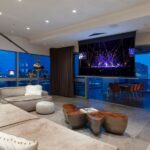
In the end, Walker was surprised by how much the episode focused on the technology, especially the voice-activated home automation system designed in conjunction with SimplyHome. The last two segments of the two-part show focused heavily on the monitoring system (which allowed Brian’s parents to do away with the baby monitor they previously had to rely on), the retractable theater screen leading into his new aquatherapy room, the automated shower, and the voice commands themselves.
“The producers of the show originally wanted to have literally hundreds of commands,” Walker says. “They wanted him to be able to say ‘ABC’ and have the TV tune into ABC, for example. But we ended up limiting them to core functions. Not only did we not want Brian to have to learn a huge vocabulary, but the control structure would have become unwieldy pretty quickly. The voice commands trip relays on an Elk security panel, which the Elan g! system detects to execute the automation commands. To do hundreds of voice commands, we would have needed hundreds of relays, which would have bogged down the system.”
Congratulations to Tom Walker and Mark Jahnigen for a Neat-O! installation. We’re looking for over-the-top projects. Cool, unique, tidy or meticulous, share your best work with our readers. E-mail your submissions, with high-resolution images, to managing editor Arlen Schweiger at .(JavaScript must be enabled to view this email address).
“We knew next to nothing about the family until after we committed to the job,” Walker says, “and even then all we knew were the limitations we had to work with.”
The goal was to provide not only a more accessible home for 24-year-old Brian Keefer, who was paralyzed from the neck down in a gymnastics accident shortly before his 21st birthday, but also to give him a bachelor’s pad of sorts.
Walker, Jahnigen and their team only had a week to complete the installation. “We were able to build some racks the week before, and we had sufficient time to plan ahead of construction, be we didn’t have access to any of the pre-fabricated walls for pre-wiring," Walker says. "And we had to adhere to a pretty strict schedule during the week of the project; we were given very specific windows to work in."
An army of volunteers stepped forward to assist in pulling wires through conduits and cleaning up after each day’s work. But even with so much extra help, the pace was hectic, giving the team little time to react to unforeseen surprises.
“The automation team at SimplyHome, who we worked with on this project, only had a few hours to work with [Brian] before the family left, and we had to adapt from what they learned. So, for example, with the automated drink dispenser - for that to work, it required Brian to maneuver his wheelchair into a very specific spot. Luckily, he hit his mark on the first attempt, but if hadn’t nailed it that quickly, we would have had to scrap that idea. There simply wasn’t time to design an alternative.”
Fortunately, challenges like that worked themselves out. The biggest obstacle for Wired Home Automation Services was in acquiring the gear itself. Product selection was easy, as the integrator stayed consistent with its typical vendors such as Elan for automation, Draper for projection screen, Paradigm for loudspeakers and Anthem for electronics.
In the end, Walker was surprised by how much the episode focused on the technology, especially the voice-activated home automation system designed in conjunction with SimplyHome. The last two segments of the two-part show focused heavily on the monitoring system (which allowed Brian’s parents to do away with the baby monitor they previously had to rely on), the retractable theater screen leading into his new aquatherapy room, the automated shower, and the voice commands themselves.
“The producers of the show originally wanted to have literally hundreds of commands,” Walker says. “They wanted him to be able to say ‘ABC’ and have the TV tune into ABC, for example. But we ended up limiting them to core functions. Not only did we not want Brian to have to learn a huge vocabulary, but the control structure would have become unwieldy pretty quickly. The voice commands trip relays on an Elk security panel, which the Elan g! system detects to execute the automation commands. To do hundreds of voice commands, we would have needed hundreds of relays, which would have bogged down the system.”
Congratulations to Tom Walker and Mark Jahnigen for a Neat-O! installation. We’re looking for over-the-top projects. Cool, unique, tidy or meticulous, share your best work with our readers. E-mail your submissions, with high-resolution images, to managing editor Arlen Schweiger at .(JavaScript must be enabled to view this email address).


Post a comment