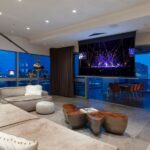
Shunning the new standards-based RF protocols, Lutron sticks to its home-grown technologies for RadioRA and Wireless HomeWorks.
08.03.2006
Zigbee, Z-Wave, Insteon and other open RF protocols for lighting controls and automation are on a rampage these days. But Lutron, the company that pioneered two-way RF lighting controls, is sticking to its guns, cranking out record numbers of RadioRA and Wireless HomeWorks lighting control systems using its original, proprietary RF technology.
CE Pro was given unprecedented access to the company's engineering department as Lutron attempts to fend off the growing interest among integrators in newer, higher-powered, higher-frequency wireless lighting control technologies.
'If It Ain't Broke, Don't Fix It'
Operating in the 900-MHz to 2.4-GHz ranges, Zigbee and Z-Wave tout greater bandwidths than Lutron's solutions in the 418-MHz frequency band.
The "Z" protocols, furthermore, exploit mesh-networking technology, meaning each node is both a receiver and a transmitter -- no dedicated repeaters are required, and with enough nodes, the range can be practically infinite. Lutron, on the other hand, shuns mesh networking in favor of repeater-based systems.
On the issue of RF distance, the "Zs" have it, boasting ranges of roughly 90 feet, versus Lutron's 30-foot range (without repeaters/antennas).
So at first glance, the newer technologies seem better suited for integrators, right? Not according to Lutron, whose engineers have investigated Zigbee and Z-Wave but opted to stick with the company's own solution.
First, Lutron's lower frequency is more stable with less interference, says Richard Black, engineering project leader. When Black and his team were developing RadioRA, the goal was 100-percent reliability. "It had to be better than powerline carrier, or why even bother creating it," he recalls. To do that, engineers first conducted RF emission surveys back in 1991 to assess the best bands for operation. Black drove the streets of New York City and Philadelphia holding his arm out the window of a van with an antenna connected to a spectrum analyzer, checking for interference. He even went to several antenna farms logging RF interference.
The team learned that higher-band RF ranges did not help maintain the integrity of the signal, especially if the spectrum was filled with other devices. Black cites the "noisy" 900-MHz band shared by cordless telephones and baby monitors, and the 2.4-GHz band shared by cordless phones and wireless routers as potential interferers with lighting control signals in that same range. This is why other providers must employ solutions such as spread spectrum, frequency hopping and orthogonal frequency multiplexing.
Second, according to Lutron, the "overcrowding" problem is further exacerbated because Bluetooth, Zigbee and Z-Wave continuously transmit RF instead of sending signals in bursts. Granted, Lutron's "quiet" bandwidth is also shared by most garage door openers, wireless security systems communicators and keyfobs. However, the 400-MHz bandwidth itself is generally less crowded and has no foreseeable overcrowding problem, says Phil Scheetz, senior sales representative.
Furthermore, while Zigbee and Z-Wave tout greater ranges than Lutron's RF technology, Black claims that lower-frequency signals actually suffer less attenuation through construction materials than their higher-frequency counterparts.
Third, the company claims that mesh-network systems rely on the quality of several components from disparate manufacturers, which can compromise the integrity of a solution, while Lutron offers a one-company solution that incorporates its own antenna to boost signal strength.
So why are so many companies migrating to open-platform RF technology for their lighting control? For one thing, Lutron asserts, development work has already been done, and the technologies and reference designs are readily available.
Staying the Course
According to Andy Wakefield, director of Lutron's Home Business Unit, Lutron may indeed someday alter its RF specs, but his message to dealers is that the company's technology is here to stay for the foreseeable future.
Over the years other wireless-control technologies, like LonWorks, CEBus and HomeRF, have hit the market with much fanfare, only to wane. But RadioRA, which debuted in the late 1990s following four years of development, and the subsequent HomeWorks system, which debuted in 2003, have maintained a strong following among custom integrators.
In fact, a recent CE Pro Brand Awareness Study ranked Lutron as a dominant No. 1 in the lighting control category in terms of usage and awareness. The company is also launching an RF-based system, AuroRa, targeting homebuilders. The system, which packages a master controller, wireless controller, five wall dimmers and one repeater/antenna, is expected to launch this summer for $750 (retail).
Lutron's efforts are not lost on dealers like Tom Wells of Integrated Media Systems, Vienna, Va., who is a devoted user of the Wireless HomeWorks system. "It's robust, reliable and easy to program," he says. "We are so confident in it that we're currently installing HomeWorks in three separate projects in Jamaica, which has very different construction techniques."