Recent News


Is the One-Component Solution Possible?
Wish list: A single component that handles both home theater and whole-house audio.
image

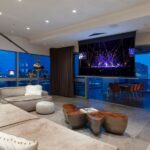
08.07.2008 — The notion of portability didn't start with the iPod, but customers have quickly come to embrace the concept of content portability, even as it pertains to a fixed installation like home theaters and multi-zone audio systems.

The customer watching the basketball finals or latest blockbuster in his home theater will automatically assume he can walk to kitchen and, at the very least, keep listening to game or action sequence as they grab another beer and slice of pizza.

The client hosting a summer house party will similarly assume that the music playing throughout the house will also be piped in for guests mingling in a home theater or media room.

Both these customers are likely to presume that, no matter where they are in their homes, they'll have quick access to keypad or controller that lets them pick playlists and switch sources -- regardless of whether the gear is connected to the home theater or in one of music system's zones.

However, as we know, it's not always that simple.

Integrating a home theater with a whole home (multi-source, multi-zone) audio system can become a costly and complicated process, so much so that in some cases customers may just decide to skip it (costing you money NOT spent).

This would be unfortunate and ironic, since home theater should be the kind of entertainment experience that encourages consumers to make their entire audio collection accessible for listening anywhere -- from the theater to other rooms in their home via a distributed audio system.

While the technology and products certainly exist to do this, the cost and configuration of such systems can be considerably more than most people are willing to spend.

From the rising cost for commodities like copper (used in all wiring), to the more technical issues of conveying and switching signals, maintaining signal quality and programming controllers to operate multiple devices from multiple locations, the task of integrating a home theater into a whole home audio system (or vice versa) may require more than most consumers expect or bargain for.

What seems conceptually simple and affordable can quickly become surprisingly complex and expensive, particularly in providing a GUI that is both full-featured and truly simple to use.

From the installer's perspective, ease of installation and integration and overall system reliability will also factor into creating desirable, cost-competitive, affordable and hopefully, persuasive price proposals to their clients.

Seeking the Single-Component Solution


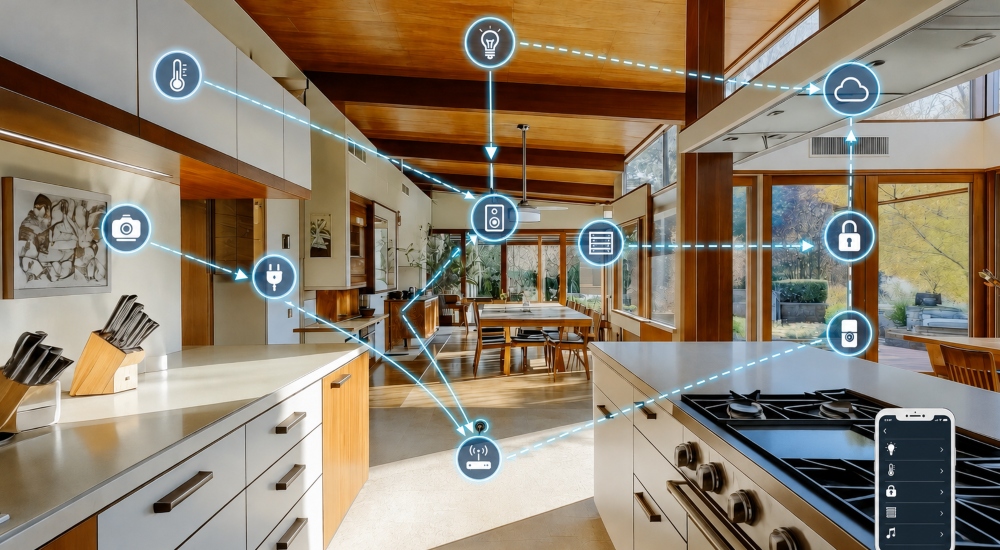
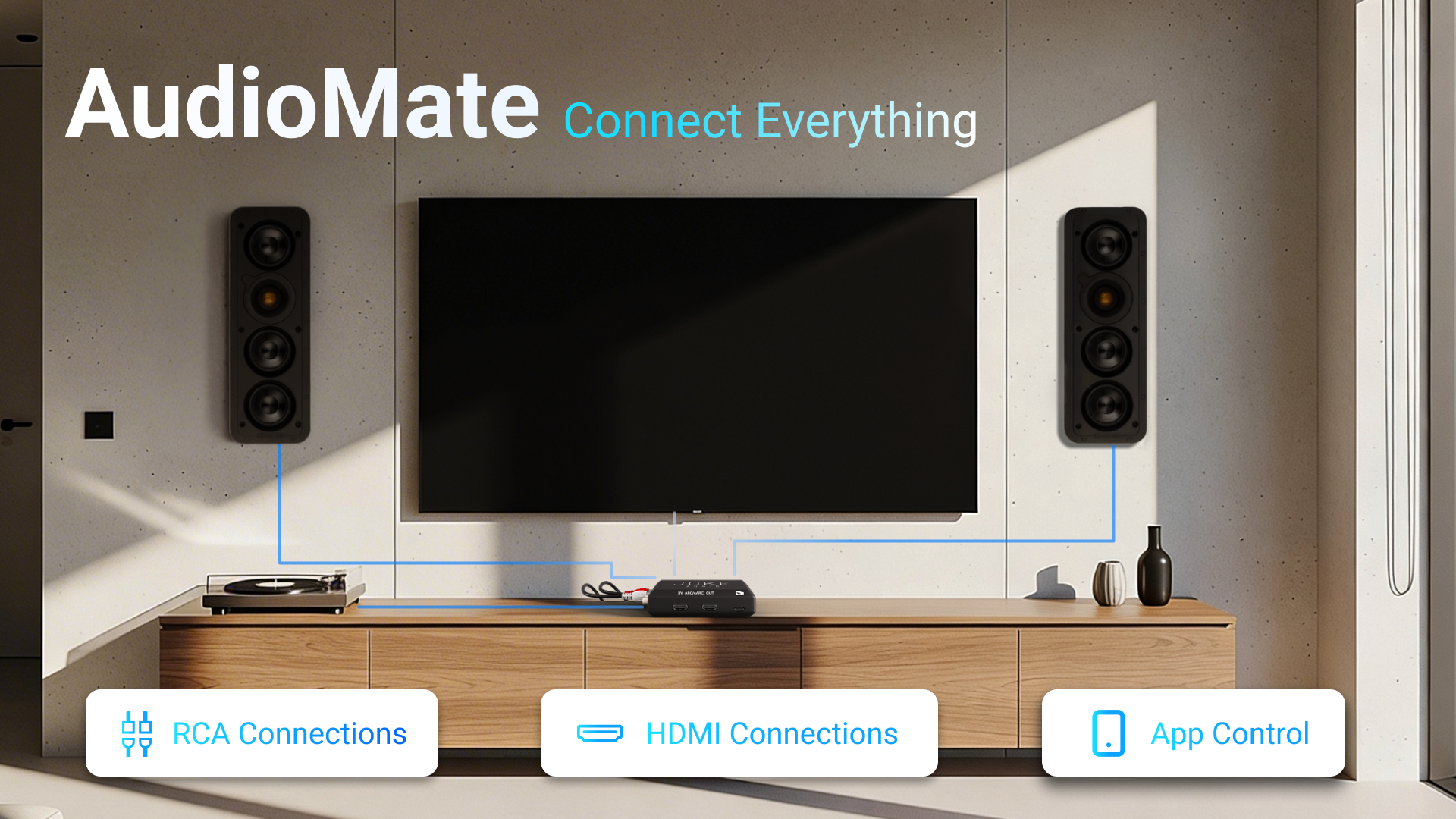
In an ideal scenario, integrating a home theater with a multi-room system would be accomplished by a single component.

It'd be capable not only of carrying the audio content -- as digital or analog -- but also equipped to convey system control signals and the metadata that frequently and increasingly accompanies the content.

The component would also need to be completely transparent to users, whose only concern should be what they want to listen to and where they wish to hear it.

For flexibility, the device must have bi-directional IR communication (including multiple IR outputs) as well as both RS-232 and Ethernet so it can easily interface with the latest A/V receivers, web-enabled and network-based devices and audio separates from one or more manufacturers.

Of course, a preferred single component integration solution will also permit remote access for programming, troubleshooting, and software upgrades so that house calls, if not eliminated, are minimized.

The component should also have low power consumption to lower carbon emissions and reduce demands on cooling or ventilation systems.

While the current state of the economy may curtail some consumer spending on custom installation, enterprising installers will use the unstoppable momentum of the DTV transition to produce new business opportunities to integrate home theaters with whole home audio systems.

Working with an audio platform that best supports home theater integration will give installers the best opportunity to capitalize on this once in a lifetime technology transition.

Sanjay Castelino is vice president of marketing and business development at Austin, Texas-based NetStreams.

Subscribe to the CE Pro Newsletter

Get the latest news, products and more delivered straight to your inbox.
This entry has been viewed 3395 times.

tags
Subscribe to the CE Pro Newsletter
Subscribe to Email Alerts
Subscribe to the newsletter today! 

tagsThis Article Tagged

tagsNews Feeds

tagsSocial Bookmark
Submit to: , Digg, Delicious, Slashdot, Reddit, MyYahoo!, Google, Technorati, Learn about social bookmarking

Comments

Posted by DrFlick  on  08/07  at  07:02 AM

Sanjay,

I know you do not want to toot your own horn, but one of the huge design considerations with doing this is to maintain audio synchronization throughout the entire home.  A system like yours facilitates this really well.  This especially is important for larger areas that may have individual speaker sets in spaces that are a combination of connected rooms used as a single entertainment area.

However, it gets even more complex if trying to display video in those rooms at the same time, as in watching a football game simultaneously on different displays within those rooms.  That same synchronized audio also requires the local video to be synched to that audio.  We see a trend developing that necessitates one-to-many A/V switching systems to accommodate this (HDMI switchers come to mind).  In addition to having just the audio piped into the various content consumption areas, one needs a single source for driving the video to all displays for the entire home occasionally, as in the case of a whole-home football party.  Using individual set top boxes for each display is not cutting it anymore because of the inherent differences in time lags for each box.

In addition, a designer also needs to take into account the individual delay factors for the rendering components.  Some displays delay the audio internally to keep lip synch intact with the video (if using the display’s audio capabilities) because they have slower processors within them that do not process the huge amounts of data being shoveled onto the screens quickly enough.  If the audio is driven through separate amplifiers, or in your case, a separate synchronized audio system, the audio chain may need the ability to insert a delay into the stream to allow the installer to get the audio synchronized with the video.  Being able to set an audio delay is an important criteria when selecting the audio amplifier components.  Conversely, if the delay imposed upon the audio chain is too great when keeping a standardized network clock for synchronizing the audio, the opposite could happen.  The audio lags the video.  Currently there are few if any products that let one delay the video stream to make it match the audio.  It gets even worse if wireless is brought into the picture for either audio or video.

Sometimes it almost requires using the same vendor’s across all rooms so that there is more consistency in the internal video and audio delays of the equipment itself as opposed to using numerous vendors’ products that may process the A/V chain differently.  Additionally, it takes a lot of time to get this set up and working correctly, so that time needs to be included in the initial installation and calibration time estimates.

I know this is picking at the obscure details of our business, but I think you will agree that integrators like us notice it immediately if we encounter a system where these characteristics have not been taken into account.  That is what distinguishes the designs and calibrations we provide from the average DIY installs.


  =D-

Page 1 of 1 comment pages
Post a comment

Name:

Email:

Choose smileys | View comment guidelines

Remember my personal information

Notify me of follow-up comments?

Please answer the question below:

Type the 4th letter of the word "theater":


Rate this article
You must be logged in to rate articles. Login or register.
  • Currently 4/5 Stars.
  • 1
  • 2
  • 3
  • 4
  • 5
Average score: 4 / Total votes: 1