Inside MyerEmco’s Collapse
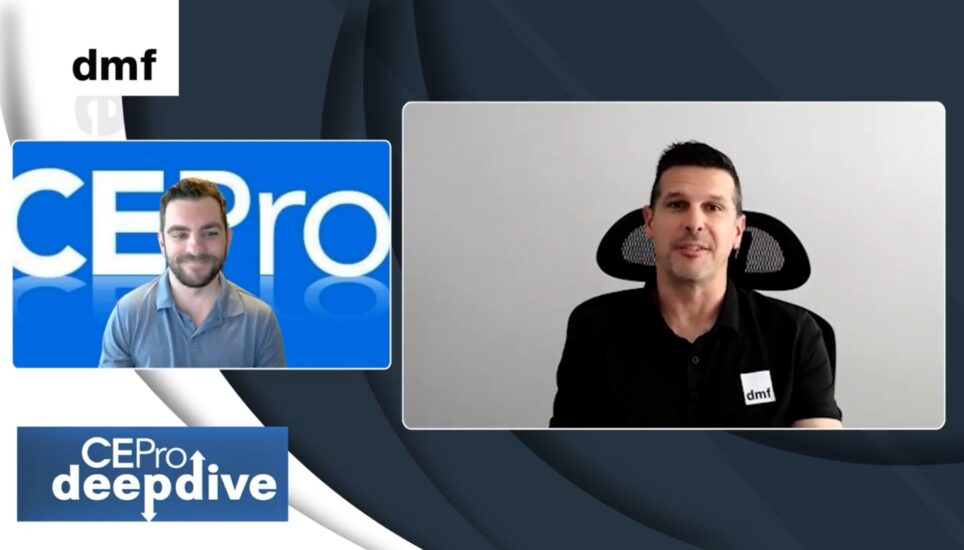
Jon Myer, CEO of MyerEmco, speaking candidly with CE Pro about his decision to close the venerable 55-year-old chain his father started, cites three reasons for the collapse, calling it a "triple whammy."
Declining Margins: The company was hit by the "declining margins of products and the trailing credit game that vendors are playing." Myer tells CE Pro this is the primary reason the company could not survive, noting that flat-panel displays accounted for 45 percent of his business. “We pay the vendors in 30 days, but they don’t pay us for 90 days, so in essence, we are financing the equipment purchases. You can only do that for so long.”
Myer believes that as long as display manufacturers continue this credit policy, it will be difficult for any specialty retailer to compete with Best Buy, Walmart and other big-box retailers.
Housing Market: MyerEmco was hit hard by the collapsing housing market. The company did a lot of pre-wire business with large homebuilders like Toll Brothers and M&D Homes. “That business dried up completely,” says Myer.
The Economy: This was the final straw. “When Lehman Brothers declared bankruptcy, it was like a light switch got turned off," Myer says. "We lost 25 percent to 35 percent of our business overnight. That was 15 months ago and you can continue only for so long under those circumstances."
The bank eventually called the note on the company’s loan and MyerEmco was left with no working capital, according to Myer. That situation occurred despite the fact that Myer sold one of his own homes and put all the equity into MyerEmco. Myer says the recent move by hhgregg into the DC area had no effect on his decision, and that the failed buyout attempt by Harvey's in 2007 was not a factor.
Unlike the implosion of Tweeter, it appears Myer saw the writing on the wall but was unable to shift the business quickly enough to survive. MyerEmco was No. 8 on the CE Pro 100 in 2009, reporting $14 million in installation revenue in 2008.
Future of Specialty Retail is Bleak
“The future of every multi-store specialty retailer is extremely lean,” he says, adding that when Tweeter went under, it effectively meant the death of half of the multi-store specialty retail business in the country. “If you are a multi-store regional specialty retailer - and there aren’t a lot of them left - you need to restructure immediately to survive."
MyerEmco's Collapse
Subscribe to the CE Pro Newsletter
About the Author

5 Comments (displayed in order by date/time)
I have an issue with this statement “Finally, there’s no future in elaborate control systems. Companies like Crestron are in a suspect position, I believe. With iPads and universal remotes that are more capable than ever, it is silly for some to pay $1,000 in programming fees to add a Blu-ray player. As I’ve always said, you can sell a customer an elaborate control system once, but not twice.”
Just because you can’t, does not mean someone else can’t. There are many capable companies out there who are able to deliver affordable state of the art control systems and do it over and over.
Just because a wireless panel will become more affordable with the introduction of the I-pad, it does not negate the fact that there is plenty of business in integration.
We stop selling basic TV’s last year because there was no money in it, we adopted add services and stayed very busy. Maybe you should have done the same, and we would not have to hear about your doom and gloom predictions.
As an integrator we have heard the call many times that it will become a DIY world. Perhaps, but not in the near future. There are still clients who want and need the services offered by companies that can properly sell and understand what integration really is. In my opinion specialty retailers who decide to dip their toe into the integration market seem to do so without changing the culture as a company; salesman tend not to look to the complexities of properly qualifying, explaining, designing and selling real integration. Its not how they are wired, once they do sell a project, they walk away and let installation take over. Big mistake, integration is a marriage and involves commitment by all parties. The fact that the sales cycle for selling integration properly is too slow for retailers only means that they shouldnt be in that business, much like Home Depot shouldnt be in the business of building or selling custom homes.
The business will be impacted by wireless solutions and Sonos and iPad but not overtaken by it.
I agree and disagree with Myer. We are a relatively small systems integrator. We migrated from residential to almost exclusively commercial. We have had growth in the double digits every year we have made that transition. We sell and design from the top down when we do larger residential projects. 2008 and 2009 were milestone years from our company. We operated at nearly 46-52% profits across the board. We simple dominate our market area while other crews are starving. We set our goals extremely high, profits higher and we do excede our client’s expectations everytime. Our labor rates start at 135.00 per hour to 285.00 per hour. Labor consumes approximately 45-50% of every project. We do deal in higher end clients. Our new projects start at no less than 45k and we are currently booked 16 weeks out. All this is happening in Ohio!


Having worked for a retailer before, I know the game has changed. The way the industry has evolved it seems impossible for anyone with a showfloor to survive. The only companies I see succeeding are those that have an office space to centralize operations and are in a low rent district.
The real question is; will those of us who have adapted to no showfloor be able to survive what’s coming around the corner? Ipads, network integration, wireless HDMI, wireless audio + ever shrinking margins are going to make it extremely difficult.
I’m in this business because I love it. Right now I am doing ok because I’ve limited my overhead greatly, am running lean, work hard, have a great word of mouth business and have adapted to the “new” game.
I just hope there’s a future.