Inside a Solar-Powered Showroom
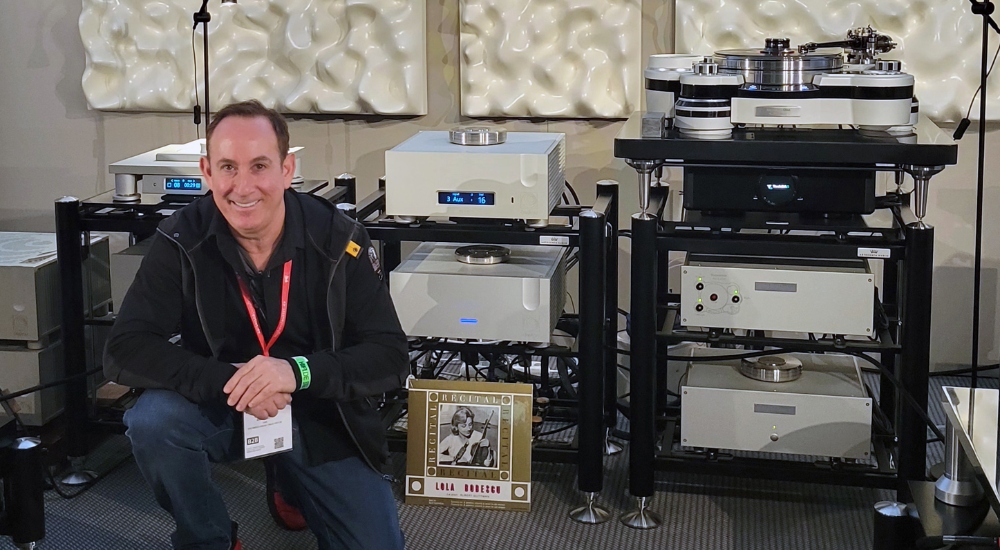
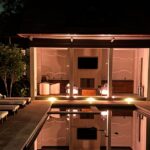
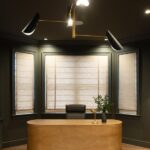
Audio High's 5,000-square-foot demo/office space is entirely powered by solar energy.
Audio High’s 5,000-square-foot demo/office space in the Bay Area is entirely powered by solar energy.
Unless you arrive via helicopter, you might not notice that Audio High's 5,000-square-foot showroom and office space is 100-percent powered by solar energy. The solar panels situated on the roof are among the few tip-offs.
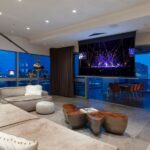
The high-end audio/video dealer doesn't take the minimalist approach that some associate with solar energy users. In fact, the indulgent electronics displayed fly in the face of solar skepticism.
If a high-end A/V dealer trusts solar power to juice its $250,000 Meridian 810 Reference Video System — one of two on display in the U.S. as of press time — a homeowner can feel good about it powering their toasters and such. That's one reason Mountain View, Calif.-based Audio High decided to go the solar route, says owner Michael Silver.
It worked, according to Norm Steinke, COO of Meridian America. "I was apprehensive at first when Michael told me he wanted to build it this way. When we got there I was impressed that we just had to plug it all in; it was just like anywhere else."
Other than utility savings, there's no real financial advantage to Audio High being so green — although Silver says his Bay Area customers appreciate it. "Solar in general, and our ability to integrate it into an automation system, is important to people in Northern California."
The company doesn't install solar panels, though, so the technology isn't a sales-driver. "We leave that to the companies that specialize in it," Silver says.
When Audio High designed and had the building constructed during an eight-month span in 2007, it certainly could have saved on the "couple million" it spent by not going solar — even though Silver says he saved by doing the design himself. He enlisted the staff to build the systems and he closely managed the process.
Even though Audio High's solar energy system is connected to the grid, it doesn't receive utility credits when it produces more energy than it uses. "That law has to change," Silver says, referring to California not following the lead of other states that encourage solar power by rewarding excess energy-producers. "It's a [lousy] law. It doesn't encourage businesses to do this."
The only reason Audio High went solar is "because we care about the environment," Silver says. "We always operated green, but at some point the Bay Area Green Business Program certified us as green. We didn't have to change anything; we were already doing all the practices they required."
The high-end audio/video dealer doesn't take the minimalist approach that some associate with solar energy users. In fact, the indulgent electronics displayed fly in the face of solar skepticism.
If a high-end A/V dealer trusts solar power to juice its $250,000 Meridian 810 Reference Video System — one of two on display in the U.S. as of press time — a homeowner can feel good about it powering their toasters and such. That's one reason Mountain View, Calif.-based Audio High decided to go the solar route, says owner Michael Silver.
It worked, according to Norm Steinke, COO of Meridian America. "I was apprehensive at first when Michael told me he wanted to build it this way. When we got there I was impressed that we just had to plug it all in; it was just like anywhere else."
Color of Money
Other than utility savings, there's no real financial advantage to Audio High being so green — although Silver says his Bay Area customers appreciate it. "Solar in general, and our ability to integrate it into an automation system, is important to people in Northern California."
The company doesn't install solar panels, though, so the technology isn't a sales-driver. "We leave that to the companies that specialize in it," Silver says.
When Audio High designed and had the building constructed during an eight-month span in 2007, it certainly could have saved on the "couple million" it spent by not going solar — even though Silver says he saved by doing the design himself. He enlisted the staff to build the systems and he closely managed the process.
Even though Audio High's solar energy system is connected to the grid, it doesn't receive utility credits when it produces more energy than it uses. "That law has to change," Silver says, referring to California not following the lead of other states that encourage solar power by rewarding excess energy-producers. "It's a [lousy] law. It doesn't encourage businesses to do this."
The only reason Audio High went solar is "because we care about the environment," Silver says. "We always operated green, but at some point the Bay Area Green Business Program certified us as green. We didn't have to change anything; we were already doing all the practices they required."
Subscribe to the CE Pro Newsletter
Read more Energy Management stories
Schneider Electric Updates Home Manager System with New FeaturesAlarm.com Buys EnergyHub for Home Energy Management
CEA to Develop CE-Energy Usage Information Standard
2Gig Taps iControl for 2nd Security & Home Automation Option
ACTP Launches Turn it On Home Automation Brand
More in Energy Management
Article Topics
News · Energy Management · Energy Management · Green · Showroom · Audio High · Solar ·About the Author

Tom has been covering consumer electronics for six years. Before that, he wrote for the sports department of the Boston Herald. Migrating to magazines, he was a staff editor for a golf publication and an outdoor sports publication. Now, as senior writer/technology editor of CE Pro magazine since 2003, he dabbles in all departments and offers expertise in marketing. Follow him on Twitter @leblanctom.
1 Comments (displayed in order by date/time)
Page 1 of 1 comment pages


Great job on the solar system. How big is the system? What monitoring system are you using to integrate with the automation system?