CEA: Cloud Will Thrive, So Will Local Storage, Services
Cloud-based computing, networking, storage and health technology will impact consumer electronics products and services; but don't write off local storage and services, says CEA at its 2011 Industry Forum.
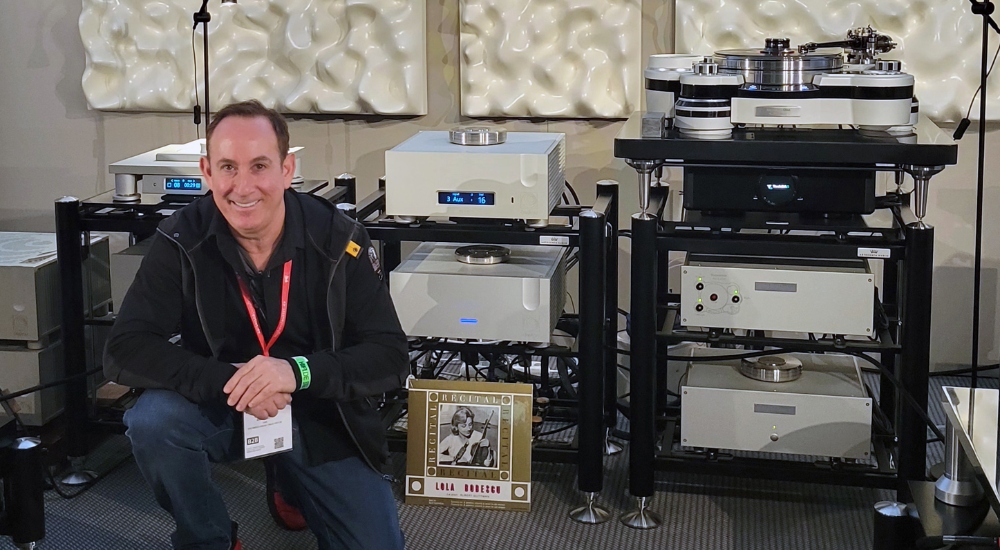
CEA’s Shawn Dubravac and CNET’s Roger Cheng discuss cloud-based networking and services with moderator Jason Oxman (not pictured).
The cloud is one of the Top 5 Technology Trends to Watch in 2012, according to the Consumer Electronics Association.
No big surprise there.
Even so, it was interesting to hear from CEA chief economist Shawn Dubravac and CNET senior writer Roger Cheng, who discussed the subject during this week’s CEA Industry Forum in San Diego.
Dubravac pointed out that we’ve seen cloud-based services expand over the last decade for things like email and banking.
“Those are core consumer activities that consumers now for several years have been doing online,” he said. “We’re starting to see that move into other categories.”
He noted, for example, that “healthcare [data] is largely captured in the cloud.”
Data from a wide range of health-related products -- such as motion sensors, medical devices and GPS-embedded watches -- are captured and aggregated in the cloud, and then shared with multiple parties via that same portal.
Such an ecosystem makes more sense than synching and sharing devices locally via peer-to-peer connections such as Bluetooth. In the cloud scenario, all parties (and devices) can upload content to the Web, and then pull them back to “any number of devices, inside or outside the home,” Dubravac said.
Cloud-related sessions at CEProLive, Oct. 27, 2011
KEYNOTE: 8 Mega-trends that Will Change Your Business Forever
KEYNOTE: Connecting with the Cloud: Content, Control, Opportunity
Combat Xfinity with IP Based Security Solutions - How to Parlay Low-Cost Security Offerings to Your Advantage
ADT: The Changing Face of ADT and What it Means for Your Business
Already, the proliferation of cloud-based services is affecting the hardware we buy.
“The MacBook Air is a good early example of people compromising on memory,” Cheng said. He bought one that has a mere 128 GB hard drive.
“That’s not a lot of memory,” he said.
He added, “Within or year or so, with mass adoption, I think there will be a higher comfort level with cloud services. We’re not there yet. I think the [mobile] network is not quite there yet.”
The offloading of storage and services to the cloud does have some immediate implications for product development and marketing.
iCloud, for one, has “changed the way people shop for phones,” Dubravac said. “It used to be that you needed more storage on the phone. Now, you keep it in the cloud.”
When was the last time a phone maker or service provider touted the storage capacity of a mobile device?
Local storage, of course, is not going away. As CE Pro has suggested over the past year or so, we’re always bound to have a hybrid solution even if more content and services are offloaded to the cloud.
RELATED: More CE Pro coverage of The Cloud
Data will be stored locally, and then pushed to the cloud when a connection is available, Dubravac said.
He brought up another interesting point about cloud-based services, using connected cameras as an example: “Upload speeds are much more important than download,” he suggested. “We’ve been focused a lot so far on download speeds, but I think upload speeds are now important.
With all the talk about the cloud, though, the panelists were bearish on robust home networks.
When asked by CE Pro if connectivity and cloud communications would spur interest in richer, enterprise-grade networking for the home, Cheng said, “I don’t know if we’re quite there yet. I don’t know if people are at the point yet where they are investing in their own high-end [home networks].”
The panel discussion also covered CEA’s other 5 Technology Trends to Watch. The five trends are:

What can the cloud do for you? Learn more in the CEProLive keynote session:
Connecting with the Cloud: Content, Control and Opportunities
CEProLive is OCT. 27, 2011. Free registration at http://ceprolive.com.
No big surprise there.
Even so, it was interesting to hear from CEA chief economist Shawn Dubravac and CNET senior writer Roger Cheng, who discussed the subject during this week’s CEA Industry Forum in San Diego.
Dubravac pointed out that we’ve seen cloud-based services expand over the last decade for things like email and banking.
“Those are core consumer activities that consumers now for several years have been doing online,” he said. “We’re starting to see that move into other categories.”
He noted, for example, that “healthcare [data] is largely captured in the cloud.”
Data from a wide range of health-related products -- such as motion sensors, medical devices and GPS-embedded watches -- are captured and aggregated in the cloud, and then shared with multiple parties via that same portal.
Such an ecosystem makes more sense than synching and sharing devices locally via peer-to-peer connections such as Bluetooth. In the cloud scenario, all parties (and devices) can upload content to the Web, and then pull them back to “any number of devices, inside or outside the home,” Dubravac said.
Cloud-related sessions at CEProLive, Oct. 27, 2011KEYNOTE: 8 Mega-trends that Will Change Your Business Forever
KEYNOTE: Connecting with the Cloud: Content, Control, Opportunity
Combat Xfinity with IP Based Security Solutions - How to Parlay Low-Cost Security Offerings to Your Advantage
ADT: The Changing Face of ADT and What it Means for Your Business
Already, the proliferation of cloud-based services is affecting the hardware we buy.
“The MacBook Air is a good early example of people compromising on memory,” Cheng said. He bought one that has a mere 128 GB hard drive.
“That’s not a lot of memory,” he said.
He added, “Within or year or so, with mass adoption, I think there will be a higher comfort level with cloud services. We’re not there yet. I think the [mobile] network is not quite there yet.”
The offloading of storage and services to the cloud does have some immediate implications for product development and marketing.
iCloud, for one, has “changed the way people shop for phones,” Dubravac said. “It used to be that you needed more storage on the phone. Now, you keep it in the cloud.”
When was the last time a phone maker or service provider touted the storage capacity of a mobile device?
Local storage, of course, is not going away. As CE Pro has suggested over the past year or so, we’re always bound to have a hybrid solution even if more content and services are offloaded to the cloud.
RELATED: More CE Pro coverage of The Cloud
Data will be stored locally, and then pushed to the cloud when a connection is available, Dubravac said.
He brought up another interesting point about cloud-based services, using connected cameras as an example: “Upload speeds are much more important than download,” he suggested. “We’ve been focused a lot so far on download speeds, but I think upload speeds are now important.
With all the talk about the cloud, though, the panelists were bearish on robust home networks.
When asked by CE Pro if connectivity and cloud communications would spur interest in richer, enterprise-grade networking for the home, Cheng said, “I don’t know if we’re quite there yet. I don’t know if people are at the point yet where they are investing in their own high-end [home networks].”
The panel discussion also covered CEA’s other 5 Technology Trends to Watch. The five trends are:
- The impending spectrum crisis
- Cloud computing
- Technology and politics
- Next-gen power
- Alternative input methods (e.g., gesture and touch)

What can the cloud do for you? Learn more in the CEProLive keynote session:
Connecting with the Cloud: Content, Control and Opportunities
CEProLive is OCT. 27, 2011. Free registration at http://ceprolive.com.
Subscribe to the CE Pro Newsletter
Read more Home Health stories
IBM Patent: Multitouch Floor Detects Heart Attacks, IntrudersTechnology Gives Voice to People with Disabilities
Ford Motor Co.‘s Gary Strumolo to Keynote at Digital Health Summit
CEA: Cloud Will Thrive, So Will Local Storage, Services
Home Automation Brings Dignity, Independence to Residents with ALS
More in Home Health
Article Topics
News · Product News · Video · Digital Media · Home Health · Ceprolive · Consumer Electronics Association · Cloud · Industry Forum · Td · Trends ·About the Author

Julie Jacobson, Editor-at-large, CE Pro
Julie Jacobson is co-founder of EH Publishing and currently spends most of her time writing for CE Pro, mostly in the areas of home automation, networked A/V and the business of home systems integration. She majored in Economics at the University of Michigan, earned an MBA from the University of Texas at Austin, and has never taken a journalism class in her life. Julie is a washed-up Ultimate Frisbee player with the scars to prove it. Follow her on Twitter @juliejacobson.


Post a comment