5 Basic Numbers for Proper Job Costing
To accurately bid a project, you must know these 5 basic data points: equipment revenue, infrastructure parts revenue, labor revenue, equipment cost and hours on the job.
I hate job-costing. Not because I don’t like profitability, I’ve just never liked poring over job-cost minutiae. It’s always struck me as chasing nickels with $20 bills.
For the past seven years, I’ve been using and refining a management system that illuminates everything an integration company needs to know to maximize its profitability. Does it allow job-costing? Absolutely. Does it require time-consuming minutiae management? Absolutely not.
Every job I’ve ever encountered can be analyzed with a handful of significant numbers: Total job revenue, subtotaled by equipment, parts and labor (if you don’t track these three categories separately, you lose strategic opportunities to manage profits); cost of equipment; hours on the project.
Let’s look at each of these.
Total Job Revenue: Before going into a fixed-bid project, you specify the components required for all the subsystems. These are what I call "equipment." To design a system, it’s fundamental to be able to accurately specify/price equipment items in advance. That’s Job Subtotal #1.
The “infrastructure” parts needed to install and connect the components are less clear. No matter how good your processes, you never know for sure how much of this stuff will get consumed on a project. So you make an estimate. That’s Job Subtotal #2.
You also estimate how much labor, design, and project management will be required. Again, you never know for sure, so you make an informed guess. That’s Job Subtotal #3.
Change orders will alter the original estimate amounts, of course. But in the end you should know exactly what the client got billed for each.
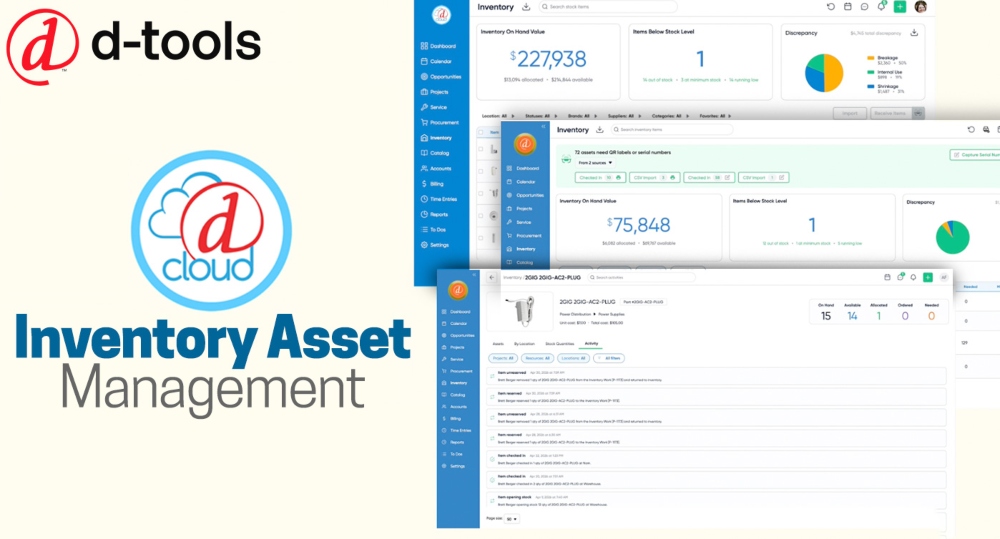
Cost of Equipment: Equipment costs represent about 95 percent of the “non-labor” costs on a project. It is essential that these are tracked accurately. That’s why I advocate an inventory system – if the equipment items are tracked as inventory items, their cost is captured automatically on customer invoices. Easy.
Hours on the Project: Tracking actual hours on the job allows you to easily estimate your actual labor costs. You should know your average cost per labor hour – just multiply that times actual hours and you’ll be in the ballpark.
These five numbers - along with your monthly P&L - tell you everything you need to know about job profitability.
For the past seven years, I’ve been using and refining a management system that illuminates everything an integration company needs to know to maximize its profitability. Does it allow job-costing? Absolutely. Does it require time-consuming minutiae management? Absolutely not.
Every job I’ve ever encountered can be analyzed with a handful of significant numbers: Total job revenue, subtotaled by equipment, parts and labor (if you don’t track these three categories separately, you lose strategic opportunities to manage profits); cost of equipment; hours on the project.
Let’s look at each of these.
Total Job Revenue: Before going into a fixed-bid project, you specify the components required for all the subsystems. These are what I call "equipment." To design a system, it’s fundamental to be able to accurately specify/price equipment items in advance. That’s Job Subtotal #1.
The “infrastructure” parts needed to install and connect the components are less clear. No matter how good your processes, you never know for sure how much of this stuff will get consumed on a project. So you make an estimate. That’s Job Subtotal #2.
You also estimate how much labor, design, and project management will be required. Again, you never know for sure, so you make an informed guess. That’s Job Subtotal #3.
Change orders will alter the original estimate amounts, of course. But in the end you should know exactly what the client got billed for each.
Cost of Equipment: Equipment costs represent about 95 percent of the “non-labor” costs on a project. It is essential that these are tracked accurately. That’s why I advocate an inventory system – if the equipment items are tracked as inventory items, their cost is captured automatically on customer invoices. Easy.
Hours on the Project: Tracking actual hours on the job allows you to easily estimate your actual labor costs. You should know your average cost per labor hour – just multiply that times actual hours and you’ll be in the ballpark.
These five numbers - along with your monthly P&L - tell you everything you need to know about job profitability.
Subscribe to the CE Pro Newsletter
Read more Business Resources stories
People On the Move: Definitive Technology, Milestone AV, JL Audio, NACE10 Reasons Coax, Not Wireless, Is Future of Video Distribution
3D: Tips to Reignite Consumer Interest
The Home Depot: Your Friendly Neighborhood Distributor?
13 Wire & Cable Tips from the Pros
More in Business Resources
About the Author

For 20 years, Steve Firszt was partner & president of an AV retail/installation company in Illinois. While growing that business to four stores and 75 employees, Steve developed many of the financial, marketing, and organizational skills used in his current work at Fast-Forward Business Coaching.
Since 2004, Steve has served as a management coach and advisor to AV retailers, manufacturers, distributors, and integrators. Using his innovative Top-Line Management System as a foundation for improving financial strength, he works directly with company owners on business planning, marketing strategy, and organizational process.
Steve shares his management philosophies and insights via a bi-weekly newsletter, monthly webinars, and frequent presentations on behalf of industry groups and vendors.
Steve resides in St Louis and can be visited on the web at www.ffbizcoach.com.
1 Comments (displayed in order by date/time)
Page 1 of 1 comment pages


Great information, Steve. Keeping it simple is great advice. Don’t try to make it rocket “accounting.” Cash is cash, everything else is accounting.
With these numbers, integrators might consider some Key Performance Indicators:
Profit per Hour
Revenue per Hour
Project Profit Margin
Gross Profit Margin for Parts, Labor
Break Even Point
Assign jobs to crews/trucks and measure Revenue per Truck or Profit per Truck.
Just pick 2-3 and measure them throughout the year.
Stuart Preston
SW Pro Sales and Consulting
swprosales.com