4 Keys to Perfect Speaker Placement
For installers to consistently achieve quality audio installations, room placement, room dimensions, seating distances and usage preferences are all important factors.
The reality is that perfect sound is a myth created by the over-zealous audiophile market to drive consumer interest.
But it is possible for CE pros to create an audio experience that eliminates some of the inherent problems typically associated with consumer audio.
Today, installers have access to the finest speakers ever produced, modern tools and installation aids and educational resources that are backed by countless research projects that have examined the factors that affect home audio reproduction.
While some of this information is old-hat to experienced integrators, new technicians should remember these 4 important rules to consider that affect the pursuit of perfect sound.
Room Shape
Audiophiles have overlooked what is arguably the biggest variable in the home audio quality equation: the room environment.
Kary Wawrzyniak, product development expert for TruAudio, says installers must find out specific details about their clients' homes before the system is installed to ensure the best possible performance.
“First thing is to make sure you understand, completely, the how the room will be used,” asserts Wawrzyniak. “A dedicated home theater will need a much different speaker system than a room used mostly to listen to music or a room that will be used mostly for gaming, which might require a completely different speaker set up. Again, if it's a family room environment with a pool table and plasma, yet another totally different speaker setup will be needed."
Wawrzyniak advises integrators to make sure to ask the end user to explain his or her expectations. "So many times this is overlooked, and the dealer puts in what they think would be best," Wawrzyniak says. "Next, the dealer needs to take into consideration the shape and size of the room, including window and door location as well as furniture. After all that, it should be easy to decide what kind of speaker setup is needed.”
One factor Wawrzyniak is emphatic about is the role the room shape plays in affecting sound. He points out that, if possible, dealers should avoid square rooms and rooms that have dimensions exactly twice one another, like 10-feet x 20-feet, for example.
Subscribe to the CE Pro Newsletter
Read more Spotlight stories
9 Tips for Selling Lighting ControlDSC Taps iControl for Cloud-based Security, Home Automation
LevNet Self-Powered Wireless Devices Save Energy, Batteries
Another Reason to Hoard Incandescents: Easy Bake Oven
Could Motorized Shades Drive Home Automation?
More in Spotlight
Article Topics
News · Audio · Speakers · Acoustics · Home Theater · Spotlight · Truaudio · Home Theater Spotlight ·About the Author

5 Comments (displayed in order by date/time)
Thanks for reading Bryce. I think that old-school audiophiles do tend to ignore the room factor as part of the audio equation and part of that involves speaker placement.
Cables are also a part of the equation and good cables can provide reliable performance that includes RF/EMI shielding, but with that said, the room is a huge component of a good sound system and that’s the point I wanted to make with the story.
I also wanted to throw a collective kudos out to the engineering staffs at these companies producing architectural loudspeakers. Today’s in-wall and in-ceiling speakers perform to a very high level and they should be recognized for that feat.
Thanks for reading,
Bob Archer
Hi Robert,
Thanks for the important and timely article. Many installers today, particularly those from non-AV consumer electronics, lack the training or experience to spec and locate speakers for good sound. Every speaker has a location where it is designed to give its best. Incorrect location can turn a great speaker into a garbled mess. It is very important that the system designer spec speakers designed to work where they will be installed and for installers to install speakers where they were designed to work. The best CI speaker companies make similar in wall, in ceiling, & in room models, all voiced to sound the same when installed in their correct locations.
Thanks,
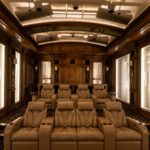
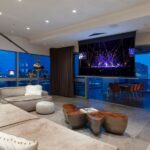
Wouldn’t it be a good idea to let people know the importance of eliminating the first reflections in a room in order to enhance the spacial effect and broaden the sound stage? If you can’t do anything with the first reflections which are usually high and mid frequencies, how about the reverb that must be present in an untreated room. Properly placed absorption and or difussion makes magic happen. Low frequecies are often the least of the rooms problems. If I were working in a room similar to the one pictured, I would be concerned with all of the reflective surfaces. While speaker placement and seating position are very important, let’s not forget the desireable results that can be made by taming the space. Even a through rug would be very helpful when trying to dial in a room with a tile floor.
I’m somewhat surprised to see an article like this on a website named CE Pro. Wouldn’t any “Pro” know about these things already? Go to any popular audio/HT forum and you’ll find this information and much more.


Best Themed Home Theaters
Nice article Robert. It’s good to see a self proclaimed “dedicated audiophile” hit all these practical points that can make a huge difference in the sound in a room without mentioning the “importance” of hyper-expensive speaker wire.