SoundSense Offers Noise Cancellation Solutions at CEDIA Expo
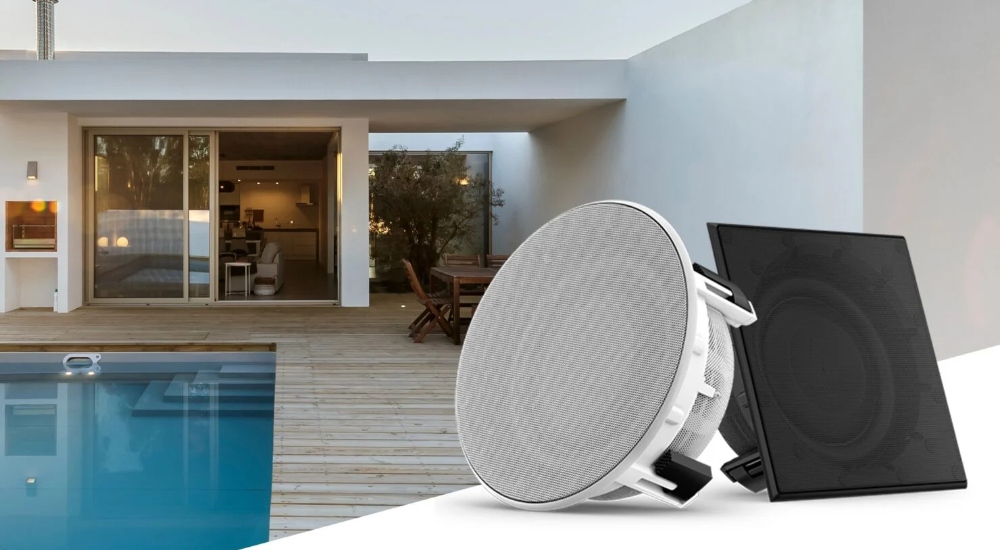
NoiseOut Speaker Backs keep speaker noise out of other rooms.
SoundSense’s NoiseOut Acoustic Speaker Backs reduce noise transmission through speakers in walls and ceilings to keep noise out of other rooms.
SoundSense will debut several noise cancellation solutions at its booth (453) at CEDIA Expo 2008.
The patent-pending NoiseOut Acoustic Speaker Back is an enclosure designed to maximize speaker performance by reducing noise transmission through speakers in walls and ceilings to keep noise out of other rooms.
The NoiseOut Acoustic Speaker Back comes completely constructed and ready to be installed as a single unit for both new construction and retrofit environments.
They are available in two standard sizes to address both ceiling and wall applications. Custom enclosures can also be ordered to fit any speaker size.
SoundSense says the materials used to create the speaker backs have been acoustically tested to reduce noise transmission between walls and floors.
The company will also unveil a new technology and design for an Acoustic Chimney that absorbs, filters and reduces low-frequency sound in home theaters.
A sound generating room is encapsulated within an outer acoustic rated perimeter that contains various openings to one or more acoustic ducts, or "chimneys," the company says.
The acoustic chimneys, which can be tuned to transmit defined frequencies, function as an acoustic waveguide, SoundSense says, to the open air or specific location intended to receive the low-frequency wave.
This development allows low-frequency waves to diffract through the sound generating room (through duct openings) and broadcast through the acoustic chimney.
The sound is radiated at a distance outside the source room, and the effect is similar to a pressure release valve.
The Acoustic Chimney generates effective noise control for the home theater or any room with excess noise at a reduced cost to standard treatments.
The acoustic waveguides may be coupled to tunable passive or active noise mitigation devices such as Helmholtz resonators and low-frequency noise sources that use phase information.
SoundSense has a new method to eliminate unwanted noise. The company, while short on details, says the process requires a small microphone and speaker.
A noise-cancellation speaker emits a sound wave with the same amplitude and opposite polarity to the original sound. The waves combine to form a new wave and cancel each other out, according to SoundSense.
"This simple and effective process will save installers and clients both time and money," says SoundSense president Bonnie Schnitta.
"Every home theater system has unwanted noise that would greatly improve the user experience if eliminated."
The patent-pending NoiseOut Acoustic Speaker Back is an enclosure designed to maximize speaker performance by reducing noise transmission through speakers in walls and ceilings to keep noise out of other rooms.
The NoiseOut Acoustic Speaker Back comes completely constructed and ready to be installed as a single unit for both new construction and retrofit environments.
They are available in two standard sizes to address both ceiling and wall applications. Custom enclosures can also be ordered to fit any speaker size.
SoundSense says the materials used to create the speaker backs have been acoustically tested to reduce noise transmission between walls and floors.
Acoustic Chimney Reduces Low-Frequency Sound
The company will also unveil a new technology and design for an Acoustic Chimney that absorbs, filters and reduces low-frequency sound in home theaters.
A sound generating room is encapsulated within an outer acoustic rated perimeter that contains various openings to one or more acoustic ducts, or "chimneys," the company says.
The acoustic chimneys, which can be tuned to transmit defined frequencies, function as an acoustic waveguide, SoundSense says, to the open air or specific location intended to receive the low-frequency wave.
This development allows low-frequency waves to diffract through the sound generating room (through duct openings) and broadcast through the acoustic chimney.
The sound is radiated at a distance outside the source room, and the effect is similar to a pressure release valve.
The Acoustic Chimney generates effective noise control for the home theater or any room with excess noise at a reduced cost to standard treatments.
The acoustic waveguides may be coupled to tunable passive or active noise mitigation devices such as Helmholtz resonators and low-frequency noise sources that use phase information.
Eliminating Unwanted Noise
SoundSense has a new method to eliminate unwanted noise. The company, while short on details, says the process requires a small microphone and speaker.
A noise-cancellation speaker emits a sound wave with the same amplitude and opposite polarity to the original sound. The waves combine to form a new wave and cancel each other out, according to SoundSense.
"This simple and effective process will save installers and clients both time and money," says SoundSense president Bonnie Schnitta.
"Every home theater system has unwanted noise that would greatly improve the user experience if eliminated."
Subscribe to CE Pro CEDIA Daily Alerts
Receive the latest news, products and more from CEDIA delivered straight to your inbox.
Subscribe to the CE Pro Newsletter
About the Author

Jason Knott, Editor, CE Pro
Jason has covered low-voltage electronics as an editor since 1990. He joined EH Publishing in 2000, and before that served as publisher and editor of Security Sales, a leading magazine for the security industry. He served as chairman of the Security Industry Association’s Education Committee from 2000-2004 and sat on the board of that association from 1998-2002. He is also a former board member of the Alarm Industry Research and Educational Foundation. He is currently a member of the CEDIA Education Action Team for Electronic Systems Business. Jason graduated from the University of Southern California.
1 Comments (displayed in order by date/time)
Page 1 of 1 comment pages


These look neat. Any chance they are fire-rated? Or at least have some type of listed energy rating?