By
Julie Jacobson
February 07, 2011
While many integrators choose to lament the shrinking margins in TV sales, others are actively picking up the slack with audio.
Some of the most successful CE pros last year made their money on audio, and they did it in very different ways: through good demos, good DACs, good psyche and good “game” faces.
It seems
audio is making a comeback. These dealers share their secrets of success.
1. Satisfied Salespeople Make Good Champions
When Toledo, Ohio-based
Jamiesons Audio Video began selling Sonos wireless music systems four years ago, every store employee received a bundle as a gift, along with a one-year subscription to the Rhapsody streaming music service.
Sales associate Scott Caventer was one of those employees.
“Several of us embraced the product when we first brought it on board,” he says, but using the system at home really kick-started sales.
“Everyone, including all the installers, started using one at home and realized how easy and fun it was to use,” Caventer explains. “We tell the customers that Sonos is the first product in the 56-year history of our company that everyone in the company owns!”
2. Rev it up and Think Big
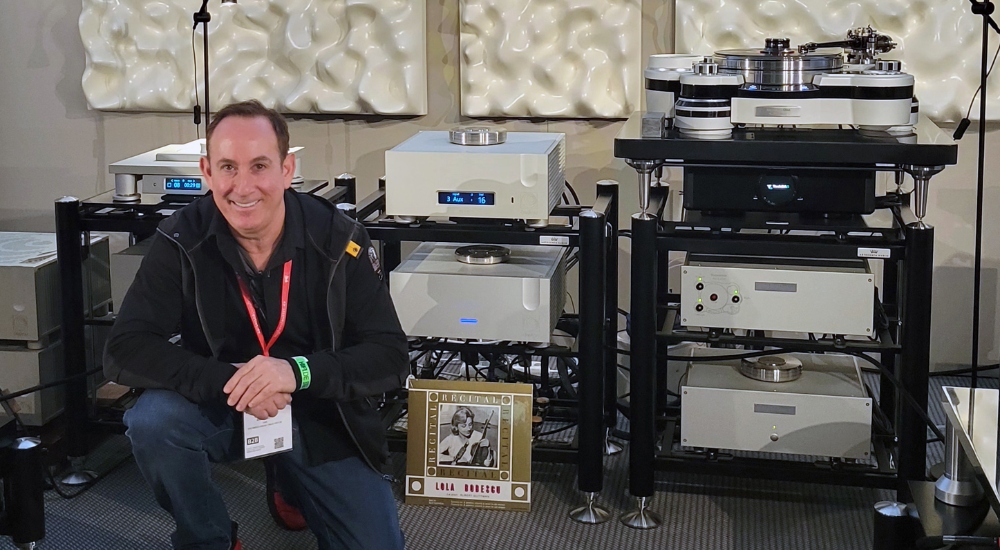
About two years ago, Jamiesons was approached by McIntosh about putting a $120,000 system -- including preamp, DAC, CD transport, mono amps, turntable and speakers — on display at the Toledo store.
“Frankly, I was somewhat intimidated,” says Caventer. “This may not be a big system in some areas of the country, but in recession-ravaged Toledo, it is a very big system, especially back in 2008.”
Even so, Jamiesons took on the display, which McIntosh had offered for six months. The custom retailer was so successful with the setup that McIntosh kept the gear there for an additional six months, and eventually Jamiesons bought it for permanent display.
“I’ve sold five of the MC1.2kw amps, two pairs of the XRT1K speakers, and six of the smaller MC501 (500 watt) amps off this display within the last two years,” Caventer says.
And many customers who opted for other brands nevertheless were sold on high-end audio based on the McIntosh demo. The opportunity to demonstrate performance audio challenged Jamiesons to aim high, and the retailer rose to the occasion.
Caventer himself created a demo “to show this system off to as many people walking into the store as possible."
Until they built the McIntosh demo, Jamiesons never thought they could sell high-end audio
He loaded 75 of his favorite demo CDs - ripped uncompressed - onto a network storage accessible from an in-store Sonos music distribution system. He and other sales associates rehearsed simple dialog “to tell the customers what they would be hearing,” Caventer says. “I started taking people into our sound room to show them our ‘Ferrari’ sound system. People were blown away with the sound quality as well as how easy it was to use the Sonos system to access music.”
The demo has spurred many Jamiesons customers to buy high-performance audio on impulse. Better yet, for the majority of clients who aren’t ready for such an investment, the experience lingers long after the demo.
Caventer tells of a client who came to Jamiesons to buy an entry-level
Blu-ray player.
“I knew he loved music, so I took him into the room with the big system,” Caventer recalls. “He listened for a few minutes, then I switched him to a system that I knew would be a better fit for his living room.”
The client didn’t bite right away, but a few months later he called to say he was changing jobs, moving to a new city and “doing pretty well for himself.”
Based on the demo, he bought a system that totaled more than $30,000.
3. A Little DAC’ll Do Ya
Two-channel audio has been good recently to New York City-based
Stereo Exchange. Founder David Wasserman says the company does big business with Peachtree Audio, makers of high-end digital-to-analog converter (DAC) products.
Sales of the Peachtree devices are fairly straightforward, Wasserman says. Whatever a shopper is looking for, they almost always get asked if they have an iPod … and most of them do.
“Many of them have no idea that there’s a way to get great sound out of it,” says Wasserman.
It helps that Stereo Exchange has a long history with Jon Zimmer, a former employee who now heads Sound Representation, representing several digital-audio brands in the New York Tri-State area. Zimmer sometimes takes his place (again) on the Stereo Exchange sales floor when the custom retailer needs some extra manpower.
“I would say the majority of customers that come through the door, if you ask them what they listen to, they’re not saying CDs,” Zimmer says during one of his days at the store. “They’re listening to an iPod or computer. They want it to sound better but have no idea how to do it.”
New York City-based Stereo Exchange offers clients a choice of digital-to-analog converters to play back their digital audio files.From there, the salesperson becomes the educator, explaining how “the quality of a DAC chip has a tremendous impact on the overall sound,” says Zimmer. “There is a qualitative difference between DACs. The better the DAC, the better the sound.”
Stereo Exchange demonstrates what a device like a Peachtree iDecco ($1,019) can do to otherwise inferior iPod streaming - how a user can use a superior external DAC instead of the default DACs built into computers and music players.
“As soon as you get people to start listening and learning from you, you’re already 90 percent to making the sale,” Zimmer says. “If you’re giving them valuable information they’re not getting from Best Buy, their guard is down. They’re learning. They’re happy.”
Zimmer adds that the difference between music from an iPod and music via an external DAC is obvious: “It’s not a golden-ear difference - oh maybe I hear it - it’s night and day. They’re going to want it.”
Once they’re sold on a DAC, “they buy the speakers, they buy the speaker cable,” says Zimmer. He adds, “they’re also telling their friends because they found this place where people are giving them information they can’t get anyplace else.”
Educating Stereo Exchange salespeople on DACs, and in turn educating the customer, has helped to “bring back the audio profits we need,” says Wasserman. “We’re selling limited-distribution audio components, speakers and cables. We’re selling the whole system.”
4. Eventually They Outgrow the Pimples
In the Chicago area,
The Little Guys is tapping into an unlikely customer pool: college-age gamers.
Co-founder David Wexler tells of a 20-something friend of his son’s who visited The Little Guys to scout products before buying online. An avid gamer like Wexler’s son, the young client sprang for a big-screen TV.
Wexler recalls asking, “What are you doing for sound?’”
To which the kid responded, “Oh, I just hook it up to computer speakers.”
Naturally Wexler lectured the guy on all the gaming goodness he’s missing with such a wimpy audio set-up.
The young man then stuck his foot in the door by asking, “What difference does it make?”
After demonstrating a $400 Marantz receiver and a $400 set of speakers, Wexler sold the job. The gamer and his roommate split the bill.
“Yes, it’s cheap entry-level stuff to get them started,” Wexler says, “but guess what’s next, in three to four years when they start making money?”
Wexler says The Little Guys is building up a separate database of younger, hipper clients in order to groom them for bigger A/V buys. He’s clearing out a space for a new gaming room, and hopes to co-host events at the store with some help from the local Game Stop and Apple stores.
Over the next few years, he explains, “We’ll hit them with cool ideas.”
5. It Helps if You Actually Sell Audio
When we asked how business is going, Mike McMaster of Los Angeles-based
Wilshire Home Entertainment replied, “We’re selling a lot of floor-standing speakers."
So we asked, “Why is that happening? Are customers asking for audio?”
“They’ve always asked for it,” he said. “We just weren’t selling it to them.”
McMaster attributes the bump in speaker sales in part to a “mind-shift with our staff,” especially after the momentum of a few big
home theater sales. The company recently “re-merchandised” its listening room for high-performance audio and brought on some higher-end speaker lines.
It doesn’t hurt that Wilshire is geographically close to the JBL factory, and that the retailer routinely takes customers through the speaker plant. Plus, according to McMaster, “JBL really is making it easier to do business with them.”
Almost as an afterthought in our audio discussion, McMaster remembered, “Oh, and Sonos really took off [last year] because it is stupidly simple for customers and salespeople.”
6. That Receiver is so 2005
While Wilshire’s recent success in high-performance audio was almost accidental,
Stereo One in Cape Girardeau, Mo., has been more deliberate in its audio business.
“HD audio is the best-kept secret in Blu-ray,” says owner John Selby referring to the high-resolution lossless Dolby TrueHD and DTS-HD Master Audio formats that accompany the 1080p Blu-ray images.
Typically, customers wander into Stereo One seeking a flat-panel TV. Store associates know to ask about the client’s receiver, which was likely purchased before Blu-ray was common and may be missing HDMI ports, outputs for more than 5.1-channel surround sound, and decoding for lossless audio formats.
“If it’s over three years old, we take them in [to the listening room] and have them sit through the demo,” Selby says. “Most of the time, they had no idea they were missing so much audio quality from movies. … Our close rate is almost 100 percent.”