Analog Audio’s Comeback
Many consumers are listening to digital and analog audio in their chase to discover the ultimate listening experience.
Installers are reporting increased sales of two-channel systems and record sales are also up. Can the custom installation industry fully capitalize on the renewed interest… View this discussion thread.
Back in the early 1980s when the CD was first introduced, it was promoted as a format that would provide listeners with a less noisy, more dynamic and more inclusive sound experience.
Nearly 30 years later, many old-school audiophiles, and some Generation X and Y consumers, are turning to technologies that were abandoned by the masses, hoping to restore the visceral impact that's allegedly eluded engineers designing digital components.
Why the interest after so long?
Annual year-end sales figures from the Recording Industry Association of America's (RIAA) show vinyl sales have increased after a dip the past two years. Billy Wright, president and CEO of Cary Audio, says the increase is likely a combination of factors.
"It is quite obvious how much people enjoy music by the sheer dollars and time spent on electronics, as well as music," says Wright, whose company manufactures tube and solid state electronics. "Unfortunately, the majority of the music listened to is in a highly compressed format. However, I do think that with the migration of the purchasing dollars moving from disc-based systems to computers and hard drive, server-based systems, consumers are starting to become aware of and more knowledgeable about higher quality [music]."
Do You Spin Vinyl?
Are You Having a 2-Channel Resurgence?
2-Channel Revival Spurs Business
"Another reason may be the ‘cool factor,'" Wright says. "Whether it is the glow of tubes or the ritual of changing of a record, it transforms the listening of music into a hobby instead of a pastime. It transports us to a different place. With our hectic schedules, this represents an oasis for us."
Can analog and digital coexist?
For years, audiophiles said home theater and two-channel audio couldn't coexist within the same system. Michael Fremer, vinyl expert and editor of Music Angle refutes the idea that home theater and two-channel audio need to be separated. He says if installers take a few precautions, a turntable can be inserted into a home theater system without any degradation of quality.
"A turntable can definitely be integrated into a home theater," asserts Fremer. "I would recommend showing the customer how to bypass a home theater's digital processing [or setting up their receiver] so they can access the [electronics'] analog bypass. When setting up the system, the placement of the turntable is critical, don't put it on a receiver.
"Also be aware of placement for footfall feedback [when someone walks and creates vibrations that could affect the turntable]. It should be on a rack shelf or somewhere sturdy. Even if you do that, it still may bounce, but there's a cheap solution, if you ground the rack to the wall to the wall use a turnbuckle and use a wedge it's a cheap way of eliminating vibration."
Wright says many companies design products to allow users to enjoy two-channel and multichannel audio listening, adding that tube amps can sound great in a home theater and that vinyl playback in a home theater is as easy as adding a phono stage (preamplifier).
Turntable Setup 101
"There are many inexpensive turntables such as the Pro-ject Debut III and Rega P1," Fremer says. "There are also some consumers who want to transfer their vinyl to their iPods and there are phono preamps that have built-in USB, so they should ask their client about that whether they want to transfer their vinyl to a digital format. However, they shouldn't put their clients into one of those plastic turntables."
Subscribe to the CE Pro Newsletter
Read more News stories
Nationwide Buying Group Uses Tech to Combat ShowroomingHidden Projector, Glowing LEDs Make for Epic Movie Nights
Consumers Bid Out Home Theaters to Designers Worldwide
IP Networks & Security: Everything You Might Not Know
Nortek’s Core Brands Selects New Protocol for Wireless Multiroom Audio
More in News
About the Author

18 Comments (displayed in order by date/time)
@Robert Archer,
With no pun intended, this article is music to my ears!
I’m the first one to admit that I’m, “IT challenged,” regarding programming the more advanced HA control systems, but then again, that’s why I pay my staff top dollar to be certified for every brand we carry. Thus, as a certified, “old timer,” let’s see how well & fast my computer savvy friends can learn the art of assembling a true high-end turntable from base to tonearm, from tone arm to cartridge, and from cartridge to platter without the use of a lap top.
(Just to add to Mr. Fremer’s comments, don’t forget to search out high output moving coil phono cartridges for a real treat. Anything rated with a 1.5 micro volt or better output will work perfectly fine with a MM phono input.)
Thanks again for the article and attempting to teach this generation what real high-end audio is all about. Also for reminding me that there is something that I can personally do far better in my sleep than the best Crestron programmers can do… That’s provided that they don’t have the codes for an ADC Accutrack 4000 turntable.
Thank you Mr. Archer
I ditto Mr. Steven’s thanks; thank you for addressing this subject.
And Michael Fremer is an absolute…, excuse me, the stereophile on this subject.
His advice is money.
I like to add to his comment regarding the coexistence of home theater and two-channel audio. The left and right speaker are the cornerstones of the multi-channel system.
If you can’t get the two-channel right, you wont’ get the multi-channel right.
Accuracy is accuracy: fidelity and the imaging.
Music and movies are art forms.
Our job is to deliver the mesmerizing experiences offered by the artists.
Hi Dave and Ed, thanks for reading.
Do you guys see this analog trend with your businesses?
Are you considering adding tubes & turntables to your product portfolios if you don’t already offer them?
thanks
Bob
Really well done article on this stuff from a different focus than I’ve ever seen. Fremer is, of coarse, “the man” for turntable stuff, and the part on tubes was very well done.
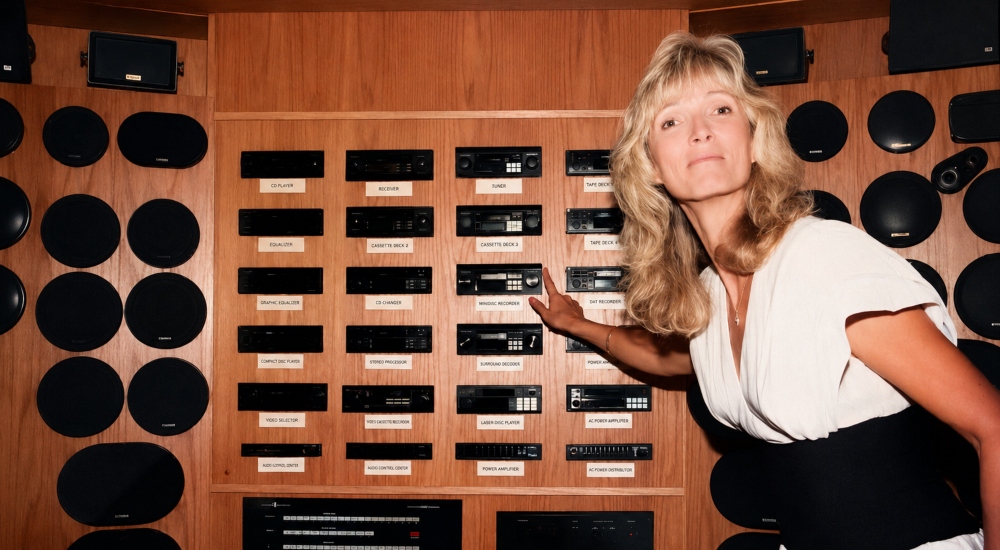
Bob, thanks so much for including the picture of my system in your article. While I laughed at the irony of featuring a tube based system with a digital front end as the sole source in an article about tubes and vinyl, I must state for the record that I finally added a turntable to the system. In addition to the big league tube amps in this system, I also play around with several low powered amps that range from 2.5 (45 tube) to 20 watts (300BXL tubes). I am glad to see the quotes from Billy Wright who is an incredibly cool person who runs an extremely good company. While continuing to build the amps that made the company famous in the past, he also focuses on the future by developing some of the better digital gear on the market. Wonderful article. Thanks so much for taking the time to turn people onto the wonderful and wacky world of high end audio.
Hi Patrick, thanks for reading. I think your system represents the some of the things that Billy and Michael discuss in the story regarding how you can combine analog with digital.
You have a very cool system, it must sound really nice.
@Robert Archer:
As much as I would love to bring quality turntables back into my product mix, unfortunately this is the year of inexpensive flat panel TV’s, internet radio, and, “i,” this and, “i,” that system integration.
As a side note, for many years it has physically upset my stomach to watch DJ’s putting their greasy hands on a record to, “scratch,” rap music, which, (let’s not forget), is presently still the largest mass use of turntables. Anyone want to purchase a Technics SL-1200MK II? But then again, what lies within those vinyl grooves IMO is not worth listening to anyway.
Regarding combining a great Home Theater and high-end two channel system, Audio Research makes a truly fine pre-amp, (sorry, but the model number escapes me). With just the flip of a switch, it gives you the best of both worlds with that oldie but goodie Audio Research sound.
Thanks again Bob for a great article!
Bob
My status is different from many of your readers. I turned 60 earlier this year. I am currently in a state of semi-retirement. Yet with regards to your question; Am I using or considering adding analog to the mix? I can only speak as a third party observer of two brick and mortar shops. One is owned by my brother, the other by a very good friend.
My brother runs a small mid-fi shop. He is focused on product such as Denon AVR’s and Paradigm speaker systems. My good friend has a high-end shop with offerings that include Audio Research, Ayon, Meridian, and B&W.
My brother has seen a sales up-tick in turntables, and turntable related product: Grado cartridges, Discwasher, modest phono preamps. But he has also found a niche of mid-fi customers who buy used stereo receivers. He combs the used market for quality mid-1970’s to mid-1980’s product. To be sure there is an element of nostalgia involved in these sales. But he and his customers are having fun. They are pairing the old stereo receivers (analog power meters and lots of knobs) with new speakers.
My good friend with the high end shop has already added stereo tube amps. But as my brother, he has also had success with used gear: Vintage tube and solid state stereo gear. Nostalgia is again a factor. But they do sound good. His mix has included old Mac, Marantz, Fisher, Quad, Gale, Linn, Dynaco, Hafler, Revox: tube and solid state amps, turntables, and old speaker systems. However he has added a twist. He is using a Linn digital stream player as a source in many of his demonstrations. He and his customers are also having fun.
It appears that many retiring ‘Baby Boomers’ are returning to their record collections. They are looking for dealers that can support a return to their roots. There is also a fair number of music-hungry iPod youngster’s who are ready for better sound. Two-channel analog is certainly one area that can appeal to them. But digital product such as the Squeezebox Touch should also be part of the mix.
The issue is not necessarily analog vs digital. It’s about better sound. As much of digital audio, analog has its fair share of bad sounding product. Well, that’s my two cents. What else are you hearing?
We are hearing similar things Ed. Installers are selling more two channel to people that want a better audio experience, and to those that want audio, but not a full surround system.
The mid level category is also driving things, which is good. Many dealers tell us that they aren’t selling dedicated theaters, but they are selling multi-purpose systems into great room/media room types of environments.
The key with all of this is to have the stuff on hand and ready to demonstrate.
@Ed:
Even as a third party observer, your recent post was an absolute pleasure to read for many reasons. As Mr. Archer pointed out, the key of & to this business, (and it’s why I got into it 35 years ago), is that after all of these years we’re still having FUN!
I’m a huge Denon & Paradigm dealer/ fan, but also sell many high-end products as you have mentioned your friend does.
At the end of the day, “almost,” nothing is as much fun than dusting off my Sansui 9090DB, Marantz 2250, Pioneer SX-1000, or Accuphase integrated amps, and hooking them up to a pair of B&W Diamond or Paradigm Reference series speakers just for the hell of it.
I truly fear that our newest generation of CE Pros have never experienced, or can appreciate, the time that it took for the evolution of audio products as we have. Instead of tubes to transistors, records to CD’s, now it unfortunately seems the only evolution they see is the latest version of an Apple, “i anything,” (which comes out every other month), while we witnessed & waited for years for just Monster Cable speaker wire.
I’m signing off now before this turns into a, “Pepperidge Farm,” commercial…
I think Ed has a great point. It seems like the used market is at least as hot as the high end analog market. Check out prices on ebay, audiogon, etc for old “bargain” stuff, it is a strong market. Has seemed to be since the recession got deep, at least volume wise. Even hard nosed skeptics get enticed when yard sale economics give them a chance to “walk on the wild side” for a pittance. Some percentage are bound to like it?
@ Bob
Wow, Sanusi 9090DB, Marantz 2250, and the Pioneer. You are having fun.
And your fear is justified. Many new generation CE Pros have not experienced real audio. But I think a fair share, when exposed, will eventually appreciate high fidelity stereo audio.
In truth many seasoned CE Pros are not, and never were, audio guys. And that’s OK. CE Pro shares a large umbrella with folks who took very different paths to get here: car audio, electrical contracting, central vacuum, satellite, security, IT, the TV store, and the brick and mortar audio shop. All segments bring gifts to the party.
And Yes, the younger generation is listening to music via iPods and on-line. And that’s also OK. It’s OK, because this is a music distribution scheme that bypasses the old guard: Radio and record companies. This is much as free-form FM radio in 1968.
In 1968, and well into the 1970’s, the music and audio business was not driven by the recording labels. Exciting new music on free form FM radio was the catalyst. As the FM audience of 1968, the new younger digital audience is also enthused about music. And as then, a fair share of the new digital audience will also seek better audio.
The future may lie in low cost data storage. A terra-byte hard drive is now less than $100. We can now promote uncompressed or lossless formats because storage capacity is no longer an issue. New product that offers an easy to use GUI with digital & analog, input & outputs, may hold the key.
If it taste better, they will buy it. It’s has always been easier to sell better. Let’s have some fun.
It was interesting researching this story in that what I found was that digital downloads and vinyl sales have increased. CD seems to be the format taking the hit right now.
This kind of indicates how music sales are trending right now and it provides some guidance on how installers can demo music.
I think one of the things that installers can do without taking up too much of their show room’s floor space is to have a secondary system that incorporates a DAC and media streaming device. At CEDIA I saw several cool media devices from companies like Bryston, Cambridge Audio, Rotel and Denon. Installers could easily build a system with these components and then add a turntable and phono stage. If installers pre-interview before the demo they could set up the demo to include a vinyl and digital comparison with music the client likes.
People will notice the differences in audio quality particularly with low-res digital files.
My wife surprised she wanted to listen to a Kings of Leon playlist we have on iTunes that are low res and she commented to me that she thought it was the speakers that were the cause of the poor sound quality (I’m working on a review of B&W MM-1 computer speakers).
I put on some Journey, Owl City and Airbourne Toxic Avenger playlists for her that I ripped in Apple Lossless and she noted how much better those sounded.
I told her it wasn’t the speakers and that it was the file quality. She understood that and the key was I did this demo with music she listens to.
The bigger point is that you don’t have to be an audiophile to conduct these demos
My wife isn’t an audiophile, but she heard the differences. All an installer needs is the desire to sell the products in a manner that’s conducive to supporting the demonstrations.
Check out the blog here that I wrote to accompany this story:
http://www.cepro.com/article/you_make_the_call_analog_vs._digital_audio/
There’s two free downloads one’s a digital recording and the other was made with analog gear. It’s a fun comparison to add more fuel to this topic.
Bob,
Now that your wife can hear the difference, is there anything I could sell her? Of course because we’re friends & colleagues, I’m willing to go just 2 points over sheet…
Hope all is well!
Dave


Michael Fremer also asked me to point out the following when it comes to turntable setup:
1. many pre/pros now include phono preamps.
2. If the new turntable doesn’t have a cartridge, be sure to buy a medium compliance Moving Magnet cartridge, which will work well in most modern tonearms. Set the “overhang” (the distance from the arm’s pivot point to the stylus tip) using the gauge supplied my all turntable manufacturers, or if it’s an older turntable, get a “universal” overhang gauge. Use an electronic stylus force gauge to set tracking force once the overhang has been set.
thank you Michael,
Bob