Search CE Pro


Print  |  Email  |  Comments (6)  |  Share  |  News  |  Follow on Twitter, Facebook, Google+ or RSS

CE Pro 100
image

How a Documentation Process Improves Efficiency

SoundVision leaves nothing to chance in comprehensive checklist for designing a system and creating a proposal.


image
Members of the CE Pro 100 are gathered for the CE Pro 100 Summit to share some of their most-effective business practices. CE Pro is highlighting several of these tips.

At SoundVision in Novato, Calif., documentation begins with the initial client meeting and continues throughout the project to provide detailed clarity to the client, purchasing department, project manager, installation team and programmer.

All documentation is stored on SoundVision’s network server, backed-up, printed, and compiled in a project binder for ease of access. From the back-end, the SoundVision office maintains extensive records of accounting, purchasing orders, and change orders. These are managed by QuickBooks and also stored with the client’s info on the network and project binders.

The focus of the documentation is to ensure that the customer and all stakeholders are always clear on services, the cost of the project, and the functionality of the technology. The results of the efforts are time saved in office management, efficiency on job sites, and overwhelmingly positive customer feedback across the board.

Here is the company's 20-step documentation process:

Design Guides - These are used by the salesperson during the client interview process to capture relevant information by subsystem, as well as document any items that are unknown at the moment.

Project Requirements - This document is created by the salesperson from existing templates to give the client a rough outline of the project scope as he understands it. This document becomes part of the system proposal.

Project Scope - This document includes descriptions of all locations, features, functions, items or work provided by others, etc. This document becomes part of the system proposal.

Sales Markups - This is a plan set (new construction) and/or photographs (retrofit) that are clearly marked-up by the salesperson showing all relevant details, known locations and wire paths.

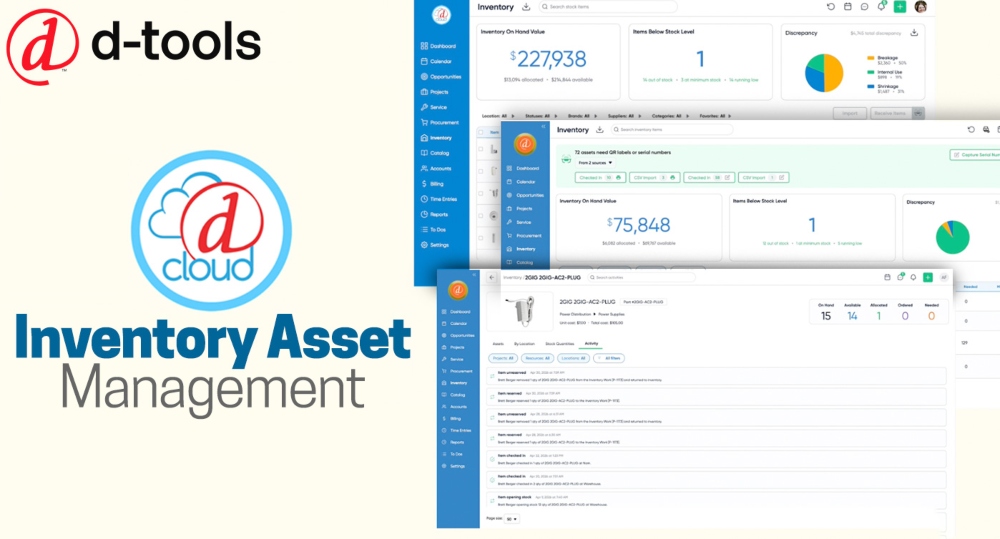
Project Pricing by Subsystem -This document is generated in D-Tools by the system engineer. It provides detailed line item pricing by subsystem, by room, including labor. This document becomes part of the system proposal.

Project Time Budget - This document is generated in D-Tools by the system engineer. It provides detailed project time requirements by phase. It is used by the operations manager to schedule crews for the appropriate amount of time for each phase of the project.

Purchase Order Request by Phase - This provides detailed purchase order information by phase, by manufacturer. It is used by the purchasing/warehouse manager to order and stage all applicable materials for each phase of the project.

Detailed Cost Summary - This document provides detailed product and labor margin and cost information for the engineer to verify that the project fits within SoundVision’s requirements for basic profitability.

Proposal - This document is created by the system engineer. It combines the project requirements, project scope, project pricing by subsystem, SoundVision policy and warranty info, and cut sheets on all major components. It is designed to give the client a clear understanding of exactly what they are going to get, exactly how it is going to work, and where the costs are coming from.

Unknown Items Checklist - This document tracks any aspect of the project that is considered unknown or TBD for review at a later date.


CE Pro 100
image

Subscribe to the CE Pro Newsletter

Article Topics

News · Business Resources · Events · CE Pro 100 · Ce Pro 100 Summit · All topics

About the Author

Jason Knott, Editor, CE Pro
Jason has covered low-voltage electronics as an editor since 1990. He joined EH Publishing in 2000, and before that served as publisher and editor of Security Sales, a leading magazine for the security industry. He served as chairman of the Security Industry Association’s Education Committee from 2000-2004 and sat on the board of that association from 1998-2002. He is also a former board member of the Alarm Industry Research and Educational Foundation. He is currently a member of the CEDIA Education Action Team for Electronic Systems Business. Jason graduated from the University of Southern California.

6 Comments (displayed in order by date/time)

Posted by Ron Callis  on  11/01  at  11:02 AM

Great information. Thanks for sharing!

Posted by Bob  on  11/02  at  09:44 AM

Where is D-Tools and what is the cost?
Thanks for sharing.

Posted by Ron Callis  on  11/02  at  09:55 AM

Here is there website:

http://www.d-tools.com

You should speak with:

Seth D. Rubenstein
Director of Sales
+1 678 383 4141 – direct
.(JavaScript must be enabled to view this email address)

Posted by Bob  on  11/02  at  12:02 PM

Thanks!

Posted by Dean  on  11/03  at  03:58 PM

Should the sales person also be the project manager this tends to happen a lot on smaller projects and blurs the line between design engineering and installers

Posted by Nate  on  11/14  at  06:05 PM

I have experienced this situation where the salesperson manages the project. No matter how small the project may be, this can lead to bad communication, experience, and/or overall satisfaction for the client.  As an installer I always prefer to have a dedicated project manager.  Not only does the customer receive an overall better product/service, I am a happier installer; able to provide a much more qualitative installation.

Page 1 of 1 comment pages
Post a comment
Name:
Email:
Choose smileys | View comment guidelines
Remember my personal information
Notify me of follow-up comments?

Sponsored Links

  About Us Customer Service Privacy Policy Contact Us Advertise With Us Dealer Services Subscribe ©2012 CE Pro
  EH Network: Electronic House Electronic House Ideas Commercial Integrator ChannelPro ProSoundWeb Church Production Worship Facilities Electronic House Expo Worship Facilities Expo