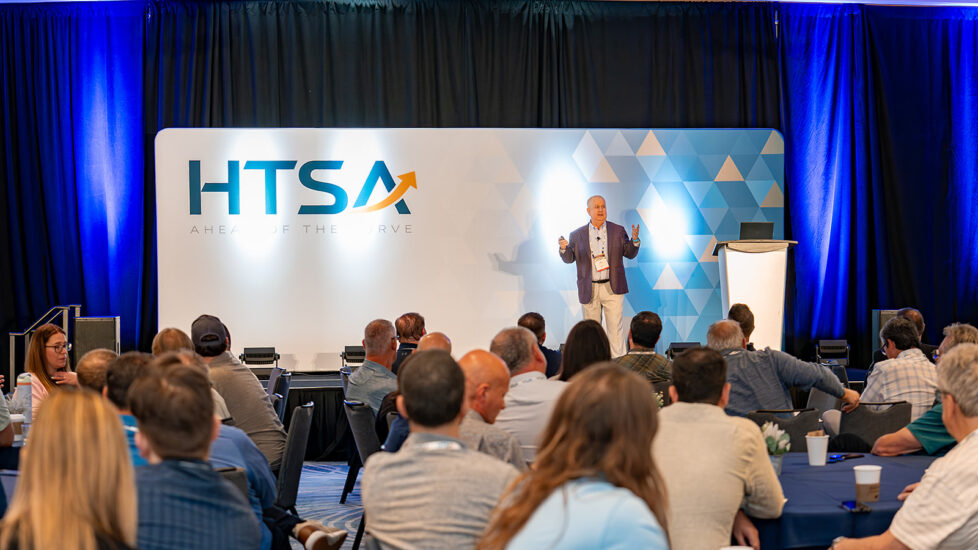
At the HTSA Spring Conference in Fort Lauderdale, Fla., HTSA leadership and vendor partners described an integration industry that remains focused on operational improvement, peer collaboration and emerging business opportunities around AI, lighting and luxury entertainment technologies.
Speaking with CE Pro during the event, HTSA Executive Director Jon Robbins and Director of New Technology Initiatives Tom Doherty says this year’s conference format was intentionally designed to prioritize interaction between members and vendors rather than traditional keynote-driven sessions.
“We found that interaction is really the best learning experience, rather than having somebody dictate,” Robbins says, noting the conference structure was shaped heavily by member and vendor feedback.
The event featured expanded peer-to-peer sessions, networking opportunities and off-site showroom visits to locations including JL Audio, CinemaTech, LK Associates and Just Video Walls, the latter of which gave CE Pro a private tour of their Tamarac, Fla. facility a short drive from the HTSA event.
According to Doherty, HTSA members continue to place a premium on informal knowledge-sharing and operational discussions with fellow integrators.
“The primary value that these members get by attending is the exchange of information amongst each other,” Doherty says.
AI Discussions Shift Toward Real-World Workflows
One of the dominant themes throughout the conference was the increasing use of AI tools in day-to-day integration businesses.
Doherty explains that HTSA began introducing AI-focused education shortly after tools like ChatGPT entered the market, but conversations this year were notably more workflow-oriented.
“There are a lot more members that are doing and building some real use case, real day-to-day business workflows,” Doherty says.
The organization hosted optional AI sessions during the conference focused on workflow automation and advanced AI tool usage, including a multi-hour educational track led by Doherty and other industry participants. According to Doherty, nearly 100 attendees signed up for the sessions.
“They’re leaning into AI to figure out how to automate and enhance, make themselves more efficient,” he says.
Robbins added that workforce-related challenges around project completion and deployment continue to be one of the industry’s biggest ongoing issues.
Just Video Walls Makes Luxury Video a Bigger Conversation
Image/Zachary Comeau
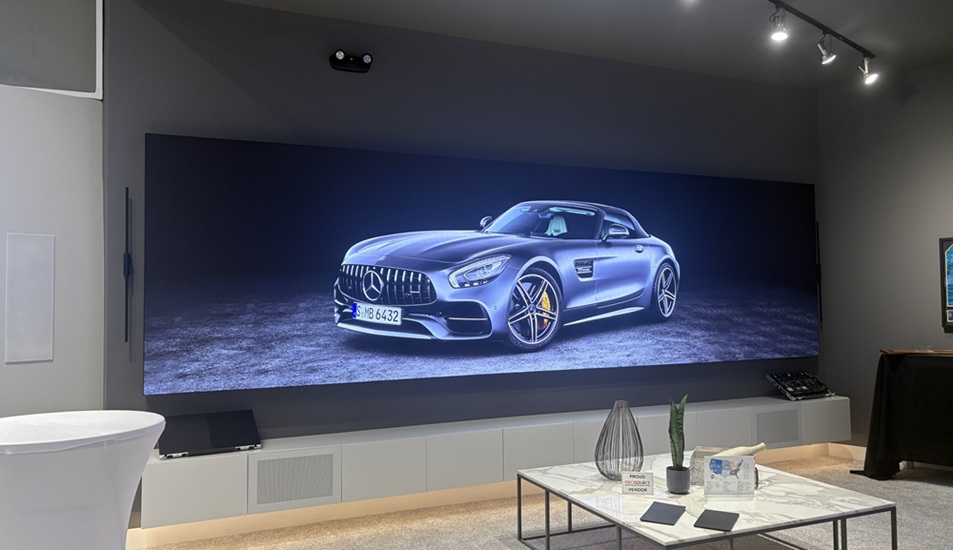
The conference also highlighted growing momentum around luxury video walls and microLED displays through the Just Video Walls facility tour. HTSA attendees had the opportunity to tour the company’s headquarters in Tamarac, Fla., and CE Pro got an exclusive tour that included a wide-ranging conversation on the company’s model and the video wall market.
Company executives demonstrated a range of residential applications including ultra-wide cinematic displays, digital art installations and indoor-outdoor entertainment spaces while emphasizing the importance of dealer training, installation precision and long-term support in the category.
The Just Video Walls pitch is relatively simple: a highly specialized luxury residential maker of video walls, specifically designed for integrators serving luxury clients. In fact, the company can install video walls for end clients themselves (and they do help dealers with installations), but they won’t without an integrator.
The video wall market, according to the company, is fragmented and made up of a few big-name display brands that aren’t solely focused on the channel and what dealers need. With a technology that can be somewhat complex, dealers need all the support they can get.
“This is not something that I can go to Costco, get a mount, get a TV, and anyone with the ability to use a screwdriver can put on a wall,” says Skyler Meek, chief marketing officer at Just Video Walls. “There’s 1,000 ways it can go wrong.”
Company executives said Just Video Walls was founded specifically to solve many of the installation, calibration and long-term reliability issues integrators experienced during the early years of residential video walls. According to the company, many dealers could complete an initial installation successfully, but without proper mounting techniques, structural isolation and quality control processes, issues would often emerge weeks or months later, leading to callbacks and service problems.
Rather than competing primarily on price, the company said its strategy centers around dealer enablement, training and long-term support. Executives detailed a multi-stage quality control process that includes factory inspections, third-party verification and full pre-assembly of every wall at the company’s headquarters before shipment.
“The dealer doesn’t need the cheapest LED video wall,” Meek says.
What dealers do need, according to the company, is a video wall partner that gets it. Most integrators are small businesses and don’t have time to deal with the problems that many video walls bring. Just Video Walls goes as far as to send install teams to help integrators with the install and essentially take away all of the pain points. This also helps ensure that the company’s products are installed the right way.
The company also demonstrated its newer “Absolute Black” display technology, which it described as an effort to deliver OLED-like black levels and contrast performance in larger microLED installations. Executives additionally emphasized that video walls remain a highly experiential category that homeowners typically need to see in person before purchasing, making dealer showrooms and demos a critical part of the sales process.
“The installation is the product,” says Chief Revenue Officer Jim Koenig.
Lighting (Especially Dealer-Focused Lighting) Continues to Gain Momentum
Lighting also remained a major topic throughout the conference, both from HTSA leadership and participating vendors.
Robbins says HTSA continues to prioritize lighting initiatives alongside what the organization calls “modern workspaces,” referring to technology-enabled residential environments designed for hybrid work, education and communication.
“We feel like we were kind of at the lead of the industry on [lighting],” Robbins says.
Among the lighting-focused exhibitors at the event was Lucetta CI, the custom integration division of Elemental LED.
Paul Irwin of Lucetta CI and Elemental LED’s chief revenue officer, says integrators are increasingly becoming more comfortable with lighting technologies and moving beyond small pilot projects into larger whole-home implementations.
“Early on, we were seeing smaller jobs to kind of prove the model and get their feet wet,” Irwin says. “Now we’re seeing larger, more full-scale jobs across the entire home environment.”
Irwin compared the current state of lighting in the custom integration market to the early days of motorized shading, arguing that many integrators are still working through the learning curve around fixture specification, configuration and deployment. While lighting control has existed in the channel for years, configured lighting systems introduce additional complexity around power supplies, controllers and system design that many integrators are still learning to navigate.
According to Irwin, Lucetta CI’s strategy has been centered on simplifying that adoption process for integrators by focusing heavily on installation consistency, long-term reliability and reducing service callbacks. Like Just Video Walls, the company aims to prioritize its dealers and their relationships withs customers.
“The integrator needs to install it without error and without callbacks and service issues the first time,” Irwin says.
Irwin also stresses that succeeding in the CI lighting market requires more than simply selling products through integrators. He credited HTSA’s vendor curation efforts for helping members identify brands that are making long-term investments into the channel rather than opportunistically entering the market.
Conversations throughout the conference pointed to an integration channel that continues to mature operationally while expanding into newer categories like lighting, AI-enabled workflows and luxury display technologies. Rather than focusing solely on product launches, much of the discussion centered around how integrators can build more efficient businesses, strengthen partnerships and create more differentiated experiences for homeowners.