Search CE Pro


Print  |  Email  |  Comments (0)  |  Share  |  News  |  Follow on Twitter, Facebook, Google+ or RSS

Upselling Sound Vibration Isolation to High-End Clients

For integrators selling high-end audio systems or to audiophiles, explaining vibration isolation can open up a potential upselling opportunity for vibration isolators for turntables, tube electronics or CD players.


image

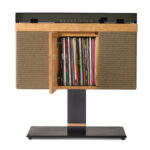
Newly developed negative stiffness isolators for turntables, tube electronics, CD transports or other audio equipment provide 0.7 Hz isolation performance vertical, and 1.5 Hz horizontal, using a totally passive mechanical system.

The impact of external vibrations plays a critical role in the sound quality produced by turntables and tube amps within high-end audio systems. Capacitors, resistors, transistors and other electronic components used in many audio systems are likewise sensitive to vibration.

Vibration isolation in the playback process is crucial to experiencing high-quality audio. Any external vibration, no matter how slight, even someone walking near the turntable or vibration from floor-mounted speakers, is sensed by the turntable’s stylus and affects the sound being played back from the record.

With recorded discs, sound waveforms are captured in the disc grooves with microscopic undulations. The turntable’s cartridge and stylus trace these minute wave forms, play them back with very sensitive low voltages and convert them into an audio signal. This is how the sound captured in the record grooves is reproduced. But this process is extremely sensitive to movement and vibration.

Vibrations in the range of 2 Hertz (Hz) to 20,000 Hz will influence the sound reproduction in audio systems. Vibration within this range can be caused by a multitude of factors. Every structure is transmitting noise. Within the home or building itself, the heating and ventilation system, fans, pumps and elevators are just some of the mechanical devices that create vibration. Depending on how far away the audio system is from these vibration sources, and where in the structure the audio system is located, whether on the third floor or in the basement, for example, will determine how strongly the sound quality will be influenced.

External to the building, audio equipment can be influenced by vibrations from adjacent road traffic, nearby construction, loud noise from aircraft and even wind and other weather conditions that can cause movement and vibrations of the structure.

These internal and external influences primarily cause lower frequency vibrations which are transmitted through the structure, creating strong disturbances in sensitive, high-end audio systems, making vibration isolation a necessity.

To put this into perspective, a stereo LP groove is 0.0028 inches wide (70 microns) and your typical sheet of 20-lb printer paper is 0.0038 inches thick. The human ear can detect movements of the stylus as small as 0.25 microns (250 nanometers, or 1/100,000 of an inch). It does not take much vibration to affect the sound.

“People who care about sound quality – such as audiophiles, musicians and recording engineers – can have very strong, subjective preferences about what constitutes good sound,” says Eric Jacobs, president of The Audio Archive, which provides consulting and audio transfer services to digitize, restore and preserve sound recordings from a wide array of current and obsolete analog media formats.

“Some people like resonances in their system that emphasize particular frequencies, so they will insist, for example, that their equipment must rest on a maple wood support because it has a certain resonance to it that makes the sound more appealing to them. Others, particularly those engaged in audio restoration or archival work, want to experience sound as the mastering or recording engineer intended it, without further coloration," he adds.

Reducing Turntable Flutter
“Most manufacturers of high-end turntables recognize that external vibration is a problem, and will go to great lengths to minimize it in their turntable designs,” continues Jacobs. “Quality turntables, for example, are built with superb platter bearings to minimize rumble. Some turntables can cost as much as $100,000 and use air or magnetic bearings, and other sophisticated approaches.

"They often incorporate high-mass platters that are designed to increase speed stability and reduce flutter. They might use exotic materials to dampen vibrations without deadening the sound. Tone arms have their own set of vibration and resonance characteristics which manufacturers attempt to isolate from the audible frequencies through geometry, localized vibration isolation and damping. Turntable designers go through this elaborate process to try and eliminate vibration throughout the entire turntable playback structure.”

High-end turntables are also sometimes factory-equipped with built-in vibration isolation supporting the entire turntable. These turntables are poor candidates for additional vibration isolation because resting an isolator built into a turntable upon an external isolator causes the two isolation systems to interact, creating random resonances that actually harm the audio quality.

But for the majority of high-end turntables that are manufactured without factory-installed vibration isolation, third-party air-based vibration isolators have become a popular accessory. These systems typically have a vibrating power pump to supply air, with a tank that holds the pressurized air and delivers steady pressure to the isolator. The noisy pump is usually located outside of the room that has the audio equipment, and the air hoses are run over to the tank and isolating platform.

“Air systems are usually a less than optimal set-up,” explains Jacobs. “They do achieve some isolation, but we have found that like most of the mechanical audiophile vibration isolation devices, they provide limited isolation performance. They do isolate some – usually in one dimension (vertically) with limited horizontal isolation – but they do not isolate to the extent that is really needed at very low resonance frequencies.”


Subscribe to the CE Pro Newsletter

Article Topics

News · Business Resources · Audio · Speakers · Acoustics · All topics

Comments

Post a comment
Name:
Email:
Choose smileys | View comment guidelines
Remember my personal information
Notify me of follow-up comments?

Sponsored Links

  About Us Customer Service Privacy Policy Contact Us Advertise With Us Dealer Services Subscribe Reprints ©2012 CE Pro
  EH Network: Electronic House CE Ideas Store Commercial Integrator ChannelPro ProSoundWeb Church Production Worship Facilities Electronic House Expo Worship Facilities Expo