
Entry-level CI sales talent is commanding premium pay in the custom integration industry, according to the 2025 CE Pro Wage & Salary Study, signaling a notable shift in how firms are valuing front-end revenue drivers.
While many technical and back-end roles saw only modest movement in compensation since 2023, the data shows integrators are increasingly willing to invest in less experienced sales professionals who can navigate consultative, design-forward conversations. In a competitive hiring environment where finding qualified salespeople remains a persistent challenge, companies appear to be strengthening base salaries to attract talent early and secure long-term growth.
Median Sales Pay Sees Substantial Growth in 2025 for Entry-Level Positions
Digging into median worker pay, many personnel salaries remained largely unchanged. Systems designers and programmers saw limited gains since 2023 as did IT/network management specialists.
Entry-level CI sales staff, however, saw perhaps the largest pay increase, with the average sales rep under two years of experience now making $75,000 median annual salary, an uptick of $13,000 compared to 2023.
| Salary Range | Sales Manager | Sales Rep <2 yrs | Sales Rep 2+ yrs |
| Under $50,000 | 0.0% | 15.2% | 2.7% |
| $50,000–$59,999 | 5.9% | 12.1% | 13.5% |
| $60,000–$69,999 | 11.8% | 9.1% | 2.7% |
| $70,000–$79,999 | 8.8% | 21.2% | 10.8% |
| $80,000–$99,999 | 14.7% | 27.3% | 27.0% |
| $100,000–$124,999 | 32.4% | 12.1% | 24.3% |
| $125,000–$149,999 | 2.9% | 3.0% | 8.1% |
| $150,000–$199,000 | 14.7% | 0.0% | 8.1% |
| $200,000+ | 8.8% | 0.0% | 2.7% |
For comparison, CI sales staff with over two years’ experience saw a pay increase of $5,000, bringing them up to $90,000 median annual salary. The next single largest increase came from Project Managers, whose pay increased $5,000 from 2023 to a median annual salary of $85,000.
One thing to note, however, is the difference between markets. Hagan Kappler, co-founder and CEO of Daisy, a national custom integration firm with locations across the U.S., points out that in “higher-cost metros” and especially for “specialized roles,” the pay should be expected to go meaningfully higher.
The Shifting Landscape of Sales Compensation
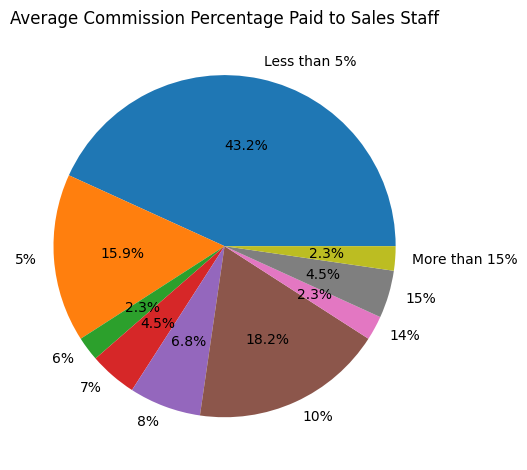
While entry level sales staff saw a substantial salary bump, the commissions they make off of sales shrank, implying that more of a premium is willing to be paid for talent out the gate.
With the increase in sales salaries, CE Pro also noted a decrease in sales commissions. In 2025, 48.9% of respondents were paying between 5-10% on sales commissions, down from 59% in 2023. The number of companies paying less than 5% on commission nearly matches that at 41.9%.
“The rise in sales compensation is noteworthy,” says Kappler. “Good sales talent that can handle consultative, design-forward selling is commanding a premium. For design and engineering roles, the market is particularly competitive and we see even higher compensation.”
Talks with other industry leaders have netted similar assessments as nowadays, businesses reported struggling to find salespeople with the requisite knowledge and skillsets to adequately sell CI services and products.
Could Scope Be Part of the Issue?
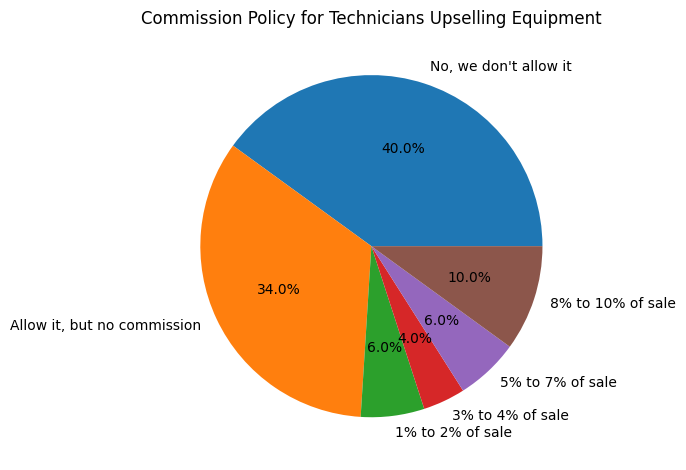
Historically, service techs have not been paid commission for upsells on equipment, however, in recent times, the number of integrators that do reward it have been shrinking.
Part of the struggle with sales in custom integration lies in being able to upsell while maintaining realistic scopes on projects according to industry leadership. For many firms, this is a pain point frequently caused by those unfamiliar with the ins and outs of the industry and is one of the larger challenges of determining how to acquire CI sales personnel.
Though conjectural, this challenge to maintain scope could also be a reason as to why many companies may not want to incentivize upsells too heavily and could also point to why some CI firms are paring back on commissions while still increasing pay among their dedicated sales teams.
This could also explain why, historically, many companies do not pay commission for upsells by service technicians and why some companies outright forbid it. There is still a subset of companies that do allow it, however as 24.5% said they pay commissions on service tech upsells with a remarkable 10% paying as much as 8 – 10% on commissions.
The Methodology Behind the 2025 CE Pro Wage and Salary Study
The CE Pro Wage and Salary Study is a semi-annual look into the payrolls of custom integration firms to see how all parts of an integrator’s business are compensated, offering comparisons to prior years in the hopes of providing enough transparency to keep market rates competitive and ensure critical talent is being compensated.
Soliciting open participation from members of the custom integration (CI) industry, CE Pro opened its Wage and Salary survey for the month of January, asking integrators to respond to questions related to pay and compensation for the 2025 fiscal year.
Answers regarding pay and revenue have been consolidated to median numbers with data analysis being conducted by CE Pro editors as well as Kappler, co-founder and CEO of Daisy, whose prior experience includes category management at Starbucks, mergers and acquisitions with Ingersoll, and franchise ownership at ServiceMaster.
A download to the full study with additional data breakdowns and analysis will be uploaded soon to cepro.com, at which point, this article will be updated to include links to the resource.
Wage & Salary Study FAQs
What is the key takeaway for integrators?
Pay growth remains competitive, but it’s clear that certain talent is being traded at a higher premium, and integrators looking to capture the best talent will need to find ways to differentiate themselves beyond traditional compensation models.
As Kappler summarizes: “The playbook is the same everywhere: pay competitively, reward performance, give people a stake in the outcome, and build a place where they can see a career, not just a job. The integrators who figure that out first are going to pull away from the pack.”
What else does the data suggest about the CI industry?
The data points to an industry that is maturing, professionalizing and stabilizing around competitive compensation norms.
As Kappler points out: “The fact that 86% of responding companies are doing over $1 million in revenue and the median company has been around for more than two decades tells you this isn’t a fly-by-night space. These are real businesses, and they need to be compensating their people like real businesses.”
How did business perform in 2025?
The year started unevenly, with some sectors lagging and others ramping up project volume later in the year. Revenue distribution appears somewhat bifurcated between $1M and $5M+, however, compensation increases largely remained steady.
What is the median expected pay increase?
The median expected pay increase for 2025 is 3%, consistent with prior studies.
Which roles saw the biggest salary growth?
Entry-level sales (Under 2 Years) saw a $13,000 increase in median annual salary compared to 2023, with the role now bringing in $75,000 annually.
Which roles saw limited salary growth?
Systems designers, Programmers and IT/network management specialists saw the smallest gains in salary since 2023.
How are sales commissions trending?
48.9% of companies are paying 5–10% commission (down from 59% in 2023) while 41.9% pay under 5% commission.
Why are sales salaries rising while commissions decline?
Industry leaders cite a shortage of consultative, design-forward sales talent. Higher base salaries may reflect the premium for qualified sales professionals, while commission structures are being adjusted to maintain project scope and margin control.
How common are bonuses?
Extremely. 84.9% of firms were offering bonuses in 2025, up 8% from 2023, with 56% calculating bonuses as a percentage of profit.
What are the top five benefits being offered by custom integration firms in 2025?
Top benefits include
- Paid Vacation
- Worker’s Comp (up 12%)
- Paid Holidays (down 7%)
- Tool Reimbursement (up 11%)
- 401(k) Retirement Plans (up 12%)
Is profit sharing common?
No. In fact, profit sharing has declined by nearly 20% since 2023.
How else are custom integration firms compensating employees?
Some firms report offering flexible scheduling, equity participation and fully covered health insurance, though these remain exceedingly rare in the industry.
What is the median labor profit margin?
The median labor profit margin remains at 35%, consistent with 2023, with 57.7% reporting 31%–75% labor profit margins.
How common is it for integrators to outsource labor?
Outsourcing has dropped sharply, with 11.5% using outsourced labor (down from 51% in 2023). Subcontractor use has increased, however, with 51.9% using subcontractors (up ~15% from 2023) reflecting integrators expanding into categories like energy and power that require specialized trades.
A download to the full study with additional data breakdowns and analysis will be uploaded soon to cepro.com, at which point, this article will be updated to include links to the resource.