
Around this time of the year, CE Pro generally likes to look at the state of the smart home industry from a business perspective. However, timed perfectly with that this time around, Vivint has released its own state of the industry of sorts which asks the question: how are the current rates of adoption among consumers sizing up to interest in smart home technology?
Methodology Behind the ‘How We Home’ Report
The ‘How We Home Report’ as Vivint calls it seeks to, in their words “unveil how the home…has evolved over the past five years, driving new needs and preferences among homeowners.” To accomplish this, Vivint reach out to 5,000 U.S. homeowners to see what their relationship with smart home technology currently looks like.
Also, if you’re curious, the demographic breakdowns were pretty even, all things considered. The spread goes something like this:
- 1% of respondents were from the Silent Generation
- 13% were Baby Boomers
- 17% were Gen X
- 17% were Millennials
- 2% were Gen Z
The Current State of the Smart Home Adoption
Looking at the state of smart home adoption today, roughly 84% of respondents said that they have at least one smart home device in their home. Breaking it down by generations, however, reveals that Gen Z and Millennials are the ones leading that trend with 96% and 93% of the respective generations owning at least one smart device.
Despite this profusion, however, not everyone feels as though they’re a necessity in the home. In a follow up question, only one in five said that they can’t imagine their life without smart devices (unfortunately, there’s no demographic breakdown to see who hurts more without the tech there).
Also, if you’re wondering what smart devices are currently sitting in most people’s homes, here’s the rundown:
- Smart TVs top out with 58% of respondents having one in their home.
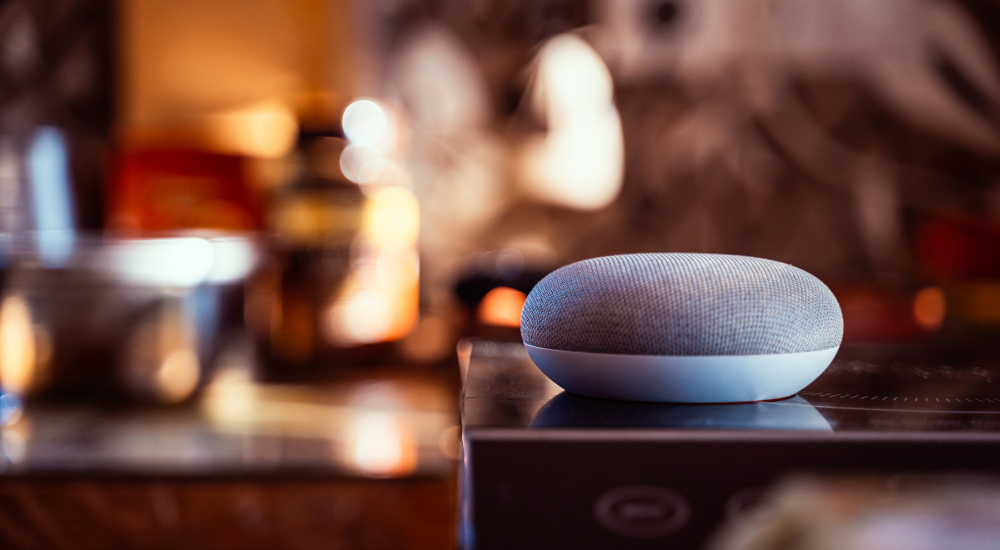
- Smart speakers are the next most popular device at 36% profusion.
- And smart doorbells finish barely in third at 35% adoption.
What Home Technology Categories are Homeowners Most Interested In?
Despite plenty of people already owning a smart speaker or TV, those, perhaps unsurprisingly, are not the devices people want the most. In fact, in terms of most desired smart home upgrades, lighting is number one with 22% of respondents saying they plan on making that the next purchase.
Following lighting is outdoor security cameras, though not by much. At 20% the two categories remain close in interest, which, given prior studies we’ve had the opportunity to go over, tracks with people’s evolving desire for smart surveillance.
Smart doorbells are the only ones that show up twice between these lists. With 19% of respondents stating their intent to buy, they are the third most sought after smart devices in addition to being the third most installed smart device.
What Smart Home Features Do People Think Are Best?
When it comes to what people want out of a system, the top three features’ people tend to prioritize nowadays are:
- Real-time alerts (38%)
- Battery back-up/failure protection (36%)
- And voice control/app control from anywhere (33%)
It’s worth noting that real-time alerts likely tie in with security, as that was something we saw in prior studies regarding security system adoption.
Integrators should also take note that, in the study, the younger generations had similar, yet different priorities. Namely: among younger respondents, data security and encryption ranked second highest for priorities when building out their smart home.
What is interesting, though, is that, despite being a priority, most people aren’t planning on buying a battery back-up currently, though that could be due to what’s to follow.
What are the Biggest Hurdles to Smart Home Adoption Currently?
For the average consumer, cost continues to be one of the biggest hurdles to smart home adoption with 53% citing it as a reason for holding them back. Privacy and security come in at 33%, though it’s unlikely related to actual physical security and more to do with cybersecurity as consumers have always been particularly leery about smart devices thanks to some bad actors.
Below that, functionality issues (23%), an overabundance of apps (20%) and just a general lack of compatibility with each other causing frustrations (18%) closely mirror many of the complaints that professionals see lobbed at their systems to this day.
Additional Insights: The Interest in Smart Energy
In some follow-up questions, Vivint uncovered that 59% of respondents saw an increase in their energy bills in the past 12 months. Out of that number, 54% believed that smart tech could help reduce them.
Overall, however, eight in ten respondents said they just want a unified energy management solution, highlighting a big issue/opportunity depending on how you want to look at it, as despite Vivint’s study veering more towards DIY, this is an issue that occurs at the pro level as well.
That issue/opportunity is this: energy in the home is complex, and there is yet to be a single one-size-fits-all solution out there such that it can be easily packaged, marketed and sold at scale.
That doesn’t mean one needs to be made. If anything, based on conversations with leaders in the industry, energy comes off as being something that should be approached holistically. What it does mean when paired with the data, is that it’s the people that are able to put together the products that are going to be sought after when it comes to energy management in the smart home.
Final Thoughts and Takeaways
Physical security continues to be one of the most sought after categories in the industry, but anything to do with energy has caught the attention of homeowners. Unsurprising given the uptick in energy costs over the past five years (which are unlikely to go down any time soon).
What’s noteworthy, though, is that as of yet there’s no cleanly packaged solution out there that can address those issues. With disjointed services being a clear pain point for many, the role of a curator, a la ‘custom integrator,’ becomes a highly sought after one in the smart home space.
Homeowners see value in these systems, but they are particular about how they expect these systems to perform, and, given recent advancements in AI, those expectations are likely to grow loftier in the future. The good news is that, assumedly, that’s because these experiences will be easier to deliver on from the perspective of the integrator.
Don’t get caught up in the categories, however. The big takeaway should be the last three hurdles outlined in the report (app fatigue, compatibility, and functionality issues) as these are the three aspects of the smart home an integrator has the most control over. They also have the most potential to overshadow the other qualms.





