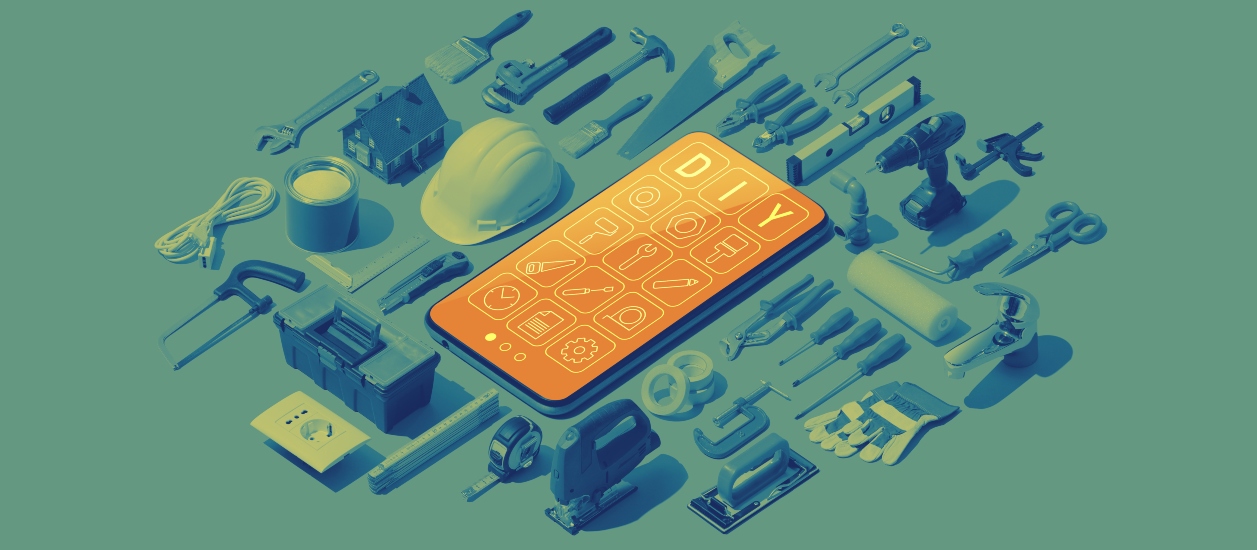
DIY and its impact on business is an ever-present concern within the custom integration (CI) industry, with the main fears being that should installation methods and device performance become simple enough, the average homeowner would sooner install systems themselves than reach out for a professional. But why does that fear exist? Is it well founded? And what is the actual impact DIY products are having on integrators’ businesses today?
This article will look to explore many of the different facets of the DIY conversation, bringing forward prior discussions, available research on the topic, and commentary from the industry to try and measure the true impact of DIY on an integrator’s business, and what can be done to mitigate (and perhaps even benefit from) it moving forward.
Why This Matters to Integrators
Business lost due to DIY is the most prominent concern related to the topic (as evidenced by CE Pro articles dating back nearly a decade at this point), but while many point to (cost) as being the main drivers for homeowners choosing DIY over pro, it misses some of the nuances of these decisions and brushes off its impact on business elsewhere, particularly the newly formed floor of the industry.
Homeowners will pursue DIY as an option if they think they can save money, but it’s also not entirely true that higher end projects are completely insulated from DIY, as the mere existence of it promises elements that larger, more complex systems can struggle to achieve, assuming that the integrator providing them is careless with the implementation.
The Real Impact of DIY on an Integrator’s Business
There’s no dedicated research on how much DIY can impact business in general—let alone in custom integration. The closest we have is looking at the home improvement market, which, Harvard’s Joint Center for Housing Studies reports that in 2023 the owner-occupied home improvement market totaled $405 billion. Of that, DIY’s market share represented 15.9% of that at $64 billion, and that 15.9% represents a historic low for the lifespan of the study. Meanwhile, in that same time, professional spending grew 14%.
As a “threat,” DIY is shrinking, though it’s doing so in fits and bursts (it is very prone to cyclical rises and falls). So, what’s the worry?
Custom Integration Projects Can Largely be Considered ‘Safe’ to DIYers

Google’s recent advancements with AI have now made it easier for DIYers to build custom automations on their smart home platforms. Photo by Ascannio – stock.adobe.com
The reason why integrators might be more concerned with DIY is because CI as an industry is theoretically vulnerable to DIY trends. There are a few reasons for that:
- The first is that the low barrier of entry makes it so DIYers can get started as easily as integrators in some cases.
- Next is because the budgets for CI projects tend to pull from discretionary spending, which is the type of spending most susceptible to being diverted into DIY projects.
- Lastly, the tech-centered business model lends itself to disruption as the prevailing trend is that over time more complex systems become easier to install for the end user.
How Does Project Cost Factor into DIY Decisions?
Whether or not someone will opt to do DIY instead of calling a professional largely depends on the cost of the project.
The average size of a DIY project sits at around $5,000, with anything over that usually getting picked up by a professional, so, basing assessments off the average CI project costs (between $25,000 and $75,000 according to CE Pro‘s 2026 State of the Industry), it’s safe to assume that most integration projects are insulated based on cost alone.
That’s on average, though, and digging deeper into the specifics reveals a different take. As it turns out, 15% of all CI projects fall under $5,000, making it the second largest project cost segment in the industry. That’s 15% of this industry’s work capable of being disrupted by DIY (which fits almost perfectly with the percentage of spending going into DIY discussed at the top of the article).
Who is Supporting These Smaller Projects?
More than likely, the types of firms occupying this project scope are those either relatively new to the industry or still trying to build out their business by pursuing a higher volume of low budget projects. Older more established firms tend to pursue a lower volume of higher budget projects.
Is Cost King?
One anomaly throwing a wrench into the cost equation is the recent market entrant, Bundl, who made headlines with DIY CI kits that cost as much as $12,000. The $5,000 mark isn’t a hard and fast rule, but when pitching a DIY kit at that price point, you might wonder if it was a miscalculation on Bundl’s part or something else?
Back when she used to write for CE Pro, magazine founder Julie Jacobson penned a piece talking about the threat of DIY to integrators, and her take leaned away from the cost angle.
In her own words: “…Consumers don’t necessarily go the DIY route because they’re too cheap to hire a pro, or the products themselves are cheap (they’re not always). They do it because it’s just simpler that way. Configuring the products is simple enough (at least consumers are led to believe), and they can complete the transaction — from ordering to installation — without having to talk to a salesperson or let a stranger into their home.”
Homeowners Want Convenience and Simplicity
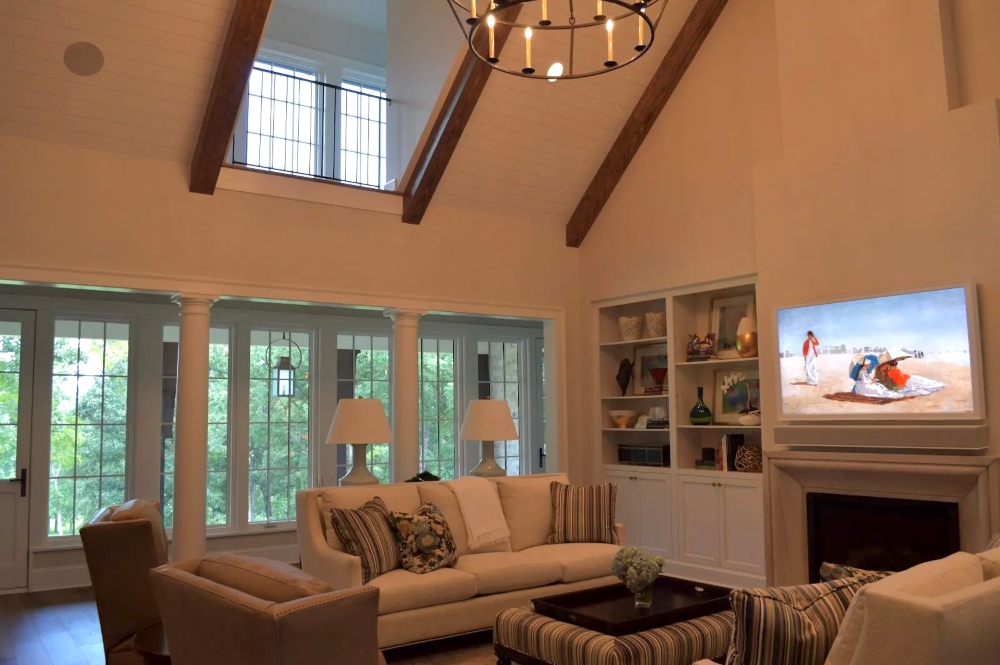
This particular smart home won a Home of the Year Award in 2024 for its unique integration of pro-level systems into Apple’s DIY devices. The initial request was borne out of a desire to retain a familiar, simple interface by the homeowner, an ex-Apple engineer. Photo by Stephanie Johnson
Homeowners want their smart homes to be convenient and simple, even in the setup, and that’s something that, historically, the pro channel has struggled with. Just because a professional system is more advanced and feature complete doesn’t mean that a homeowner will always view it as worth the hassle (if there is one).
As Executive Editor Zachary Comeau wrote discussing ongoing biases against the industry: “Without thoughtful interfaces, clear automation logic, and ongoing support, small problems compound and make everyday interactions feel slower, more confusing and less reliable than traditional controls.”
Opportunities in DIY
Rather than viewing it strictly as competition, many within the industry have begun looking at DIY products as opportunities for education, both for how professional systems can better emulate the simplicity and convenience at the DIY level and how integrators can show prospective clients what a pro-level experience looks like.
AVIXA’s David Labuskes is on record for viewing DIY as a great opportunity for integrators looking to scoop up frustrated clients and wow them with a pro-grade solution.
There’s evidence of that being the case as well, as Parks Associates found that 29% of DIY projects in the smart home space turn to pros for finishing the job.
To make those conversions, however, Labuskes said integrators need to focus on why someone would want to hire them in the first place and promote that. Integrators can’t be selling TVs and expect to outcompete DIY for long; they need to be selling themselves and highlighting the impact of the services their business provides.
The Do-It-for-Me Market
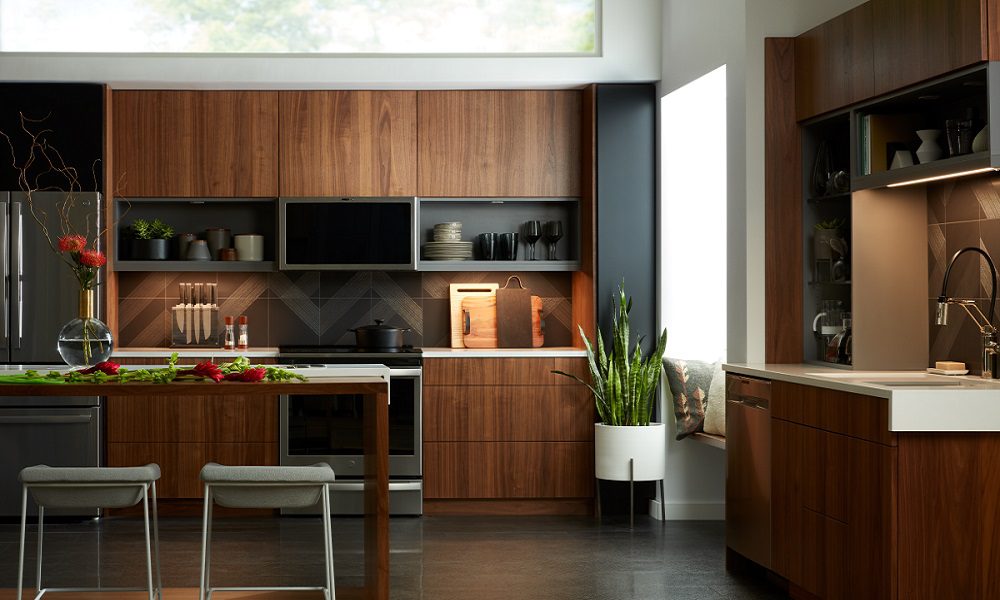
Savant’s Cync line (which runs under the GE Lighting brand) is a DIY solution that the company has added more support to over the years as a means of being able to upgrade into pro-level systems. Photo courtesy of GE Lighting
JC Murphy, Chief Commercial Officer over at Savant goes so far as to highlight DIY as being a catalyst for the “Do-it-for-Me” (DIFM) market, a growing segment in the industry actively using DIY-level devices but implementing them with the same thought and care as a professional-grade system.
“There is an entire crop of homeowners out there getting fired up about DIFM smart home, and many are now seeking out next level solutions from integrators,” he says.
“It is not uncommon that some of these consumers find their way to the pro-channel via their DIY experiences,” he adds, referencing patterns he has seen over at Savant with customers graduating from its DIY offerings into more robust, professional systems.
DIY Lets Homeowners Try Before They Buy
Georgio Galaris, Manager of Residential Marketing over at Crestron echoes that sentiment, pointing out how homeowners outgrowing DIY is a very real phenomenon.
“When a customer is seeking a more connected, elevated experience, DIY products often expose them to what’s possible and the limitations of their current setup,” he says. “While smaller, single-device features might be fine for DIY, once a homeowner is looking for a connected system, professional expertise becomes essential.”
“While DIY solutions can kick off the customer journey, integrators are ultimately the ones who can deliver the seamless, connected smart home many homeowners seek,” he adds.
In Summary
It’s hard to solidly quantify the true impact DIY has on an integrator’s business. If we’re looking at current project spending spreads, DIY is the weakest it’s ever been. It’s safe to say either way that custom integration, as an industry, is well insulated from DIY, though it can still impact the business of younger, smaller firms by stealing away smaller projects.
Staying competitive requires a look at why consumers might pursue DIY. Cost is a major element, but convenience and simplicity is almost just as important, and that latter portion is something pro-channel projects have struggled with historically.
For that reason, it is vital that integrators, especially those starting out, define themselves less by the individual products they offer and more by the result they can achieve with those products, focusing on human-centered systems that actively work to reduce friction in household interactions.
Those at the top and those within the DIFM market have their identities nailed firmly down in that respect, and they are thriving as a result. Those relatively fresh to the industry, meanwhile, would do well to consider what value they bring to homeowners, because if that can’t be answered, then DIYers might actually eat their lunch.