For much of the custom integration industry’s history, collaboration with architects and interior designers was treated as an operational necessity rather than a strategic opportunity. Integrators were often brought in after major decisions were already made, asked to make technology work inside spaces never designed to support it. Designers, in turn, were left managing the visual consequences of systems they had little influence over.
That approach no longer works.
Today’s residential technology systems are infrastructure, not accessories. Lighting control, motorized shading, networking, security, audio, video, and environmental systems now shape how homes function, how they feel, and how clients experience them every day.
Across conversations with several architects and interior designers, a consistent theme emerges: integrators who succeed in the next phase of the market will be the ones who stop operating like late-stage subcontractors and start behaving like members of the design team.
Indiana-based architect Adam Gibson argues that the historical tension between design and technology is often misunderstood. In his work across kitchens, baths, remodels, and new construction, he sees discomfort with complexity far more often than resistance to technology itself.
“Designers think it’s complicated, and they think it’s expensive,” Gibson says. “It often is, but there are many levels of home automation, and designers don’t always see that because they’re not brought into the conversation early enough.”
When integrators are engaged earlier and communicate in a way that aligns with the design process, Gibson says, the friction largely disappears. The problem, he suggests, has never been technology—it’s timing, translation, and whether integrators are willing to participate as true collaborators rather than problem-solvers brought in after the fact.
How To First Approach Designers and Architects

Image/Deep River Partners
Making the right first impression is crucial. The initial approach can set the tone for a lasting partnership or doom the relationship before it even begins.
Toni Sabatino, an interior designer who is well-known in CEDIA circles for embracing the custom integration industry in her projects, is clear about what designers are not looking for: product pitches, technical jargon, and feeling like technology is being imposed on their design.
“Designers and architects value partners who can speak our language, not just tech jargon,” Sabatino says.
Sabatino emphasizes the importance of showing, not telling. Case studies and photography that demonstrate how technology can disappear into high-end spaces are far more effective than specifications lists. Offering design-phase consultations or informal lunch-and-learns helps build trust before a live project is even on the table.
Nick Blavat, a principal with Milwaukee-based architectural firm Deep River Partners, echoes that sentiment, saying integrators should present themselves as true collaborators. In many cases, architects and designers have already been working with the client for months, so that relationship must be respected.
“It should never be ‘my way’ or ‘their way.’ It should be how we work together to serve the client,” Blavat says, adding that architects and designers usually interface with the client first for several months.
“I think we have valuable knowledge of how they want the house to perform,” Blavat says.
However, some designers have different experiences with integrators. For example, Seattle-based interior designer Tristan Gary says she hasn’t had much success finding an integrator willing to be a true partner and collaborator.
“I want to use technology, and I want to incorporate it into my projects, but I want it to be a team collaborative effort that everybody is happy with,” Gary says. “I just haven’t found an integrator with the same intention.”
Collectively, these voices encourage integrators to approach the process with humility, curiosity, and a willingness to truly support the vision of the design team.
When Integrators Should Be Involved and Why Timing Matters
Every expert interviewed agrees on one point without hesitation: integrators should be involved as early as possible, ideally during concept or schematic design. This helps reduce headaches and conflict later in the project lifecycle.
“If a project includes anything integrator-worthy, you’re part of the design team,” Gibson says. “Smart homes aren’t an accessory. They’re infrastructure. The earlier you’re involved, the smoother and more elegant the final result will be.”
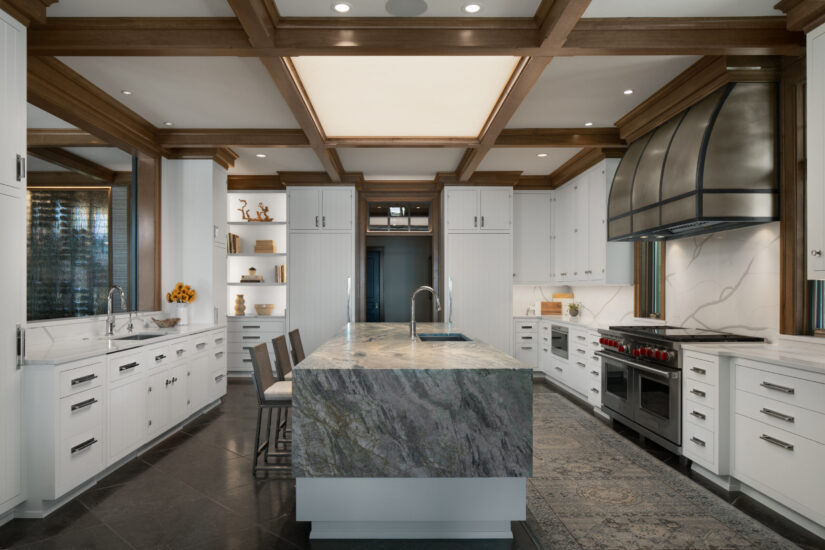
Early involvement allows for proper space planning: equipment rooms with adequate ventilation, conduit pathways that don’t compete with structure or millwork, and coordinated electrical and low-voltage infrastructure. It also enables alignment around lighting control, shading, and networking before those decisions become expensive to change.
Gary, who admits that she hasn’t had successful relationships with integrators, agrees that early involvement is essential, but offers the caveat that both sides need to remain flexible and open to changes.
“They need to be there early for wiring and framing, but then they want everything decided immediately,” Gary says. “Lamp locations, furniture placement, all of it. And then you’re locked in. Design needs flexibility early on.”
For integrators, the takeaway is not to retreat from early engagement but, rather, to understand the evolving nature of the design process. Early collaboration should focus on system architecture and flexibility, not fixed placement decisions that may need to change as the design develops.
The Aesthetic Reality: Clients Love What Tech Does, Not What It Looks Like
Designers would not be the aesthetic experts they are if they didn’t instinctively push back on anything that threatens visual harmony. Across residential projects of every scale, technology is rarely rejected for its functionality. Instead, it is rejected for how it shows up in a space.
A recurring theme across all expert interviews: clients love how technology improves daily life, but they dislike visible disruption.
Wall clutter, mismatched keypads, oversized speakers, visible sensors, and poorly integrated displays undermine the cohesion designers work hard to create, says Portland, Oregon-based interior designer Molly Switzer.
“Technology doesn’t need to be hideous,” Switzer says. “Just because something works doesn’t mean it belongs there.”
Switzer says aesthetic conflicts between designers and integrators tend to come up when integrators try to sell standard packages instead of offering custom solutions.
“If you’re putting a 15-inch-deep center channel speaker where I don’t physically have the depth, that’s not problem-solving,” she says. “That’s just installing your standard package and expecting everyone else to adapt.”
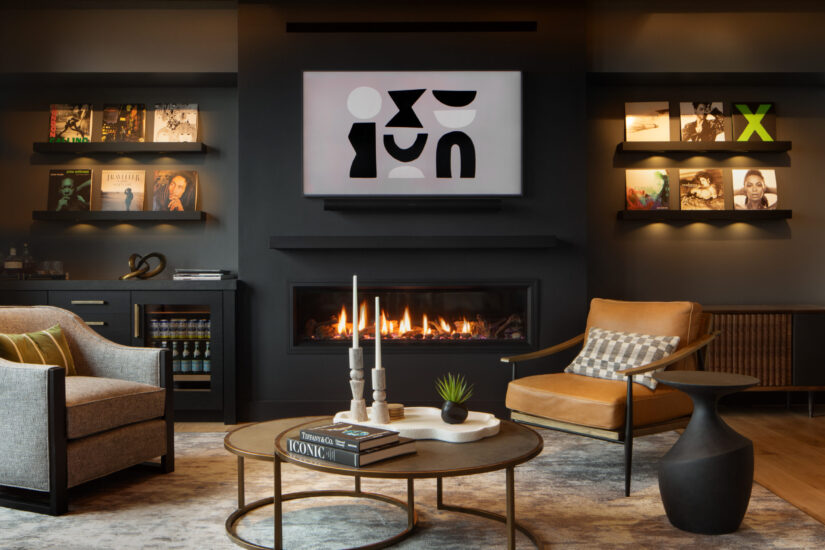
The solution, designers say, is not less technology but better integration. Invisible speakers, recessed devices, integrated soundbars, mirror TVs, hidden racks, and thoughtful keypad selection allow technology to support the design, rather than dominating it.
Across interviews, designers and architects referenced the term “wall acne,” which refers to visible tech such as keypads, touchpads, switches, thermostats, and other items placed on walls.
However, experts like Blavat also acknowledge that manufacturers are adapting to meet the aesthetic demands of homeowners and designers.
“We’re seeing more products built with aesthetics at the forefront—hidden speakers, low-profile sensors, even touch panels that blend with the wall,” Blavat says.
Even Gary, the designer who isn’t fully bought into the idea of collaborating with integrators, says design-conscious products like Samsung’s The Frame TV and in-wall speakers are softening her stance.
“Now I’m like, ‘OK, let’s put them in,’” she allows.
The Lighting and Shading Bridge

Image/Deep River Partners
Lighting is where technology and design most visibly collide. Lighting systems can help highlight architectural features or artwork, and shading systems can actively shape how a space feels throughout the day, controlling glare, preserving views, and protecting finishes without drawing attention to themselves. It is also where collaboration either begins smoothly or breaks down early.
Gary is direct about the centrality of lighting to her process and how integrators position themselves around it.
“If more integrators lead with lighting and shading, I’d probably be more receptive to working with them, since those are really the design pieces that they have to offer,” Gary says.
From Gary’s perspective, lighting control, dimming protocols, fixture compatibility, and system integration are not backend considerations. They directly affect the design narrative of a home. Integrators who start conversations with lighting and shading are signaling that they understand how technology can serve design, rather than compete with it.
Gibson agrees that lighting is often the most revealing category.
“Lighting is the biggest one,” Gibson says. “If you can reduce wall clutter and make life easier with thoughtful control, designers immediately see the value.”
Lighting control impacts wall aesthetics, ceiling composition, and user experience simultaneously. When handled poorly, it creates visual noise and operational frustration. When handled well, it fades into the background.
From an architectural standpoint, lighting control hardware is not just an interface; it is a permanent visual element of the house. Blavat frames lighting control as a design decision that signals quality and longevity.
“Lutron is one of my favorite lighting control systems,” Blavat says. “The look of the keypads and switches matters. Those are like the stitching on a Ferrari.”
Blavat’s point is not about features or performance. It is about the small, highly visible details that communicate intention and craftsmanship. Keypads and switches live on finished walls and are interacted with daily. When they feel cheap, cluttered, or poorly considered, they quietly undermine the architecture.
Switzer repeatedly returns to lighting and shading as representing the moment when integrators either earn a designer’s trust or quietly lose it. Unlike many other systems that can be hidden or deferred, these elements are visible, experiential, and permanent. They shape how a home feels from the moment a client walks in, which is why she views them as design decisions first and technical decisions second.
“Lighting changes everything about how a space feels,” Switzer says. “They’re part of the design.”
That mindset affects how willing designers are to collaborate. Switzer notes that integrators who lead with lighting and shading tend to feel more aligned with the design process from the start, because those systems sit at the intersection of aesthetics, daily experience, and long-term satisfaction.
“If an integrator starts with lighting and shading, I’m already more interested,” she says.
Where Coordination Breaks Down Most Often
Certain technology categories consistently create coordination challenges between integrators and the design team. Although lighting and shading systems are some of the most design-friendly technologies in a home, they require a lot of coordination, as do other tech categories.
Lighting control and fixtures require alignment on dimming, wiring, programming, and keypad aesthetics. Motorized shades demand early decisions around pocket sizes, fabric selection, and power. HVAC and environmental controls introduce cross-trade complexity. Networking infrastructure requires careful placement of access points and cabling. Home theaters and media rooms involve structural, acoustic, and electrical coordination.
Shading systems can become a pain point if integrators aren’t coordinating with the design team from its early stages, Blavat says.
“If we know about motorized shades ahead of time, we can design details to hide them,” Blavat explains. “If we don’t, we’re all compromising later.”
That same dynamic plays out across other technology categories, especially networking and infrastructure, where late decisions force visible trade-offs that designers and architects then have to explain to clients.
Gibson says these breakdowns rarely stem from technical difficulty. Instead, they come from missed conversations early in the process.
“Most of the issues I see aren’t because the technology is complicated,” Gibson says. “It’s because nobody talked about it early enough, and then everybody’s trying to solve it when the walls are already going up.”
Where Integrators Lose Trust: Details, Communication, and Follow-Through
When architects and interior designers talk about where integrators most often fall short, the answers are strikingly consistent and rarely dramatic. The breakdowns tend to happen in the fine details: finish coordination for devices, adequate rack ventilation and service clearance, integration of shades and lighting with millwork and window detailing, early specification of conduit size and location, and clear delineation of low-voltage responsibilities between trades.
Those issues are not typically read as technical failures. Instead, they are interpreted as signs that the integrator chose to apply a standard solution rather than responding to the specific needs of the project, the design intent, and the client.
“You can tell when someone is just copy-pasting their solution instead of responding to the project,” Switzer says.
That pattern shows up most clearly when coordination conversations happen too late. By the time conflicts surface, walls are already going up and options are limited, forcing compromises that ripple across the rest of the team.
That same dynamic carries over into how changes are managed. Designers and architects consistently say they are not asking for constant updates or micromanagement. What they want is structure: a single point of contact, written change proposals that clearly outline scope, cost, and schedule impact, version control for drawings, and regular check-ins rather than last-minute emails.
Taken together, the message from architects and designers is clear. The seemingly small details integrators miss are rarely small in impact. They shape how smoothly a project runs, how confident the client feels, and whether the integrator is seen as a true partner—or quietly ruled out for the next collaboration.
“Surprises are great for birthdays,” Gibson says. “Not for construction documents.”
Another often overlooked aspect of the integrator-designer relationship is an integrator’s support for the homeowner after they move in. It’s important to follow through on the project with the same level of dedication and support that was brought to the beginning.
According to Gary, failure to provide a professional level of support can ruin client relationships for all trades involved.
“When clients can’t get help later, that reflects on everyone involved,” Gary says.
How To Build Real Relationships with Designers and Architects
Image/Deep River Partners
Designers and architects are clear that meaningful relationships with integrators rarely begin with a project. They begin with exposure, education, and repeated low-pressure interactions that establish credibility long before there is a deadline or a budget on the table.
Lunch-and-learns are frequently cited as one of the most effective entry points, provided they are treated as educational sessions rather than sales presentations. Designers say the value lies in understanding how technology affects design decisions early, not in being walked through a list of products.
Sabatino has emphasized that these conversations work best when integrators position themselves as resources who can help designers think through lighting, shading, infrastructure, and long-term usability, rather than as vendors pushing a predefined solution. When education comes first, trust tends to follow.
Showroom visits serve a similar purpose, particularly when they are designed with architects and interior designers in mind. Designers repeatedly note that seeing technology in a finished environment helps them understand what is possible and what can be avoided.
Gary points out that showrooms are most effective when they demonstrate restraint.
“I don’t want to walk into a space and feel like I’m in Best Buy,” she says. “I want to see how this stuff actually lives in a home.”
For her, the value of a showroom is not volume or spectacle, but clarity. Lighting scenes, wall controls, and integrated shading help designers visualize how technology can support their work without overwhelming it.
Gibson notes that relationship-building is rarely about a single interaction. It is about consistency and visibility over time.
“The people I trust are the ones I keep seeing,” Gibson says. “They show up. They’re around. They’re part of the conversation.”
That same principle applies to local industry events and professional group meetings. Designers and architects say they notice which integrators make the effort to participate in regional design organizations, AIA or ASID chapter events, and informal industry gatherings not to pitch, but to listen and engage.
Blavat frames those interactions as groundwork rather than business development.
“Most clients come in not necessarily asking for technology. They know they need it but not how to integrate it,” he says. “So, a lot of the early conversations are about alignment of goals, not selling.”
From his perspective, integrators who engage architects and designers through education, shared learning, and ongoing presence are far easier to integrate into project teams later. By the time a real project emerges, those integrators are already familiar, already trusted, and already speaking the same language.
Where Integrators Prove Their Value
When integrators collaborate well, designers say their value becomes immediately clear. They translate lifestyle goals into workable solutions, prevent coordination conflicts before construction, simplify the user experience, protect design intent, and stay engaged long after move-in through service and support.
Gibson describes that shift in terms clients instantly understand.
“When you show clients that their home can greet them, light the path, unlock the gate, and keep them safe,” Gibson says, “technology stops being a line item. It becomes a lived experience.”
Across interviews, the definition of a good integrator is consistent. They communicate clearly, respect the design process, deliver documentation on time, and solve problems collaboratively. The difficult ones overpromise, rely on jargon, miss deadlines, and insist on doing things their way.
What’s at stake, Gary notes, is far bigger than a single project.
“Your integrator is married to that client for as long as they live there,” she says. “That’s a much longer relationship than any other trade.”