
Collaboration across architecture, design, construction, and technology has always mattered in high-end residential projects. But as luxury homes become more complex and client tolerance for friction continues to shrink, collaboration is no longer just a best practice. It is the mechanism that determines whether a project succeeds or struggles.
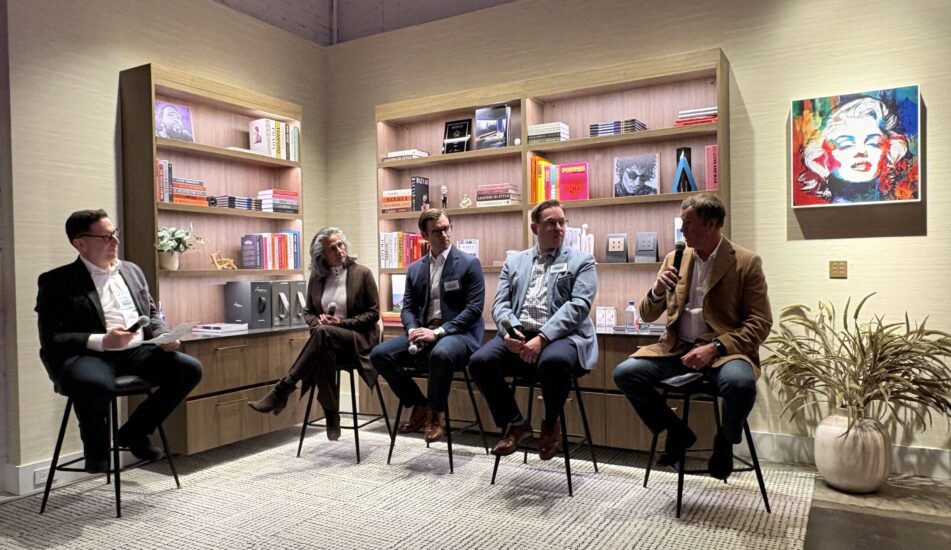
That theme came through clearly during a recent panel discussion at the Strateres Design Studio in Norwood, Mass., moderated by architect David Tabenken of Hacin Architects. He was joined by local Boston-area trade experts, including lighting designer Evelyn Audet of Evelyn Audet Lighting Design, Dan Abramson, chief experience officer at SimpleHome, architect Jacob Lilley of Jacob Lilley Architects, and Ryan Garrity, vice president of property services at Sea-Dar Construction. Together, the group explored how early coordination, shared vision, and ongoing communication directly shape the homeowner experience in luxury residential projects.
For CE Pro readers, the discussion offered practical, experience-driven guidance on how integrators can work more effectively with adjacent trades and how doing so ultimately strengthens both project outcomes and long-term client relationships.
Luxury Has Shifted from Features to Experience
Tabenken opened the conversation by emphasizing that today’s luxury clients are less impressed by technological complexity and more focused on how a home feels to live in. Across the panel, there was broad agreement that modern luxury is defined by effortlessness, which they defined as systems that simply work without demanding attention from the homeowner.
“It’s about the experience, not complexity,” Tabenken says.
However, integrating advanced technology and providing that sought after seamless experience does require complexity behind the scenes. The trick is how to make the experience intuitive and never expose homeowners to that complexity, Audet says.
Homeowners want to be educated about what is possible, then guided toward solutions that align with their lifestyle rather than being overwhelmed by features or controls.
“Clients are looking for that ease of use,” Audet says. “They want everything that is available to them, or they at least want to be introduced to everything that is available … but they want to be sure they have that ease of use.”
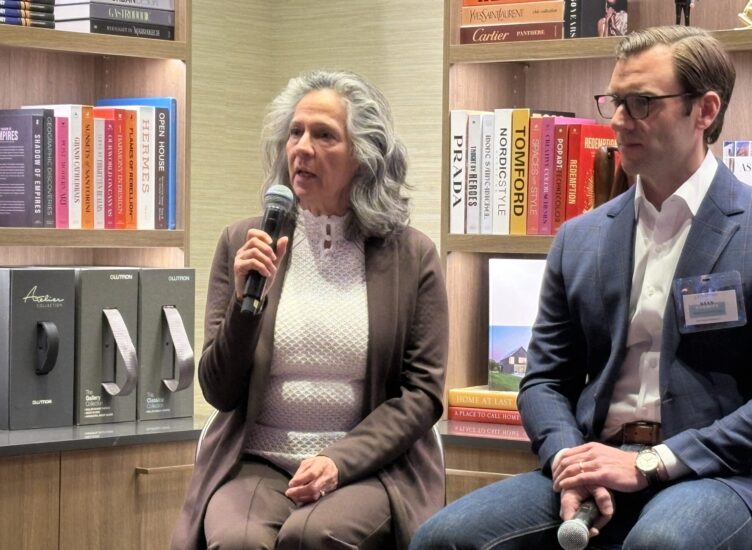
Left: Evelyn Audet of Evelyn Audet Lighting Design speaks about why lighting is so important in a luxury home. Right: Ryan Garrity of Sea-Dar Construction.
From the construction perspective, Garrity observed that clients are far less patient with learning curves than they were even a decade ago. What was once accepted as part of owning a technologically advanced home is now seen as unnecessary friction.
“Simplicity of control is so important,” Garrity says.
For integrators, the implication is clear: usability is no longer a differentiator. It is the baseline expectation, and systems that require constant explanation or correction undermine the perception of luxury regardless of their technical sophistication.
Lifestyle Changes Demand Smarter Planning
In the luxury market, it’s especially important to treat each project as its own and not revert back to a standard set of solutions. Experience with technology, age, culture, and personal habits all influence how a home should be designed and how technology should be deployed.
Lilley emphasized this point, saying that homeowners cannot be treated as a monolithic group. Rather than relying on assumptions, Lilley argued that project teams must understand who the client is and how they interact with their environment. He framed technological adoption as a cultural process, shaped by exposure and experience, rather than a simple generational divide. He cited the cultural shift that happened when electronic window controls were first introduced in cars.
“All of a sudden, everybody can see how that adds value to our lives,” Lilley says, adding that it’s not that big of a technological jump, but more of a cultural shift and exposure to new technology.
“It’s our job to look at each client individually and figure out where they are in that conversation and then explore those options,” Lilley says.
Abramson expanded on this point by noting that lifestyle shifts since 2020 have permanently changed how homes are used. Residences now function simultaneously as workplaces, wellness environments, entertainment venues, and social hubs. Technology systems must support these transitions seamlessly, without requiring constant user input or reconfiguration.
“It’s not just about opening a window or raising a shade or controlling the light or controlling your music from different apps or from different devices and different places,” Abramson says. “It’s about it all working together harmoniously.”
Meeting that expectation requires breaking down traditional silos between trades. Control strategies must align with architectural layouts, lighting intent, and interior design decisions. Without that coordination, even well-designed systems can feel fragmented or inconsistent, panelists emphasized.
Lighting Is Where Collaboration Becomes Most Visible
Lighting emerged as a recurring example of where collaboration succeeds or fails most visibly. Audet stressed that lighting design should be integrated into the architecture itself, not treated as an overlay added late in the process.
Decisions around fixture size, placement, and form factor directly affect ceiling design, millwork, and spatial composition. When lighting designers are involved before construction documents are finalized, they can contribute ideas that enhance both performance and aesthetics while minimizing costly rework.
In luxury homes, clients interact with lighting more than any other technology, and it is paramount to how a space feels, Audet says, using one analogy about choosing between walking down three alleyways: two that are dark and one that is lit.
“You’re going to go down the path that is lit. We feel energized by bright lighting, and we feel calm under lower levels softer lighting,” Audet says. “So now, we have the ability to create these moods and atmosphere.”
For integrators, lighting also represents a natural bridge between systems. Coordinating fixture placement with speakers, sensors, and control interfaces can dramatically improve the visual cleanliness of a space, a factor the panelists consistently associated with luxury outcomes.
For Audet especially, this means constant communication between these seemingly disparate trades.
“The one with the best team and the most team meetings is the project that comes out the best,” Audet says.
Early Involvement Reduces Risk and Rework
Across disciplines, panelists repeatedly returned to the idea that early involvement from all key trades reduces risk, controls costs, and preserves design intent. From the builder’s perspective, Garrity explains that achieving a simple, intuitive homeowner experience almost always requires significant coordination behind the scenes.
“Simple is the execution of a complex design,” Garrity says. “If you’re achieving simple, there are so many things that need to happen to get there, which is why having the team involved as early as possible is so important.”
Garrity notes that when integrators, lighting designers, and other specialists are brought in late, builders often become the clearinghouse for missing or incomplete information, a dynamic that increases the likelihood of miscommunication and rework.
“As the contractor, we’re always the one screening for information,” Garrity says. “When that information comes late, that’s when things get difficult.”
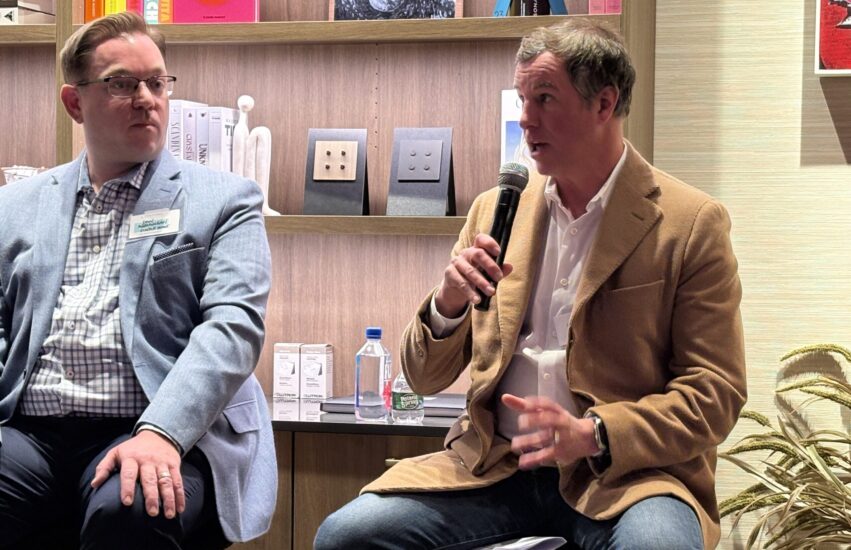
Right: Jacob Lilley of Jacob Lilley Architects speaks about the important of early collaboration between luxury home trades. Left: Dan Abramson of SimpleHome.
From the integrator’s standpoint, Abramson emphasized that participating during design development allows technology partners to contribute meaningfully to budgeting, infrastructure planning, and long-term scalability.
“Ideally, we’re involved during design development so we can help with budgetary allowances, understand the timeframes, and plan not just for the project goals, but for what’s going to happen over the lifetime of the home,” Abramson says.
That early engagement, Abramson adds, allows systems to be designed in alignment with mechanical, electrical, and architectural requirements, rather than being forced into the project after key decisions have already been made.
“We want to be fully ready with budgets, drawings, and everything ahead of time, because all of the mechanical, electrical, and plumbing needs have to be built in synergy with what we’re doing,” he says.
Lilley, while acknowledging that not every project allows for that as-early-as-possible collaboration, says consulting integrators before major decisions are finalized can help avoid costly compromises later.
“A lot of the times when things don’t work, it stems from communication,” Lilley says. “When those conversations happen too late, it becomes much harder to resolve.”
Designing for the Full Lifecycle of the Home
Another major theme was the importance of designing systems not just for move-in day, but for the full lifecycle of the home. All trades say planning must consider how systems will be maintained, updated and adapted as homeowner needs and lifestyles evolve.
“We don’t just want to know what’s happening for the project,” Abramson says. “We want to know what’s going to happen for the lifetime of the home.”
That long-term mindset affects everything from infrastructure planning to platform selection, ensuring that systems can scale and evolve without requiring disruptive overhauls.
“How is that technology going to adapt as their needs change moving forward?” Abramson says. “That’s something we have to think about from the beginning.”
Garrity reinforced this idea from a service and operations perspective, noting that homeowners increasingly expect seamless continuity between project teams and long-term service teams.
“Where we’re seeing the success is in the transfer of knowledge from the project team to the service team,” Garrity says. “When there’s an issue, there’s no finger-pointing. We know who’s fixing it.”
Audet emphasizes that lighting and control systems require long-term stewardship. As technology evolves and client expectations shift, continuity of knowledge becomes essential.
“These systems are complex, but they’re not complex for the user,” Audet says. “Having people on your team who will assist with that technology long term is part of the process.”
Actionable Takeaways for Integrators
For integrators working in the luxury residential space, the panel’s insights translate into several actionable practices:
- Engage earlier in the design process, ideally during design development
- Ask deeper lifestyle-focused questions during client intake
- Coordinate closely with lighting designers and architects to align systems with design intent
- Plan for long-term service, scalability, and system evolution
- View collaboration not as a project-by-project task, but as an ongoing business strategy





