
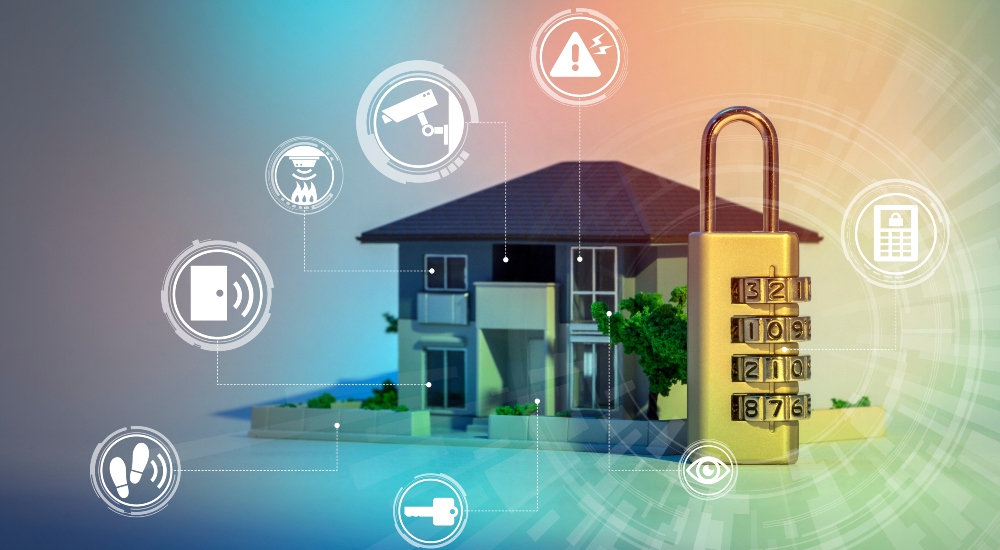
Security is a fast-growing segment of custom integration (CI) not commonly talked about due to the unique technology and nuances within the systems that have allowed it to stand as its own separate business outside of the smart home, though, in recent years, client interest in security systems has seen in become more ubiquitous on projects.
The State of Play in Security Today
Homeowners increasingly expect security to be fully integrated into their smart home ecosystems. Cameras, doorbells, environmental sensors and access control systems are now expected to work seamlessly with automation platforms, and those platform providers are ensuring just that, interweaving security functionality into core smart home aspects.
Some examples of how these solutions have evolved in recent years include:
- AI-assisted video analytics and intelligent detection
- Video doorbells and remote entry management
- Integrated access control and perimeter monitoring
- Environmental sensors for safety and system awareness
- Cloud-based platforms that deliver alerts, monitoring, and system control via mobile devices
Why the Shift
“People want peace of mind, convenience, and visibility,” McGraw says.
“The newest security solutions integrate directly with the rest of the smart home so homeowners can monitor their property, receive alerts, and manage access from anywhere.”
Why Integrators Should Take Notice
As integrators find themselves as lifestyle enablers (and in the case of Bravas “home experience designers”) with their work, the evolution of security from a protective wall to a means of providing peace of mind and convenience in homeowner lives places the technology squarely in their purview.
From homes that leverage surveillance feeds to view local wildlife to those that simply leverage the technology to handle quick hand-offs of packages and entry for friends, family and service workers, the use cases for security solutions have drastically changed with new technologies like AI rapidly driving that change.
Commercial Security Opportunities
While residential security remains a major focus, McGraw also highlights how integrators can expand their capabilities and tackle commercial security applications. Retail stores, restaurants, and hospitality venues increasingly require integrated systems that combine surveillance, access control, audio paging, and monitoring. For integration businesses, these environments represent accessible opportunities to diversify their business.
“Many residential integrators already have the technical skills to serve commercial clients,” McGraw said.
“Walk down any Main Street in America, and you’ll see opportunities — from surveillance systems and access control to background music, digital signage, and paging.”
How Integrators Can Keep in the Know on Security Trends
For residential and resimercial integrators navigating the growing demand for integrated security solutions, attending tradeshows and engaging with industry literature can offer a variety of outlets for keeping up to date with the latest developments as they pertain to an integrator’s unique business.
Tradeshows
Tradeshows like the upcoming 2026 CEDIA Expo and CIX and recently concluded ISC West offer plenty of opportunities for integrators to understand where the security market is heading and how their businesses can capitalize on key trends through open discussions and cultivated learning topics.
CEDIA Expo/CIX
Providing a broad forum for all things smart home, CEDIA Expo offers a broader “playground” for ideas and products that allows integrators to see how disparate categories might play with one another their collective systems.
On the topic of security, CEDIA Expo 2026 has already announced plans of deeper programming surrounding the topic, with a specific Smart Stage session planned for AI’s growing influence in security that aims to cover cover key considerations for deployment, privacy, and integration into the smart home ecosystem.
Additionally, CEDIA’s professional education program will deliver deeper technical training in system design, integration best practices, and business development strategies aligned with the rapidly evolving smart home ecosystem.
The show floor also regularly hosts a multitude of manufacturers demonstrating the latest in security-related technologies. Exhibitors, including 2N, ADI Global Distribution, ekey, Elk Products, IC Realtime, and more, have already been confirmed for this year’s show with products spanning the full residential and commercial security ecosystem.
ISC
As the security industry’s largest annual gathering in the U.S., ISC offers a more focused look into the security category, with show programming regularly examining how professionals can leverage new tools while still leading the way in protecting people, places and things as it relates to dedicated security systems.
On the education side, the SIA Education@ISC program delivers hundreds of sessions led by industry experts each year, with tracks spanning credentials and biometrics, data center security, perimeter security, and converged security.
Key Takeaways for Integrators
Once held at arm’s length, the security category is quickly becoming a more consistent part of smart home systems, being interwoven with non-security systems as a lifestyle component for many homeowners.
As purveyors of lifestyle solutions, this is a development integrator cannot ignore, and while industry publications will cover the broad strokes with occasional deep dives into the category, tradeshows offer a unique chance for integrators to interface with manufacturers and practitioners in ways that facilitate new and innovative thinking.
Shows like ISC offer a focused look at the security industry as a whole, whereas attending shows like CEDIA Expo and CIX present security in a broader context as it relates to the entire smart home ecosystem, allowing integrators to better understand and rationalize how it fits into the systems they work with on a regular basis.
Either way, exploration of the products themselves, in addition to learning the ropes from industry experts often present at shows are critical in gaining practical insights into how security can expand their service offerings, strengthen client relationships, and create new revenue opportunities.





