
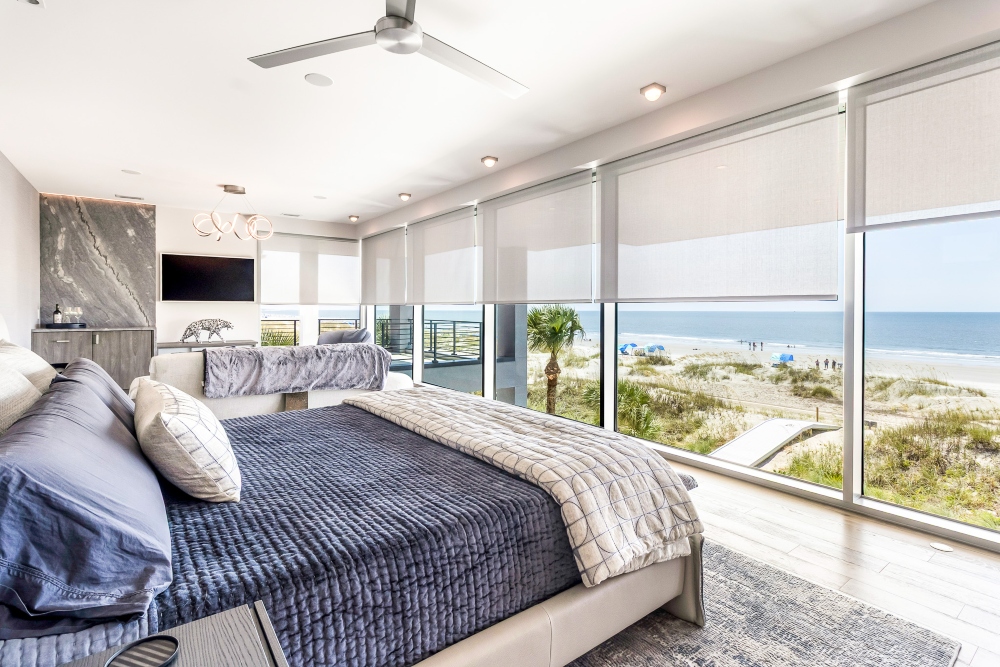
A new Lutron report makes one message unmistakably clear: in luxury residential projects, lighting and shading have become the connective tissue between design intent and smart home technology. According to the Luxury Residential 2026 Trend Report: Living with Light, these two categories are no longer finishing touches. Instead, they are the starting point for creating spaces that feel cohesive, intentional, and deeply personalized.
Grounded in exclusive Harris Poll research and Lutron’s internal sales analysis, the report shows designers and architects overwhelmingly treating lighting as the design element that shapes mood, defines materials, sculpts architecture, and communicates a homeowner’s personal aesthetic. Ninety-four percent of designers say lighting design is “highly important” to clients, while over half believe the right lighting can elevate modest interiors and that poor lighting can diminish even the most luxurious finishes. Lighting has quietly become the defining visual and emotional framework of the home.
Lighting as the Design Language of the Home
The findings reveal a decisive shift in designer behavior: lighting is now the lens through which rooms are conceived. Dynamic lighting that provides full-spectrum, tunable, layered lighting is replacing flat, uniform downlighting as designers lean into more human, natural lighting experiences.
As Los Angeles-based interior designer Huma Sulaiman notes in the report, “Layered, human-centric lighting remains the gold standard… shifting with mood and time of day.” This designer-first emphasis reframes lighting as both the foundation and the expressive medium of a space.
Yet the opportunity for integrators is enormous. While 60% of affluent homeowners already adjust lighting based on mood or time of day, only 9% are using preset scenes, suggesting that professional, design-calibrated control systems are still vastly underutilized.
Shading Becomes Architectural
Shades, meanwhile, have emerged as a parallel design element—no longer fabric accessories, but architectural tools that manage daylight, influence ambience, and support wellness. Designers now specify automated shades in 56% of final designs, underscoring that natural light control is inseparable from the overall aesthetic vision.
Melissa Andresko, Lutron’s chief corporate brand ambassador, explains the shift: “Motorized shades are increasingly viewed as a standard feature rather than a luxury.” Essentially, shades are design instruments that can soften a space, coordinate with textures, and ensure the lighting plan works in harmony with the sun.
With 38% of homeowners expressing interest and only 11% currently using automated shading, the adoption gap mirrors the same design-tech opportunity identified in lighting.
Personalization as the New Aesthetic
As homes become more expressive and emotionally driven, personalization has become the hallmark of the luxury experience. Designers are specifying:
-
Custom fabrics (98%)
-
Custom finishes for controls (56%)
-
Custom engravings (45%)
These elements turn lighting and shading into extensions of the design palette, including color, texture, light, shadow, and now interface.
Sulaiman captures the evolution with her description of “personalized simplicity”, defined as technology that disappears into a beautifully resolved space while enabling intuitive, emotionally resonant experiences.
Why This Matters for Integrators
The trend is unmistakable: lighting and shading are the design-forward gateway into the smart home, the categories that both designers and homeowners already value as central to how a home looks, feels, and functions.
For integrators, this positions lighting and shading not only as revenue opportunities, but as the most natural collaboration point with the architecture and design community.





