When Matt Thorne, executive vice president of Lincoln, Neb.-headquartered integration firm Electronic Contracting Company (ECC), gives a presentation on AV as a career for 30 to 50 students at his local tech school, he begins with a show-of-hands question.
“What’s most important to you when looking for a potential employer?” he asks. “Is it money?”
Three hands go up.
“Is it culture?”
Ten hands go up.
“Is it purpose?”
Almost all the students’ hands go up.
Thorne, who has spent a 26-plus-year career in the integration industry, notes the generational differences now are vast as compared to when he entered the field in the late ’90s.
“In my generation, it was typically about pay,” Thorne acknowledges. “‘Hey, let me do my job. I want to earn a check [and] provide for the family.’ And that was it.” He continues, “That’s one of the things that we have to adapt and change to—these generational differences.”
Today’s young talent, Thorne says, are looking for something a little bit different than what his own generation is used to. “You have to take that into consideration when you’re recruiting, and [when] you’re educating and [when] you’re trying to find the right talent,” he adds.
“You can’t just dangle money as a carrot in front of people anymore and expect them to be more interested or driven further,” Thorne emphasizes.
Finding qualified talent is not a new imperative for integrators; indeed, this has been a top business challenge for many years, according to Tom LeBlanc, executive director of NSCA.
In Commercial Integrator’s annual State of the Industry Report, published this past January, 64.6% of integrators identified a lack of qualified candidates as the biggest challenge to filling open positions. (This was followed by salary demands.)
“We’re seeing a lot of talented people jump from one integration company to another,” LeBlanc says. “And they’re often moving to higher-paying and higher-level positions, [which leaves] a lot of companies scrambling to pay more for labor on projects and putting profitability in jeopardy.”
Educating the Next Generation of Workers
“[There’s] great career opportunities that exist in this industry, [but it] exists in a bubble,” LeBlanc states. “Those of us who are inside the bubble know how great it is…[how] rewarding a career in this industry can be. But nobody outside of the bubble would consider a career in something called ‘integration’ because they don’t quite know.”
“Too many people just don’t know about it,” LeBlanc continues. “If they don’t know about it, they’re not going to pursue it. As an industry, we’re going to miss out on an incredibly large group of promising individuals. It also means that we’re going to limit ourselves to those that are already aware of this industry.” He acknowledges, of course, that the professionals who already comprise the industry are fantastic. “But we need to think beyond that,” he adds.
“It takes all of us—not just NSCA,” Thorne emphasizes. “It takes every single integrator to start educating.” As goes without saying, these issues rise in importance far above day-to-day competitive concerns; after all, recruiting and educating the next-generation workforce is about securing our industry’s future. “If that fails, we’re going to fail,” Thorne admits bluntly. “We have to make sure we work hand in hand to…educate the students in high schools and in our local trade schools.”
Searching Beyond the Career Fair

One way to help educate students is to participate in career fairs, but Thorne recommends that integrators should look beyond those. “We need to get into the early stages of industrial-art programs in high schools, [for example],” he says. “We’ve got to get to the guidance counselors in high schools to talk to them about what we do.”
It doesn’t have to be all that time consuming, either, Thorne hastens to add. Going out to a local high school once a quarter is all that it takes to help get the message out there.
ECC, working closely with manufacturers, donated audiovisual equipment to its local trade school’s electronics program. Students now have hands-on experience learning about the same equipment that the company uses every day. ECC has also found a way to make the equipment a recruiting tool: It puts the company logo and contact information right on it.
A New Approach to Inspiring Youth
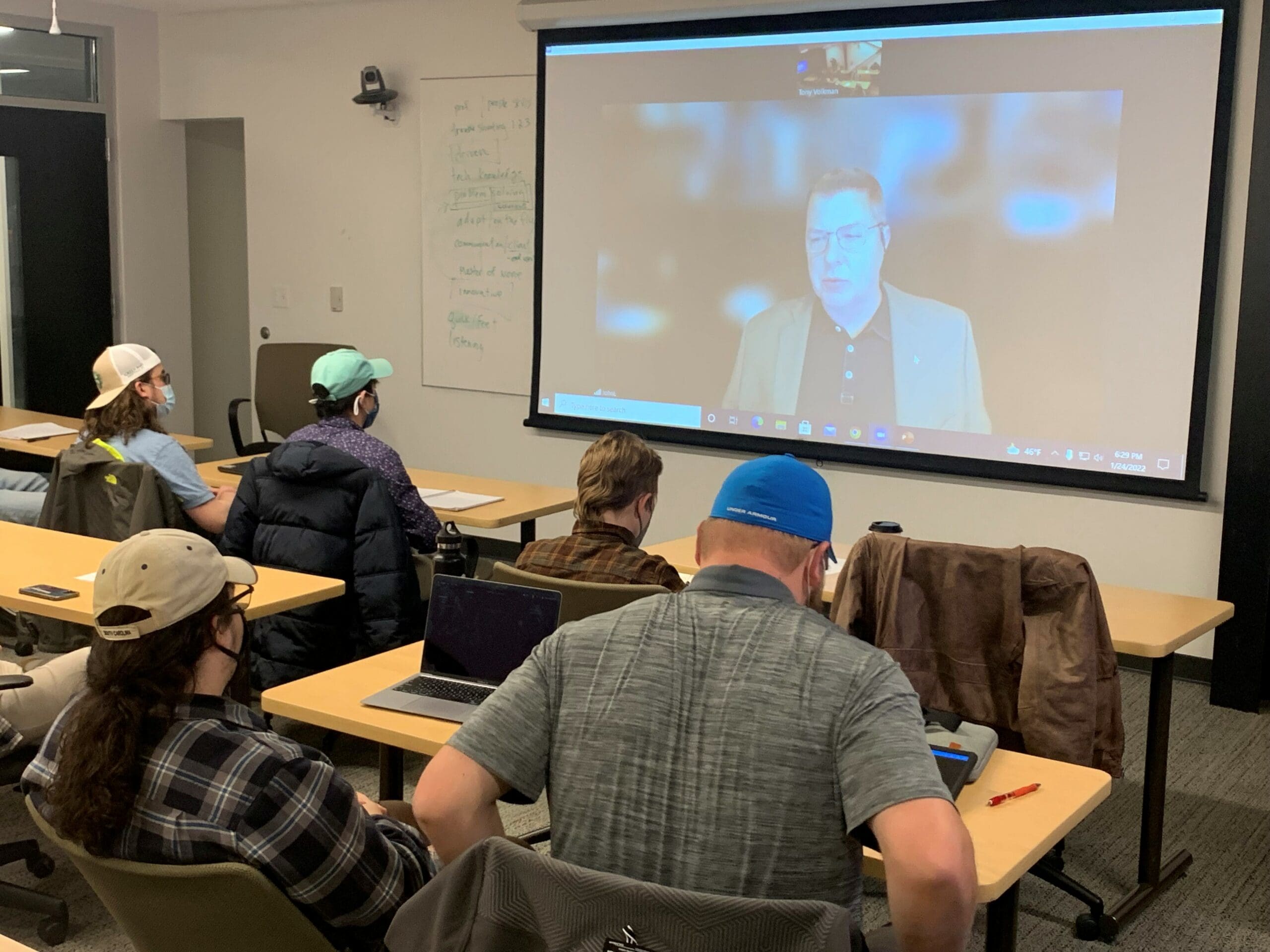
Tony Volkman, who works for Maryland Heights, Mo.-based integration firm Conference Technologies, Inc. (CTI), teaches an introduction to AV/IT course at Webster University. The course is designed to give students a glimpse of what the integration industry is like, as well as what they can do by pursuing a career in AV.
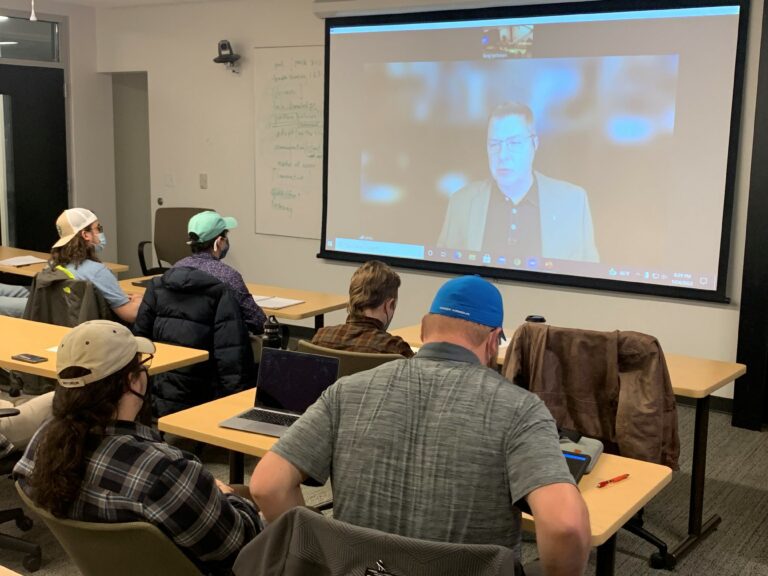
Over the course of the present semester, Volkman plans to take his class on a tour of CTI’s rack-build area, its commissioning area, its warehouse and shipping area, and its live-events department. “We’re going to give them a full-gamut walkthrough of what it really looks like at the office,” he explains. That includes the systems coming in, what the CTI team is designing and what the integrator is shipping out.
“In any industry, if you don’t know someone on the inside — or if you don’t know the ins and outs, or where to begin — it is kind of like a dome…,” Volkman acknowledges. “And, so, what we’re trying to do is to kind of stick our hand outside the bubble and pull them inside.”
Webster University originally approached CTI about teaching a course after it handled several installations across the campus. The company hopes to launch an internship program with the university, as well.
Volkman hopes students will be inspired to pursue a career in AV/IT upon completion of the course. “We want them to know that they have a place,” he stresses. “And, when they’re ready, they can jump in and find a position that’s suitable for them at the time and grow in that field.”
Improving How the Industry Recruits Talent
A lack of qualified talent is certainly plaguing our industry, but, so, too, is a lack of diversity. “The way we communicate career opportunities, or where we communicate those opportunities, seems to lead to a lack of diversity in those who are recruited into this industry,” LeBlanc laments.
“We need to be a diverse, welcoming, inclusive industry — [one] where everyone feels a sense of belonging,” LeBlanc continues. Thus, integration companies need to think more about diversity, equity and inclusion (DEI) as a core part of their company culture. “There’s no question that embracing the importance of diversity, equity and inclusion has a vital importance for any company,” LeBlanc adds.
From a recruiting standpoint, hiring managers need to look at the processes they follow. To LeBlanc, that means considering “whether or not they’re using the right language, whether they’re setting the right qualifications, whether they’re using the right platforms to get their job-opening messages out there.”
He continues, “[Integration firms] might realize that they’re not casting a wide enough net, and they might find that their messages aren’t reaching a diverse community. They may find that their messages are unconsciously limiting the types of candidates who apply due to life circumstances and educational opportunities.”
It’s equally important to consider whether there’s truly equity within your organization. “You might think about whether or not communication within a company is going to resonate with all employees the same way,” LeBlanc continues, “and how that might impact employees.” It’s essential to consider whether inequities might be inhibiting employees from having opportunities to feel comfortable enough to truly excel at their job.
Creating The Ideal Workplace
“The ideal workplace would be one that’s very reciprocal,” LeBlanc opines. He refers to leadership who feel employees are doing a great job and delivering on the company promises and, likewise, team members who feel there’s great support from management. According to LeBlanc, employees often think “in terms of career opportunities but also in terms of things like work/life balance and flexibility.”
“Let’s make sure we’re providing an environment where everybody is comfortable, and nobody feels marginalized. That everybody is able to work hard, and earn an opportunity, and drive their way up the ladder, just like anybody else.”
Tom LeBlanc, executive director, NSCA
“The goal would be for integration companies to really focus on company culture,” LeBlanc explains. Business leaders need to consider whether they’ve created a company culture in which employees are proud to deliver on the company’s ideals and feel connected to the brand—in which employees feel as though they’re part of it. Describing this ideal, LeBlanc says, “They’re not an employee, per se; they’re a part of a team that delivers on a company promise.”
“We’re really challenging integration company leaders to take a step back,” LeBlanc declares. “There are tons of talent challenges right now. Lots of people are leaving across every industry…they’re quitting. It’s hard to find talent.” The answer, he says, is not to panic; rather, the answer lies in thinking about creating “an ideal workplace.” According to LeBlanc, that means fostering an environment “[that] employees will want to be a part of.”
“Let’s look at our organizations,” LeBlanc exhorts. “Let’s make sure we’re providing an environment where everybody is comfortable, and nobody feels marginalized. That everybody is able to work hard, and earn an opportunity, and drive their way up the ladder, just like anybody else.”
Thorne sums things up especially well. “[Every integration firm] needs to have a purpose,” he concludes. “And it must appeal to the next generation of workers coming through schools. If you haven’t done that, now’s the time to take a step back as a leadership team — as a company. Re-evaluate your culture; re-evaluate your purpose as a company. You have to put that in alignment with what’s being asked by the next generation of workers. Because that’s essentially what’s attracting them to your company.”
Alyssa Borelli is the Web Editor for Commercial Integrator and sister site MyTechDecisions. She joined in May of 2021. A version of this article originally appeared on our sister publication Commercial Integrator‘s website.