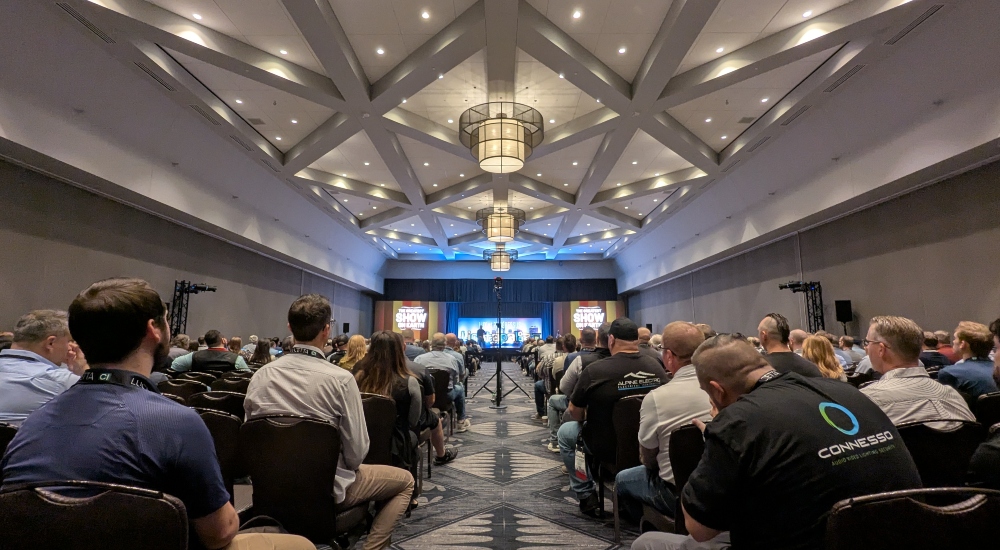
Lightapalooza 2026 officially wrapped up last week and while the show had quite a few noteworthy product announcements, the real meat lies in smaller developments glimpsed throughout the show floor and inside the classrooms and discussion halls. This article aims to give a comprehensive overview of that for anyone who didn’t have a chance to attend. If you’ve read my CES article, think that but a little more in-depth.
Major Products from Lightapalooza 2026
Given how big Lightapalooza has become, product launches for the show are not out of the ordinary. As has been seen across the industry, however, the launches this year have been muted compared to previous years. That’s not to say no new products came from the show, nor were there no showstoppers present, though. Here’s CE Pro coverage of the highlights:
- DMF Lighting Introduces One-Inch Artafex Downlight
- Coastal Source to Debut New EVO Outdoor Lighting Finishes and Fixtures at Lightapalooza 2026
- Luminii Gen 2 LEDs Revamp Strip Lighting ‘Engine’ for Architectural Applications
- Outdoor X Brings Interior Design Languages to Exterior Facades and Living Spaces
- Cool Products from Lightapalooza and More: Wired In with CE Pro
Keynote Takeaways: Integrators Need to Specialize in Their Strengths
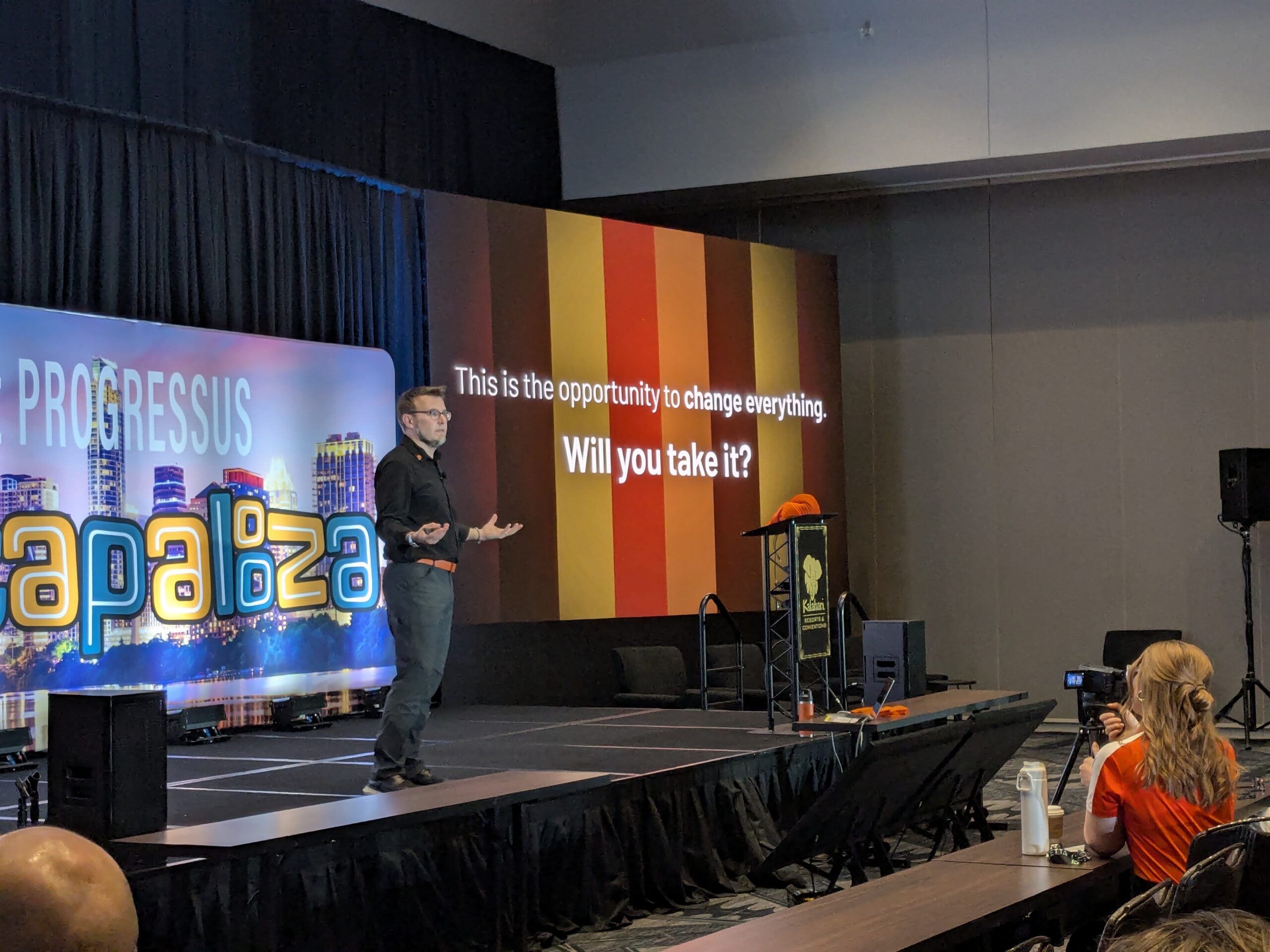
Warfel’s holistic approach to business leadership was a breath of fresh air and took quite the inspirational tone when it came to the conference’s focus on education.
In a keynote delivered by David Warfel of Light Can Help You, Lightapalooza 2026 opened with a message that integrators should always try to find their scarf. In this case, “finding your scarf” can be taken as “leaning into your strengths,” which, while seemingly obvious, doesn’t always end up being the case as integrators tend to wear the most hats at their company.
Broadly, Warfel said business leaders should figure out what roles they like the most (sales, marketing, installation, management) and then work to build teams in such a way that they’re able to embody those roles. In the best-case scenario, this results in a company built around function and not necessarily personality, which gives it more longevity.
In a way, Warfel’s keynote philosophy bucked the headline-making trend of mergers and acquisitions, as, in his final point, Warfel urged integrators to grow on an individual and team-based level to find success as opposed to pursuing that growth through industry consolidation.
In urging the industry to “Get Smart Together” Warfel highlighted the importance of education and hands-on training at shows like Lightapalooza when it comes to taking the industry out of the shadows of misconception, framing business growth and longevity in a more holistic sense compared to the more traditional routes.
That message pairs well with other recent keynotes from speakers such as Chip Wade at CEDIA Expo 2025, who, among other things, advocated for integrators to seek more collaboration with other trades as means of opening themselves up on projects so that they can lean into the functions they like and do best.
Where Does It Look Like the Market is Heading Post-Lightapalooza?
Without leaning into specific products, there were also few major trends noticed at the show:
- Interoperability was a huge focus for many of the manufacturers.
- Dim-to-Warm, a longstanding feature of fixtures, is receiving renewed attention.
- Design services and software are becoming an increasing focus of development.
- And mesh networking has the potential to emerge as a major lighting upgrade.
Interoperability Shows it Pays to Play Nice
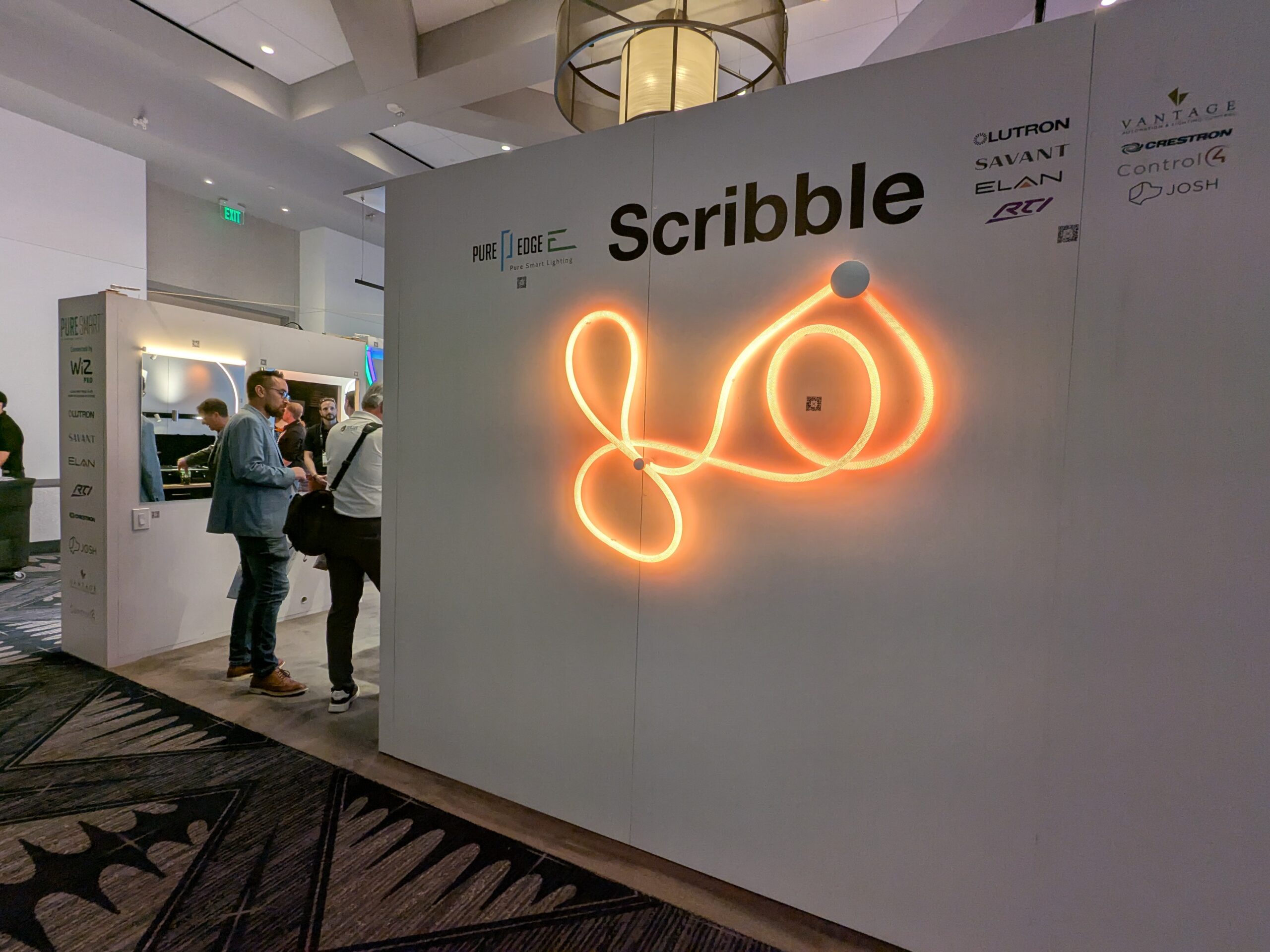
While PureEdge took the most up-front approach, most conversations among fixture manufacturers quickly led into what platforms they work with.
Lightapalooza reinforced that interoperability is critical to a product’s success nowadays. In chatting with new entrants to the channel, CE Pro noticed one consistent throughline: the compatibility of fixtures with control platforms and protocols being put front and center, not just on the booths themselves, but in the product pitches as well.
Across the show floor, names like Crestron, Wiz, Savant, Control4 and the like were plastered as a selling point on exhibitor stands. In many ways, the visual came off like an advertisement saying: “No matter who you work with, we’ll work for you.”
In lieu of major platform integrations, most manufacturers at the very least were able to be controlled via DMX, which, at this point, is something most of the major control platforms can handle easily.
Why this Matters in the Realm of Lighting
In speaking with Show Director Tom Doherty, he said “There’s a great increase in efforts by the lighting manufacturers to create more interoperability between their fixtures and control solutions. We’re well on our way for having the intelligence be inside the lighting fixtures and being able to deliver tunable capabilities at more affordable price points for clients is something that hasn’t been able to be done for a while.”
Greater interoperability translates into more flexible designs and therefore more flexible installations that can accommodate a wider range of budgets and needs. For integrators whose main goal is to deliver on a solution that can accommodate a client’s lifestyle needs within a specific budget, the ability to deliver on that is critical, especially today as integrators have evolved to fit the role of lifestyle enablers for their clients.
Dim-to-Warm: A Common Function Sees Renewed Interest
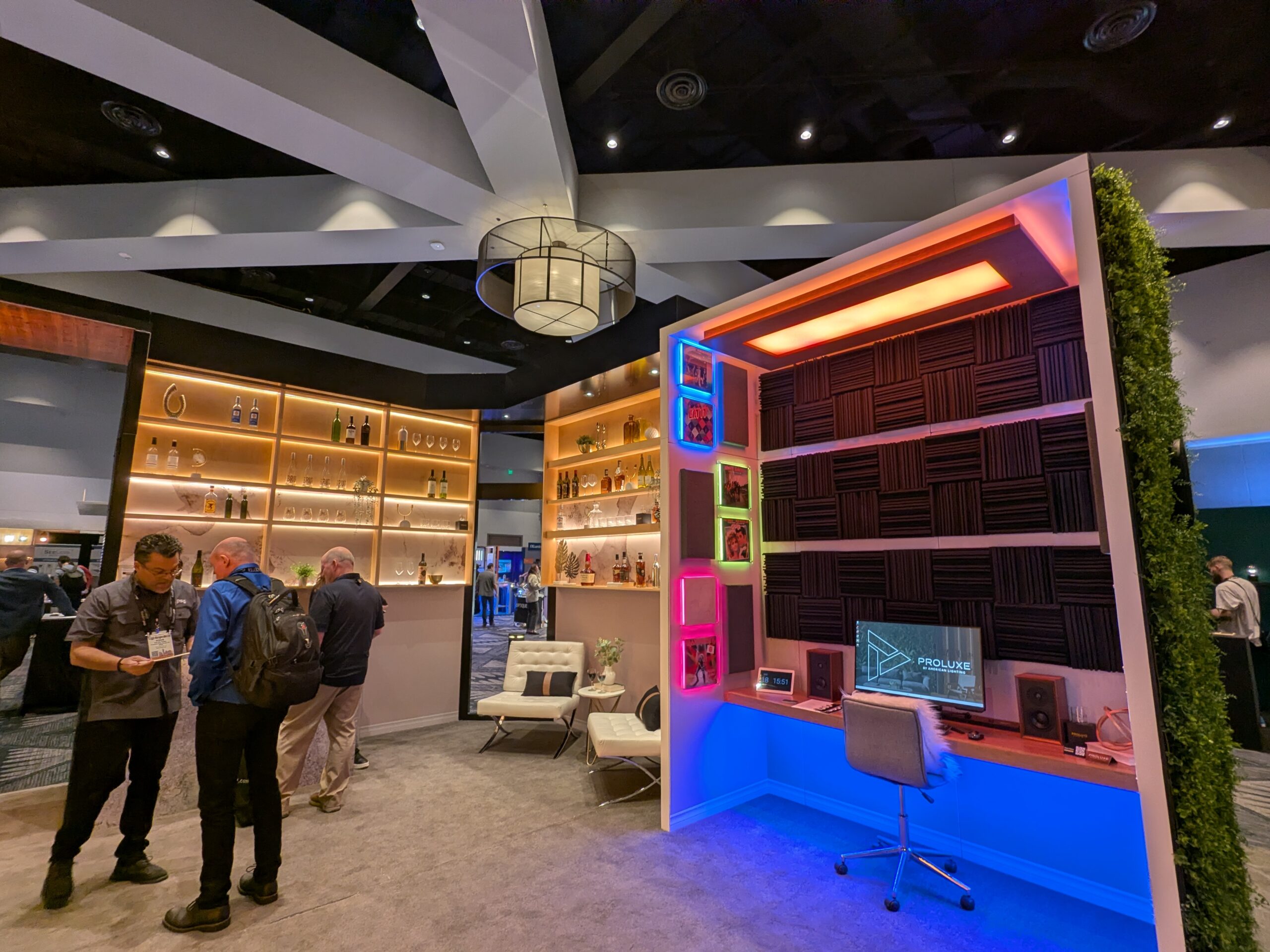
Proluxe’s booth paired warm, smooth lighting with warm, smooth whiskeys for a complimentary experience.
Dim-to-warm had an outsized presence at the show, so much so that it surprised both myself and Doherty because, as those familiar with lighting would know, dim-to-warm isn’t some new innovation. It has certainly gotten better over the years, but it’s been a core feature among LEDs for a while.
For those unfamiliar with the concept, all you need to know is that dim-to-warm is a functionality that warms an LED’s color temperature along its dimming curve. The dimmer a light gets, the redder and warmer the color gets.
In talking with the manufacturers split between both integration and design worlds, the revelation comes that this uptick is coming more from direct requests by clients as opposed to integrators stumbling on this feature themselves.
Nostalgia for Incandescent or Something More?
It’s no secret that the banning of incandescent bulbs left many sore over the aesthetic they provided. Would it be safe to assume, then, that the client interest in dim-to-warm stems from that? Maybe, however, other factors are likely contributing to the surge in interest among homeowners nowadays.
The first is general awareness. It’s likely that as more consumer-level products introduce dim-to-warm as a functionality, homeowners are more likely to see it, learn about it, and become interested in it. However, modern lighting design tends to favor these types of lights in general.
The dim-to-warm curve is far more visually appealing than the dim gray common LEDs exhibit, but past that, it follows one of the big rules of healthier lighting design, that being providing dim, warm lighting in the evening. Don’t get it mixed up, dim-to-warm is not circadian lighting by default, but its appeal does stem from that biological need of having warmer color temperatures for relaxation.
Support for Design Services Grows
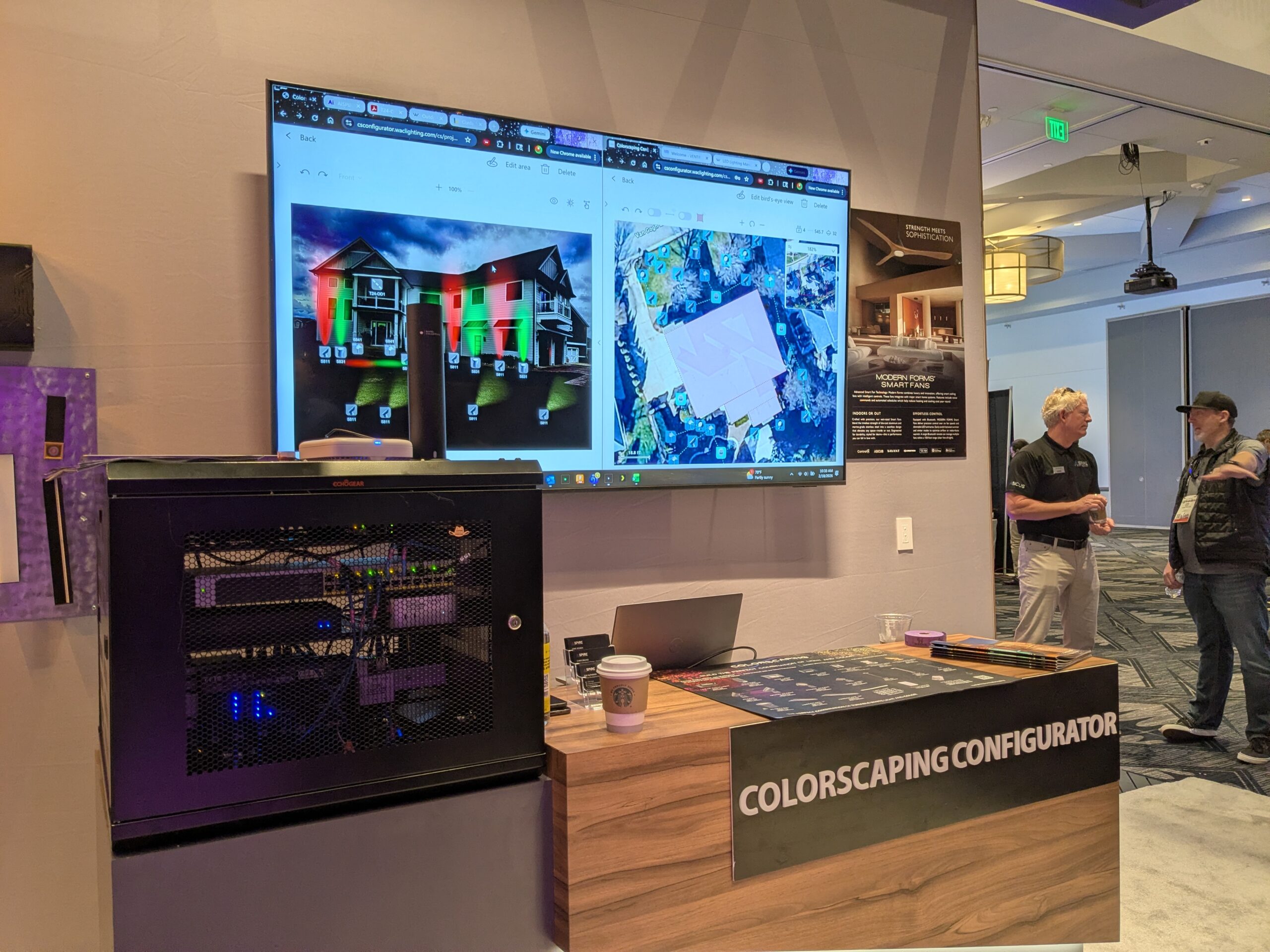
The Colorscaping Configurator is a new, web-based configuration tool from WAC Group for its Colorscaping system.
If lighting took center stage at Lightapalooza, design services were the back-up dancers. In touring through all the booths, it seemed as though that with every new product release, in the background there was a design service or software being upgraded to better support the systems that would use the product.
This is still something that is largely isolated to brands familiar with custom integration and tends to manifest itself as either free or web-based services. Some big examples seen at the show included Coastal Source and AiSPIRE, who, alongside product updates, were showing off updates to their respective software and services as well.
This wasn’t just relegated to lighting, however, as the networking and power companies present at the show had their own white-glove services on offer as well.
How Design Software and Services Benefit Even Experts
CE Pro clocked the rise of design services back in 2024 during its annual trend report with companies like Sonance and Blackwire offering services for their respective categories (audio, lighting and networking). Part of the reason for that is the sheer complexity some of the categories entail combined with the relative inexperience of the integrators.
Networking, lighting and power, for instance, are big parts of the industry today, but require way more experience with them than most integrators must develop a comprehensive, professional solution. Design services allow for an outsourcing of expertise in one area to the manufacturer so integrators can focus on the broader project.
Another reason CE Pro has noted for this rise in design services is the ability for project mockups and design documentation to provide clearer pictures to clients in bids, therefore translating these into powerful tools of profitability as well as productivity.
Mesh Networking as the Next Frontier for Lighting
Those familiar with Ketra are likely aware of how the lights form wireless mesh networks to communicate with one another. They aren’t the only lighting products to do that, but they are unique in the pro space for that in addition to their color rendering capabilities.
It’s a cool concept that has had the praises of it sung by integrators, and while it has historically been limited to a few products (Philips Hue, a consumer-level offering, is another example), Lightapalooza 2026 saw at least one other introducing this functionality into its core product stack.
One product does not make a strong case for a trend but given the growing importance of wireless capabilities for the sake of communication between devices on a network and a growing desire for more consistent, reliable control, mesh networking seems like a feature we might see more manufacturers gravitate towards in the coming years.
How Mesh Networking Can Change Lighting Installs for Integrators
When talking strictly about lighting, mesh networks not only provide a layer of stability, they also add significant scalability, ensuring communication and connectivity holds up throughout large and complex spaces where integrators commonly work.
That stability is the biggest takeaway for integrators, with mesh networks allowing for consistent, uninterrupted communication and control between devices (in this case lighting fixtures) which translates to a better overall experience for the end client.
Additionally, mesh networks tend to make the commissioning of devices simpler, allowing for simple discovery as devices on a mesh network are constantly communicating with one another.
Piecing Together the Lighting Market Direction from Lightapalooza 2026
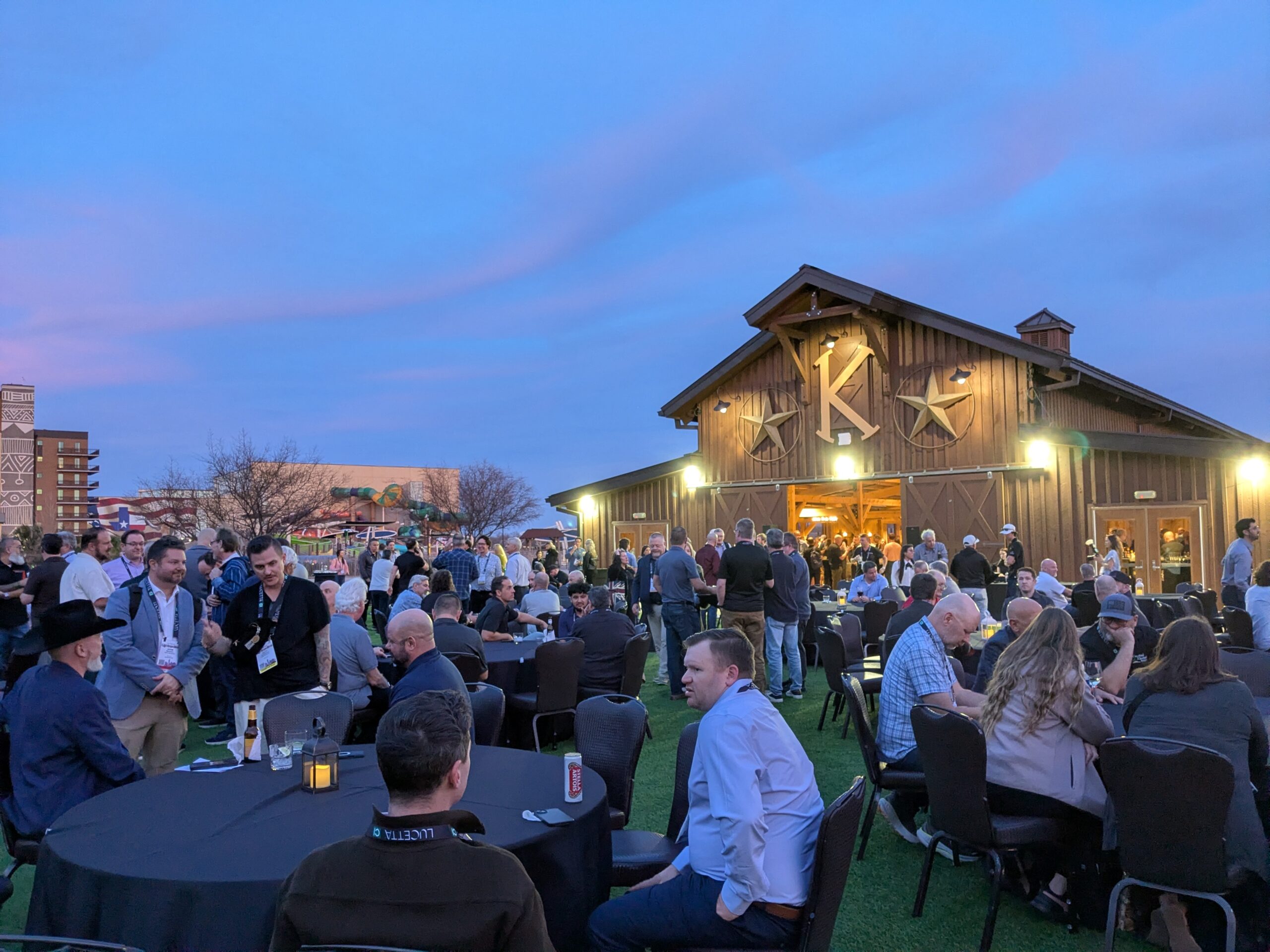
The reception following Day 1 of Lightapalooza 2026.
Lightapalooza 2026 highlights that as the industry continues to grow, mature and expand out into new categories, support on the manufacturing side has become critical. Elements like design services and interoperability are just different flavors of support that integrators recognize as an understanding of in-the-field realities.
This need for greater support is perhaps a consequence of how complex and high stakes modern projects have become, but it also is beneficial in the sense that, rather than forcing integrators to don another cap, much of that work can be offloaded to a trusted partner, allowing the integrator to focus on the roles they excel at.
Looking back on Lightapalooza, it fits a trend CE Pro has been seeing across the custom integration channel. The biggest developments aren’t being made in singular breakout products but through constant refinement of services and functionality that allow for greater flexibility, which itself has become a marker for success both among integrators and the manufacturers looking to support them.