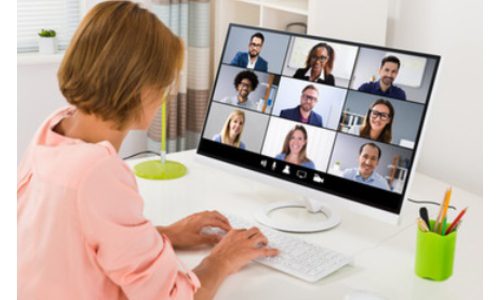
I recently wrote an article for My TechDecisions starring David Danto, director of UC strategy and research at Poly, about how organizations can future-proof their workforce for the new hybrid normal.
According to Danto, this is a long time coming, as remote and hybrid working are not new concepts. According to an IDC study sponsored by Poly, 14% of workers operated out of their home before the pandemic – not an insignificant amount. However, that has ballooned to 45% now. Going forward, remote work is still expected to remain at a 22% clip.
“It took this global pandemic for us to prove that what we’ve been saying for two decades about remote and hybrid working is true,” Danto said in an interview with My TechDecisions.
Business Leaders Need The Help of Integrators
Many organizations will need the AV industry’s help to make that a reality, especially as hybrid work evolves from just a buzzword to a corporate strategy.
“And these remote working, these home working environments are going to change, we’re gonna stop using toys and start using more professional gear.” Danto told me.
Your customers now need to think of managing devices in their employees’ homes the same way they manage devices in the office. AV integrators are well positioned to make that easier for their customers, but business models will likely have to change to accommodate those remote workers to help customers achieve technology parity for their dispersed workforce.
“If I’m a company, I have a fleet of gear up in my ecosystem in my office that I track and manage that I understand,” Danto says. “And I want to do the same thing for the people at home. I want to make sure that they’ve got equipment that I can always see, that I can inventory it, that I can make sure it’s got the latest firmware that it’s got the right bandwidth and that at least I have some view into that.”
These devices include things like headsets, cameras, microphones, speakerphones and more, and those devices should be compatible with communications platforms like Zoom and Microsoft Teams.
“They’re not any more expensive than any other webcam or any other integrated device for home use,” Danto said. “But now they connect into a desktop application. And that desktop application connects to the cloud. And the IT manager can now see all his on campus technology and all his off campus technology in the same view. it’s a complete revolution and how we’re going to look at these home offices as part of the fleet of the video ecosystem.”
This article originally appeared on our sister publication Commercial Integrator‘s website.