
Control systems are under fire.
Across our industry, the complaint has become a refrain: “The control system is unreliable.” Touch panels lag. Automations misfire. Systems that performed flawlessly in testing behave erratically once installed.
At Global Wave Integration, we’ve traced many of these “control system failures” back to their true source. In the overwhelming majority of cases, the processor isn’t the problem. The software isn’t the problem. The programming isn’t the problem.
The problem is power.
And until we address it, we’re chasing symptoms instead of solving systems.
You Can’t Build Excellence on a Faulty Foundation
Every architect understands this: a beautiful structure built on compromised ground will crack, shift, and eventually fail. No amount of craftsmanship above grade can compensate for instability below it.
Control systems follow the same physics.
Before we discuss processors, interfaces, or user experience, we must address what everything else depends on: clean, stable, intelligently managed power.
When power is compromised, nothing above it can be trusted.
The Four Pillars of System Reliability
In our work designing complex residential environments, we think of reliability as a table supported by four essential pillars:
- Rigorous system engineering
- Installation excellence
- Thoughtful programming and user experience
- Proactive expectation management
Weaken any pillar, and the table becomes unstable. But here’s what most people miss: even with all four pillars perfectly executed, the table still collapses if it’s placed on uneven ground.
Power is that ground.
It’s the invisible condition that determines whether your engineering, installation, programming, and client communication can actually deliver on their promise.
The Invisible Saboteur: What “Bad Power” Actually Looks Like
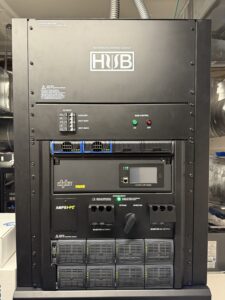
Power solutions like RoseWater Energy HUBs are designed to keep critical home systems protected and performing reliably.
Image/Global Wave Integration
Power problems are insidious precisely because they’re invisible. Voltage may read correctly on a meter yet still wreak havoc on sensitive electronics.
The culprits include:
-
Voltage sags and brownouts that starve processors of stable current
-
Electrical noise and harmonic interference from motors, dimmers, and neighboring equipment
-
Grounding deficiencies that create unpredictable reference points
-
Circuit inconsistencies that deliver different power quality to different components
-
Micro-interruptions, outages too brief to notice, yet long enough to corrupt memory or drop network connections
Modern control systems are sophisticated computers. They’re sensitive by design. Feed them unstable power, and they’ll respond with unstable behavior. Not because they’re poorly engineered, but because they’re doing exactly what electronics do under stress.
The symptoms point upward. The cause lives below.
Why the Control System Always Takes the Blame
Control systems occupy the center of the technology ecosystem. They’re the most visible component that the client interacts with daily. When something fails, they’re the obvious suspect.
Lighting doesn’t respond? Blame the control system. Audio cuts out? Blame the control system. Shades move erratically? Blame the control system.
Meanwhile, the power infrastructure upstream escapes scrutiny, even though it affects every subsystem simultaneously.
This creates a costly cycle. Home technology professionals troubleshoot code, swap hardware, rewrite logic, and add layers of complexity, all while the foundational issue persists, quietly undermining every fix.
We’re treating symptoms while the disease spreads.
Clean Power Isn’t a Product. It’s a Discipline.
Clean power doesn’t come from a single device, brand, or silver-bullet solution. It emerges from a philosophy applied with rigor across the entire electrical ecosystem:
-
Intentional electrical design that anticipates the demands of modern technology
-
Consistent power distribution strategies that deliver uniform quality to every device
-
Proper grounding and bonding that create stable electrical references
-
Intelligent outage planning that ensures graceful recovery, not catastrophic reboots
-
Treating power as a system, not an afterthought bolted on at the end of a project
When power receives the same design attention as control logic or user experience, systems behave differently. They recover gracefully from disruptions. They remain stable under load. They inspire confidence instead of frustration.
They feel invisible, which is exactly what great technology should feel like.
Reframing the Conversation Before Problems Begin
One of the most valuable roles home technology professionals play is expectation architecture, shaping how clients understand what makes systems actually work.
Most clients assume reliability is purely a function of brand prestige or software sophistication. They’ve never considered that their million-dollar technology investment might be undermined by the electrical infrastructure they can’t see and rarely think about.
It’s our responsibility to reframe that assumption early. Not as a sales tactic, but as professional guidance.
A reliable system is the sum of five elements:
- Sound engineering decisions
- Meticulous installation practices
- Thoughtful programming
- Realistic expectations
- A rock-solid power foundation beneath it all
Skipping the power conversation doesn’t save time or money. It simply defers the cost into service calls, troubleshooting hours, frustrated clients, and damaged reputations.
Start Where Every Great Build Starts
Control systems aren’t failing us. In many ways, today’s platforms are more capable, more resilient, and more sophisticated than anything we’ve had before.
What’s changed is the complexity of the environments we’re placing them in, and the near-zero tolerance for failure that luxury clients rightfully expect.
If you want systems that feel dependable, responsive, and effortlessly invisible, start where every great build starts: the foundation.
Don’t blame the brain before you’ve examined the ground it stands on.
Because no matter how strong your four pillars are, nothing stands without solid earth beneath them.
Kyle Steele is president of Global Wave Integration, which specializes in luxury residential technology that disappears, delivering reliable, wellness-forward environments built on foundations designed to last.