Editor’s Note: This article is part a CE Pro series examining the forces that shaped the custom-integration channel in 2025. Throughout December, CE Pro will share perspectives from respected industry voices to help integrators close out the year with a clearer view of where the market is heading.
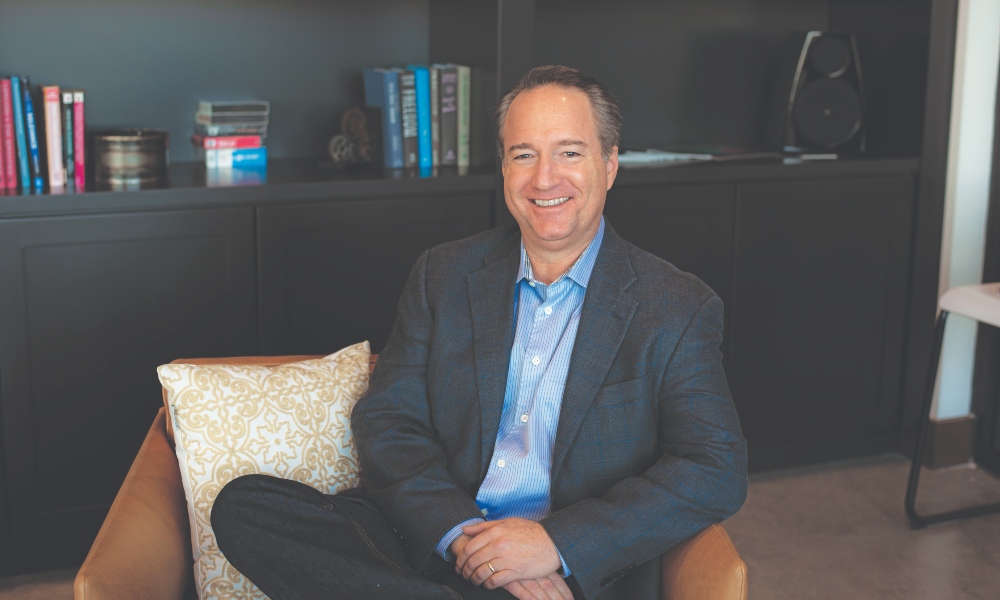
CEDIA Global President and CEO Daryl Friedman spoke with CE Pro about how 2025 reshaped the custom integration channel, with homeowners coming in more informed, networks and power becoming top priorities, and AI starting to play a real role in daily workflows. He also shared why Matter has been slower to catch on, how collaboration with the design-build community strengthened, and what lessons the industry should bring into 2026.
CE Pro: How did homeowner expectations or project demands shift in 2025?
Daryl Friedman: According to the CEDIA x NKBA | KBIS research report, 68 percent of designers and builders said homeowner interest in smart technology increased over the past two years. That demand translated into more expectations for whole-home integration, not just isolated devices.
Homeowners also drove more of the conversation themselves. The research shows 75 percent of technology-enabled projects are initiated by the homeowner, which tells us they’re not waiting for a designer or builder to raise the topic. They’re coming to professionals with a higher baseline understanding of smart tech than ever before.
A parallel members are hearing often is the comparison to new cars. Modern vehicles are full of advanced features, yet consumers don’t require hours of explanation before using them; everything is simply discoverable. That expectation has now been carried into the home. They don’t want lengthy tutorials or complicated handoffs; they want systems that just make sense.
CE Pro: Which categories surprised you in terms of growth or slowdown this year?
Friedman: There has been a lot more concern and talk about the network and power. Our members say their clients became much more conscious of what is running on their network—how many devices are connected, whether those devices are secure, and who has access to them.
On the power side, increased outages drew attention to resilience. Requests for generators, whole-home surge protection, and clean power options all became more common, with clients proactively asking how to safeguard expensive systems and keep essential functions online.
CE Pro: How did AI adoption or workflow automation evolve across the channel?
Friedman: Most CEDIA members are at least experimenting with AI, but we’re also seeing meaningful adoption in day-to-day business. AI is now being used to turn raw field notes into polished proposals, accelerate project documentation, and troubleshoot complex interactions more efficiently.
2025 was very much an experimental phase for most people. I think 2026 will be the year when AI moves from being something teams are trying, to something they are relying on regularly.
We’ll also be seeing more and more AI embedded into products. The “smart” doorbell of last year showed you who was at the door. Going forward, they’ll describe the person or even name them through facial recognition. The “smart” scenes of last year are now becoming much smarter, with AI helping with not just with pre-determined settings, but with menu planning and shopping lists, music recommendations, and suggested ambiance for intelligent lighting.
CE Pro: What trend or technology failed to gain traction despite early interest?
Friedman: Matter generated a lot of excitement with its latest release of Matter 1.5 in Nov. 2025, but it hasn’t gained the traction some expected. While the promise of seamless device interoperability is compelling, support across device types is limited or inconsistent, and many manufacturers have not fully adopted it.
While Matter might simplify pairing, it doesn’t replace the need for cohesive system design, and is the reason why a trained integrator is still the best option. They can design and manage systems that combine Matter and non-Matter devices, ensure everything works together seamlessly, and future-proof a smart home so it performs beautifully for years to come.
CE Pro: How did collaboration with builders, designers, or architects change this year?
Friedman: Collaboration with builders, designers, and architects reached a new level this year. Smart Home Day on Nov. 3 showcased the importance of involving integrators earlier in the process, reinforcing that great technology outcomes start with coordinated planning.
CEDIA partnered with NKBA|KBIS and RIBAJ to provide designers and architects with education on integrating technology in ways that support intuitive and design-forward homes. Meanwhile, CEDIA members around the world opened showrooms and engaged their local design-build communities, amplifying the message that technology belongs at the center of modern home design. CEDIA will be making major strides in this area in 2026 to forge partnership between our members and the design-build community.
We’re also seeing many of the predictions in CEDIA’s Integrator of 2027 whitepaper taking shape. The role of the integrator is becoming increasingly recognized as a lifestyle designer, not simply a supplier of devices.
CE Pro: What lessons from 2025 should the industry carry into 2026?
Friedman: Economic uncertainty tested the market, yet demand remained remarkably resilient. Research points to a clear shift: consumers now view technology as foundational to daily life, not just an add-on.
In 2026, the opportunity is to lead that narrative. Just as homeowners wouldn’t approach major electrical or plumbing work without a licensed professional, they are increasingly seeking certified integrators for technology systems that affect safety, efficiency, and long-term performance. Our industry earned that level of trust. Now, we need to reinforce it by communicating benefits clearly, collaborating early, and helping other trades see how technology elevates, rather than complicates, their work.