The custom integration industry thrives on innovation. While established giants often dominate the headlines, some of the most exciting advancements come from new players entering the market. This spirit of discovery was on full display during Day 1 of the inaugural CEDIA Expo/CIX PitchFest.
Hosted by Emerald and modeled after high-stakes formats like Shark Tank, PitchFest provided a platform for 12 new exhibitors to showcase their solutions directly to the industry. The event, moderated by Dan Ferrisi, Group Director of Content + Editorial, Industrial + Tech, at Emerald, tasked six companies on Day 1 with delivering a tight, three-to-five-minute pitch. Their goal? To impress a panel of industry judges and a live audience of integrators.
From smart shading and modular lighting to clean power and artistic TV concealment, the presentations highlighted a diverse range of solutions aimed at solving real-world problems for integrators. After a competitive round of pitches and live voting, one company emerged as the day’s finalist.
Day 2 begins Wednesday, Dec. 17, at 2 p.m. ET.
Here is a recap of the technology, the pitches, and the standout winner from Day 1 of PitchFest.
The Day 1 Finalist: BTX Window Automation
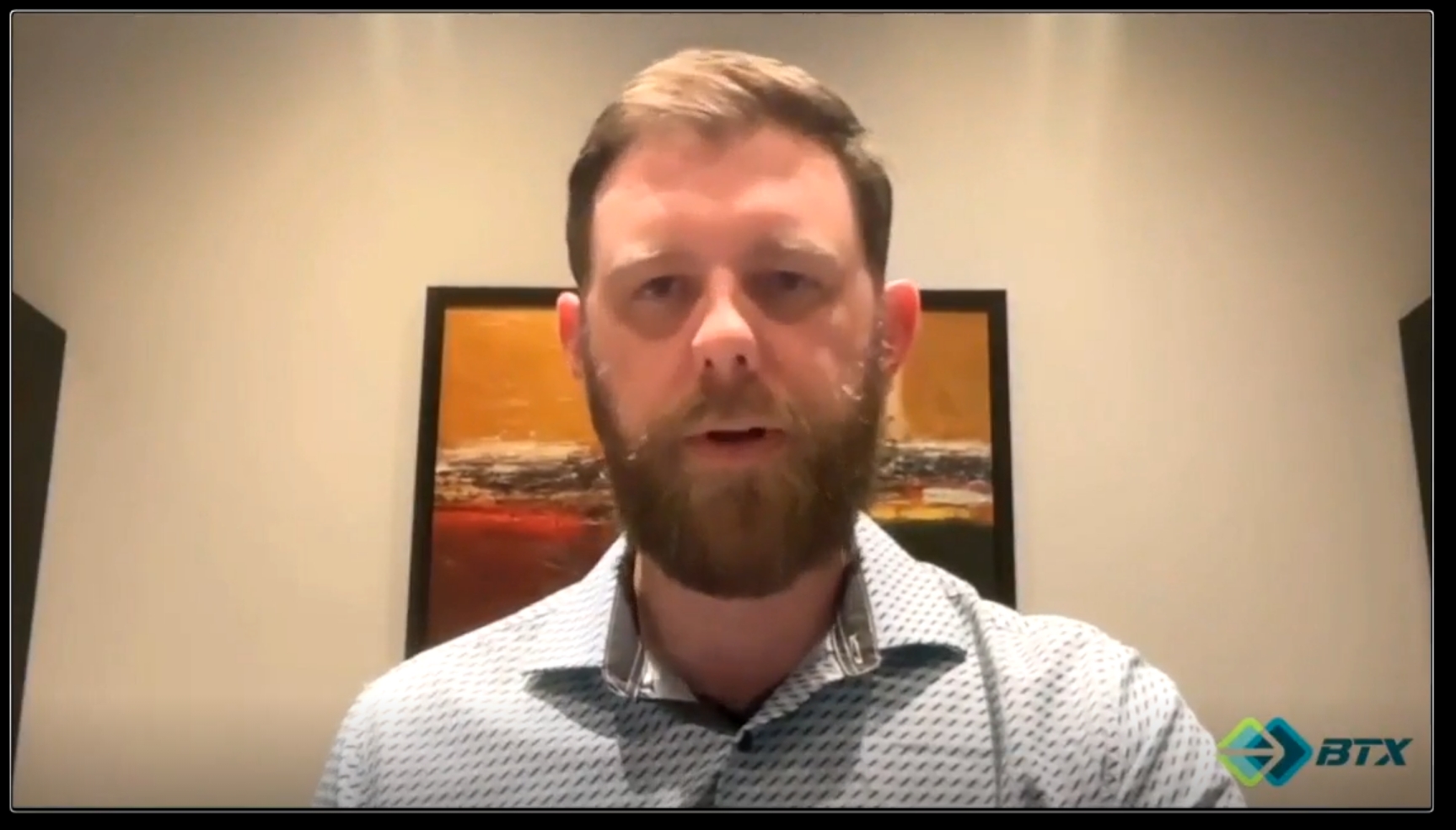
Taking the top spot for the day was BTX Window Automation, a Dallas-based custom shading manufacturer with a 40-year history in the commercial and hospitality spaces. General Manager Ben Woodall delivered a compelling presentation that focused heavily on partnership and technological convergence.
The Innovation
BTX showcased a suite of updates to their motor line, emphasizing a reduction in noise levels and an increase in power. However, the centerpiece of their pitch was the “Smart by Bond” solution. Co-developed with Bond, this technology embeds the popular Bond bridge infrastructure directly into the BTX motorization platform.
For integrators, this native integration simplifies the deployment of motorized shades significantly. It offers true RF real-time state feedback, device power management, and over-the-air updates. Crucially, it streamlines integration with third-party control systems like Josh.ai, Control4, and URC. Woodall explained that installers can pre-commission networks and pair everything easily, bridging the gap between shading and whole-home automation.
Additionally, BTX highlighted their new Power over Ethernet (PoE) motors. These units feature an internal RF radio and a lithium-ion battery. This design provides a critical fail-safe: if power is lost, the shades can still operate via the battery backup.
Why BTX Window Automation Won
The judges selected BTX Window Automation as the finalist not just for the hardware, but for their commitment to the custom integration (CI) channel.
“We ultimately felt that BTX Window Automation represents a very compelling product that offers a credible channel-focused alternative to established shade brands,” noted the judging panel during deliberations. They specifically cited the “Smart by Bond” readiness as a meaningful step forward for reliable control and integration.
Judge Michelle Ferlauto, COO of SoundVision, praised the company’s business model. “I chose BTX because it brings a new option to a space that’s usually dominated by just a few manufacturers,” she explained. “I do like that… they’re not selling their product online direct to end users, which is nice for the CI channel.”
Judge Andy Klein, CMO for Maxicon, echoed these sentiments, highlighting the product’s engineering. “I really see a change in how we’re going to control shades… I applaud the multi-functionality for control RF, the reliability between battery and power. It’s really a very amazing product.”
The Contenders: A Showcase of Innovation
While BTX secured the finalist spot, five other companies delivered impressive pitches that demonstrated the breadth of innovation occurring in the residential technology sector.
Deako: Modular Smart Lighting
Derek Richardson, founder and CEO of Deako, pitched his company as “the biggest smart lighting company you’ve never heard of.” With a presence in over 350,000 homes, Deako aims to bridge the gap between standard wiring and smart control without the complexity of hubs or custom cabling.
Deako’s core innovation is its plug-and-play system. Integrators install a standard backplate into a standard junction box. From there, they can insert a low-cost, “dumb” rocker switch. Later, if the homeowner wants to upgrade, that switch can be popped out and replaced with a smart dimmer or switch in seconds—without touching a single wire. This modular approach allows builders and integrators to offer “smart-ready” homes that can scale with the client’s budget. The system works locally without the internet but offers cloud connectivity for remote access via a single Wi-Fi-connected device.
Dio Technologies: The Minimalist Audio Solution
Addressing the complexity of modern audio distribution, Akarsh Vinod, founder of Dio Technologies, introduced the Dio Node. Vinod described the product as a “minimalist Wi-Fi speaker” designed to create an audio-first web experience.
The Dio Node differentiates itself by eliminating the “middle layer” of proprietary apps and hubs. Instead, it operates entirely on the local Wi-Fi network, leveraging existing frameworks like Apple AirPlay 2 and UPnP. This allows users to stream audio directly from their devices—whether it’s a podcast, social media feed, or music—without navigating a clunky third-party interface.
For integrators, the appeal lies in simplicity and privacy. The speakers set up in under a minute and keep data local to the home. Vinod also announced a new dealer program, positioning the Dio Node as an accessible multi-room audio solution for clients who may not be ready for a rack-mounted, architectural audio system.
MyTVArt: Concealment with Customization
As displays get larger, the demand for concealing them grows. Evan Wohlmuth of MyTVArt presented a solution that uses real canvas prints to hide televisions, distinguishing the product from digital art modes found in consumer displays.
MyTVArt offers three distinct hardware solutions:
- The Original Cover: Mounts directly to the TV (ideal for articulating arms).
- The Wood Frame: A wall-mounted solution that fully encases the TV with side walls.
- The Custom Enclosure: A mechanism designed for architectural niches and cabinetry.
The system uses a motorized roller to retract a giclée canvas print when the TV is in use. Wolmuth highlighted the flexibility of the product, noting that integrators can use stock gallery art or upload custom client photos. The mechanism can be automated via 12V triggers or IR, making it a straightforward add-on for media rooms where aesthetics are paramount.
OnFILTER: Industrial-Grade Power Protection
Vladimir Kraz, founder of OnFILTER, brought a highly technical focus to the event, pitching clean power solutions derived from the semiconductor and aerospace industries. OnFilter specializes in electromagnetic interference (EMI) filtration.
Kraz argued that standard surge protectors are insufficient for modern electronics. While a typical surge protector might stop a massive spike (over 400V), it often ignores lower-level transients (e.g., 300V) that can still degrade sensitive AV equipment and reduce its lifespan.
OnFILTER’s new AB 2020 FG filters are designed for power entry circuit breaker boxes. They clean both the power and ground lines, blocking EMI and “killing” transient voltage spikes that standard MOVs (Metal Oxide Varistors) miss. Kraz presented data showing a 300V spike reduced to a negligible 7V bump, positioning the product as essential insurance for high-performance audio and video systems.
Rithum Home: The Smart Switch Evolution
Rounding out the presentations was Ryan Ovens, CEO of Rithum Home. He showcased the Rithum Switch Pro, a smart touch panel designed to replace standard light switches while offering robust control over third-party devices.
The Rithum Switch serves as a dedicated control point for lighting, audio, and climate. It integrates natively with major platforms including Sonos, Philips Hue, Lutron, and Control4. Evans demonstrated the device’s “scene screen,” which allows for macro-based control, as well as specific screens for audio zones and thermostat adjustments.
A key feature for the Pro model is its intercom capability, which supports SIP audio and RTSP video, allowing it to function as a door station monitor. The device is PoE-powered, ensuring reliability, and configurations are handled almost entirely on the screen itself, reducing setup time for technicians.
Tune in for Day 2 and the Final Showdown!
The variety of products showcased on Day 1 reflects a healthy, evolving market. From the granular details of power filtration to the user-facing elegance of motorized art, these new exhibitors are finding unique ways to add value to the integrator’s toolkit.
With BTX Window Automation securing its place as the Day 1 finalist, the stage is set for the conclusion of the event. Day 2 will introduce six new contenders, one of whom will face off against BTX for the title of inaugural PitchFest Champion.
Stay tuned to CE Pro for coverage of Day 2 and the final results.