Electric Vehicle Charging Stations ‘Great Opportunity’ for Integrators
As a growing number of consumers opt for environmentally-friendly vehicles, more homeowners could benefit from integrating charging stations with home energy management systems.
Schneider electric’s eVlink charging station, “can be used as a stand-alone device, but it gets more interesting when integrated into an energy-efficient smart home,” says Schneider’s Mike Calise.
Integrating electric vehicle (EV) charging stations into residential systems is sort of like integrating a gas station into the home … only without all the flammable fumes. It also has the potential to drive more peripheral sales.
At a recent Schneider Electric event in Chicago, Mike Calise, director of Schneider’s Electric Vehicle Business, noted, “EVs are definitely here to stay.” It’s a standardized plug that makes EVs a practical category for residential integrators.
More than 20 production electric vehicles will become available to the increasingly demanding general market in 2012. Just about every auto manufacturer will have an electric vehicle or plug-in hybrid EV model on the market or in development.
“This is a great opportunity for residential custom systems integrators,” Calise says, “due to the nature of the product, the high consumer interest, and the other complementary home energy products that can be integrated with it.”
Schneider’s EV charging station is called the EVlink. “It’s something like an appliance,” Calise says, “somewhat like a prosumer product.”
The station itself needs an electrician, with a 240V/40A line required. Integrators can incorporate the EVlink into a complete home energy management system. “Having the station installed as an integrated package is ideal for saving money,” Calise adds, “but it also has that ‘cool’ factor that many homeowners are interested in.”
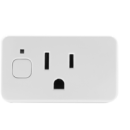
Homeowners can choose to charge their car during the best rate, at night, Calise notes. Moreover, the charging stations play nicely with other sub-systems. “The EVlink Charger integrates well with home systems,” he says, “but it also integrates well with smart thermostats, smart plugs, load controllers, inhome displays, and Internet gateways, all of which are integral parts of a comprehensive demand management solution.”
Schneider also offers its Wiser Home Energy Management System (EMS) that enables homeowners to reduce or shift energy use during peak times. The product integrates with EVlink by adding the EV charging station as a controllable point of load.
“This is not a commodity solution,” Calise adds. “We’ve seen that the more educated installers become [about Wiser EMS], the more sales capability they have compared to nonexperts. They can retain their margins and keep customers happy at the same time.”
Integrators looking to learn more about the EV category, including charging stations and their integration with energy management systems, can pursue training through Schneider’s EcoXpert EV program.
At a recent Schneider Electric event in Chicago, Mike Calise, director of Schneider’s Electric Vehicle Business, noted, “EVs are definitely here to stay.” It’s a standardized plug that makes EVs a practical category for residential integrators.
More than 20 production electric vehicles will become available to the increasingly demanding general market in 2012. Just about every auto manufacturer will have an electric vehicle or plug-in hybrid EV model on the market or in development.
“This is a great opportunity for residential custom systems integrators,” Calise says, “due to the nature of the product, the high consumer interest, and the other complementary home energy products that can be integrated with it.”
Schneider’s EV charging station is called the EVlink. “It’s something like an appliance,” Calise says, “somewhat like a prosumer product.”
The station itself needs an electrician, with a 240V/40A line required. Integrators can incorporate the EVlink into a complete home energy management system. “Having the station installed as an integrated package is ideal for saving money,” Calise adds, “but it also has that ‘cool’ factor that many homeowners are interested in.”
Homeowners can choose to charge their car during the best rate, at night, Calise notes. Moreover, the charging stations play nicely with other sub-systems. “The EVlink Charger integrates well with home systems,” he says, “but it also integrates well with smart thermostats, smart plugs, load controllers, inhome displays, and Internet gateways, all of which are integral parts of a comprehensive demand management solution.”
Schneider also offers its Wiser Home Energy Management System (EMS) that enables homeowners to reduce or shift energy use during peak times. The product integrates with EVlink by adding the EV charging station as a controllable point of load.
“This is not a commodity solution,” Calise adds. “We’ve seen that the more educated installers become [about Wiser EMS], the more sales capability they have compared to nonexperts. They can retain their margins and keep customers happy at the same time.”
Integrators looking to learn more about the EV category, including charging stations and their integration with energy management systems, can pursue training through Schneider’s EcoXpert EV program.
Subscribe to the CE Pro Newsletter
Read more Energy Management stories
Electric Imp Cloud-based Automation Monitors Almost Every DeviceLED Lighting: 4 Simple Ways to Boost Sales
Eragy Launches Control4 Energy Management Apps
AT&T to Launch Home Automation/Security this Summer
SDG&E and SoCal Edison: Pay to Get Your Dumb Meters Back
More in Energy Management
Article Topics
News · Product News · Home Automation and Control · Energy Management · Schneider Electric ·About the Author

Geoffrey Oldmixon, Freelance Writer & Editor, CE Pro & Channel Pro-SMB
Geoffrey Oldmixon is a Massachusetts-based freelance writer and editor. He served as CE Pro's managing editor from 2007 to 2009.


Post a comment