
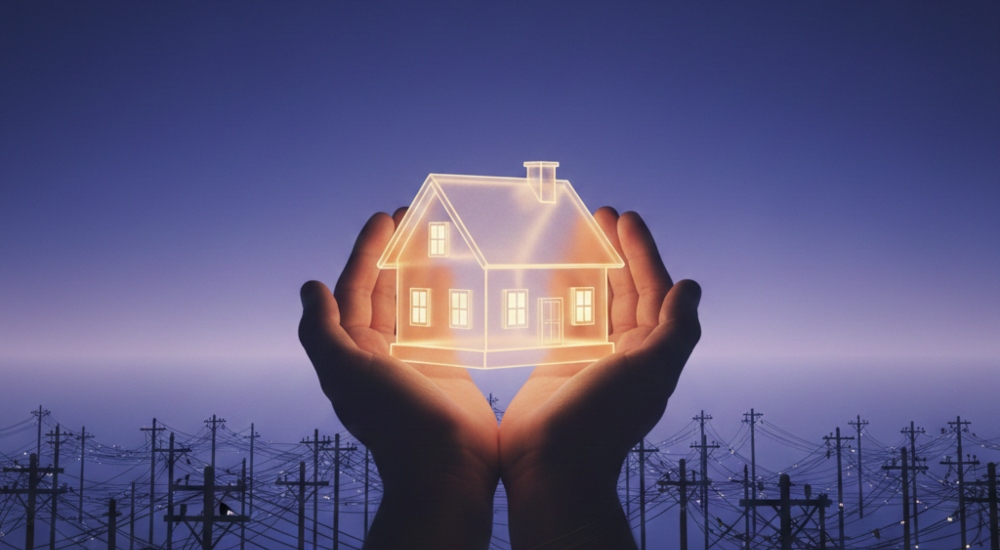
For years, the smart home industry has defined innovation through experience — lighting scenes, immersive audio, elegant shading and seamless control. That evolution isn’t over, but the next defining chapter of the smart home isn’t about ambiance.
It’s about power.
Energy is no longer just infrastructure hidden behind walls. It’s becoming intelligent, interactive and user-driven and software is what’s making that possible. Platforms from companies like Savant are transforming batteries, load panels and generators into dynamic systems that homeowners can actively manage. That shift changes the value proposition for both clients and integrators.
From Backup to Autonomy
The old energy conversation was simple: How long will my home run during an outage?
- Today’s homeowners are asking more sophisticated questions:
- How much battery should I reserve for storms?
- Which circuits are prioritized?
- Can I manage usage during peak utility hours?
- What is my home producing and consuming in real time?
This isn’t backup power. It’s energy autonomy. The real breakthrough isn’t hardware alone; it’s the software layer that makes energy visible and actionable. When power management lives inside the same interface as lighting, climate and AV control, it becomes part of daily living.
Homeowners can raise storm reserve levels as easily as activating a “Goodnight” scene. They can shift into conservation mode with a tap. Energy becomes experiential, not mechanical. That fundamentally redefines what “smart” means.
Usability Drives Adoption
Smart Power will only scale if it’s intuitive. Some clients want detailed analytics and granular control. Others simply want confidence that their home will perform seamlessly when the grid is stressed. The best platforms accommodate both. Power users can access real-time data and customization. Casual users can rely on simplified modes that optimize automatically. That layered approach empowers engagement without overwhelming the homeowner.
For integrators, this matters operationally. When clients can monitor system health, adjust reserve levels and understand performance on their own, service friction decreases. Calls drop. Confidence rises.
Intelligent software doesn’t just enhance the client experience it strengthens the integrator’s business model.
A Core Growth Category
Smart power is no longer a niche add-on. It’s becoming central to the smart home conversation. More homeowners are prioritizing resilience and energy management at the beginning of projects. Batteries, intelligent load management and generator integration are being evaluated alongside lighting and AV.
When properly positioned, energy solutions expand project scope naturally. More importantly, they elevate the integrator’s role. When a home stays fully operational during an outage, that’s not a luxury feature. That’s trust. And trust drives long-term relationships and referrals. Integrators who lean into this category move beyond installing equipment. They become strategic advisors helping clients plan for resilience, efficiency and long-term performance.
That’s a much bigger conversation than simply selling a battery.
Convergence Is Redefining the Smart Home
What’s happening now is convergence. Energy systems are integrating directly into whole-home control ecosystems. Batteries, solar, generators and load panels are unified within a single platform. That eliminates silos and simplifies adoption. Instead of asking, “Do you want backup power?” we ask, “How do you want your home to perform?”
Luxury is evolving. It’s no longer defined solely by convenience. It’s defined by resilience, visibility and autonomy. The homes of the future won’t just respond to commands, they’ll intelligently manage how energy is stored, deployed and optimized around a homeowner’s lifestyle. Software is what makes that possible.
Lighting was the first chapter. AV expanded the experience. Energy is redefining the category.
The integrators who lead in this space won’t just deliver technology. They’ll deliver independence.
And in today’s market, that’s not optional. It’s expected.
Troy Dunnington is CEO of LIGHTWORKS, a San Diego-based integrator focusing on lighting design, electrical, lighting control, motorized shades & drapes, home entertainment & security, smart energy, and home automation.





